
Multi-function composite fastener solutions|One part replaces threeAnti-loosening with anti-settlementAnti-loosening with sealing
The most common failure on the assembly line is not a bad part but a missing one. In a three-part bolt + washer + seal ring solution, one left-out part is enough for the whole unit to leak or work loose. The idea behind composite fasteners is to make those three parts one at the factory: nothing left out, nothing mis-installed, a stable takt. This page covers two combinations: anti-loosening + anti-settlement, and anti-loosening + sealing.

Five real benefits of composite fastening — none of them is 'saving money'
Turning three parts into one saves more than part cost — it saves the risk of missing parts and the line takt. Every claim below can be traced to its source on the product page.
Every part is a failure point; one less part, one less risk
In a four-part bolt + flat washer + spring washer + seal ring solution, every part must be picked up, placed and checked by hand. A missing part is often invisible from the outside, and the failure only shows up at final testing or after sale. Assemblies rivet the washer and nut together at the factory and pre-apply the adhesive and seal ring to the bolt, closing that path completely.
Soft substrates do not fail to tighten — they get pressed down
Plastics and die-cast aluminium have far lower compressive strength than steel. A standard nut has a small bearing face and therefore high unit pressure; after tightening, the substrate creeps and the clamping force keeps dropping over weeks — the symptom being 'it was fully tightened, and then it came loose'. The fix is not more torque but more bearing surface: a flange spreads the same clamping force over a larger area, the unit pressure drops, and settling is suppressed.
Pre-applied adhesive is chemical locking, not 'a dab of glue'
In the free state, microencapsulated pre-applied adhesive is dry. During tightening, the capsules are crushed by the threads, the adhesive is released and cures, bonding the thread pair into one unit. It does two jobs at once: resisting vibration loosening (chemical locking) and filling thread clearances (sealing and corrosion protection). The difference from manual dispensing on the line is consistency — the amount, position and cure of factory pre-applied adhesive are controlled, while manual dispensing depends on the operator.
One part handles sealing too, but IP68 still needs conditions agreed
Sealed multi-function screws integrate a sealing element under the head or at the thread root, so a single pass through assembly delivers both locking and protection and eliminates the separate O-ring step — ideal for compact locations with no room for a washer. The sealing rating is still stated as IP68 (IEC 60529); for IPX8, the immersion depth and duration are agreed between manufacturer and user, so any discussion of sealing must cover the medium and the pressure as well.
The price of composite parts: one disassembly, one replacement
Pre-applied adhesive is single-use: disassembly destroys the adhesive layer, and reassembly cannot restore locking or sealing; pre-riveted washer assemblies may also loosen after repeated cycles. Composite fasteners therefore assume 'assemble once, rarely reopen'. For locations with high maintenance frequency, prefer a separable solution with a replaceable seal ring rather than trading maintainability for fewer process steps.
All specifications, two function combinations
Anti-loosening + anti-settlement solves clamping-force decay on soft substrates; anti-loosening + sealing solves waterproofing in compact locations. Each card links directly to the product page; materials, standards and options are per the product page.
Anti-loosening + anti-settlement: a larger bearing face for soft substrates
2 SKUsBoth reduce unit pressure with a flange face or large bearing face to suppress creep settling in plastics and aluminium, and both lock against vibration with a locking thread, indentation or microencapsulated adhesive. The difference is form: the nut type suits through-hole joints, while the flange bolt type suits locations that need a bolt built in and combines chemical locking with thread sealing.
Anti-loosening + sealing: one part replaces three
1 SKUThe thread is pre-coated with microencapsulated locking adhesive, and a sealing element is integrated under the head or at the thread root. When tightened, the adhesive breaks down and cures while the seal ring is compressed in the same pass, delivering locking plus IP68-level protection in one assembly. It replaces the three-part bolt + threadlocker + seal ring kit and removes the risk of leaving a part out — suited to battery packs, electronics housings and outdoor cabinets, where space is tight and water protection is mandatory.
Four assembly locations where composite parts matter most
Soft substrates, high vibration, compact spaces, water and dust — four duty conditions, each matching a different function combination.
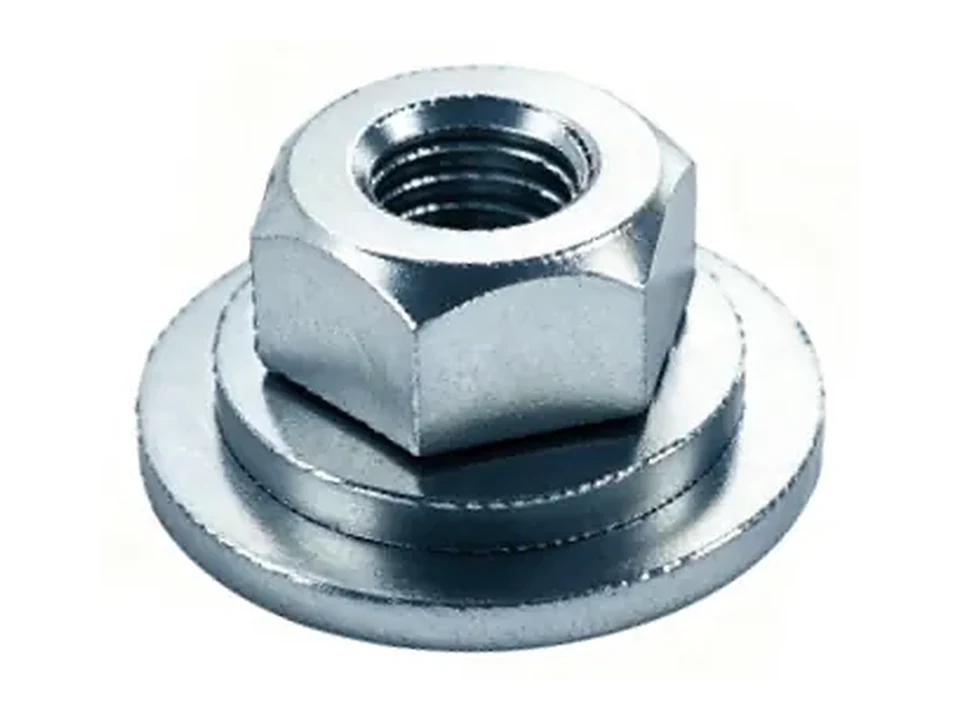
Plastic housings and interior parts
Plastics have the weakest compressive strength; under a standard nut, settling starts within weeks, shown as 'the screw is still there but the cover plate is loose'. A large bearing flange is the most direct fix, combined with a locking structure to hold the clamping force steady. These locations are rarely reopened, which matches the single-use nature of assemblies.
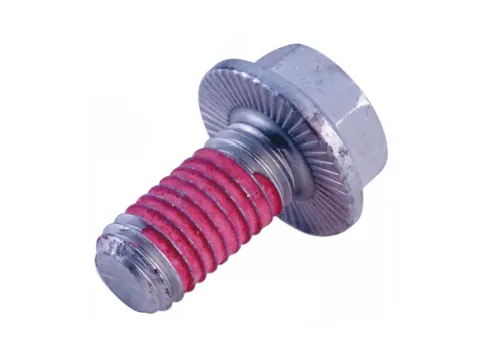
Die-cast aluminium parts and electrical enclosures
Aluminium is harder than plastic but still creeps, especially under thermal cycling. The flange bolt assembly here handles three things at once: the flange spreads the pressure, pre-applied adhesive resists vibration, and the adhesive layer fills the joint against moisture. If threads in a die casting lack strength, still add an insert before screwing.
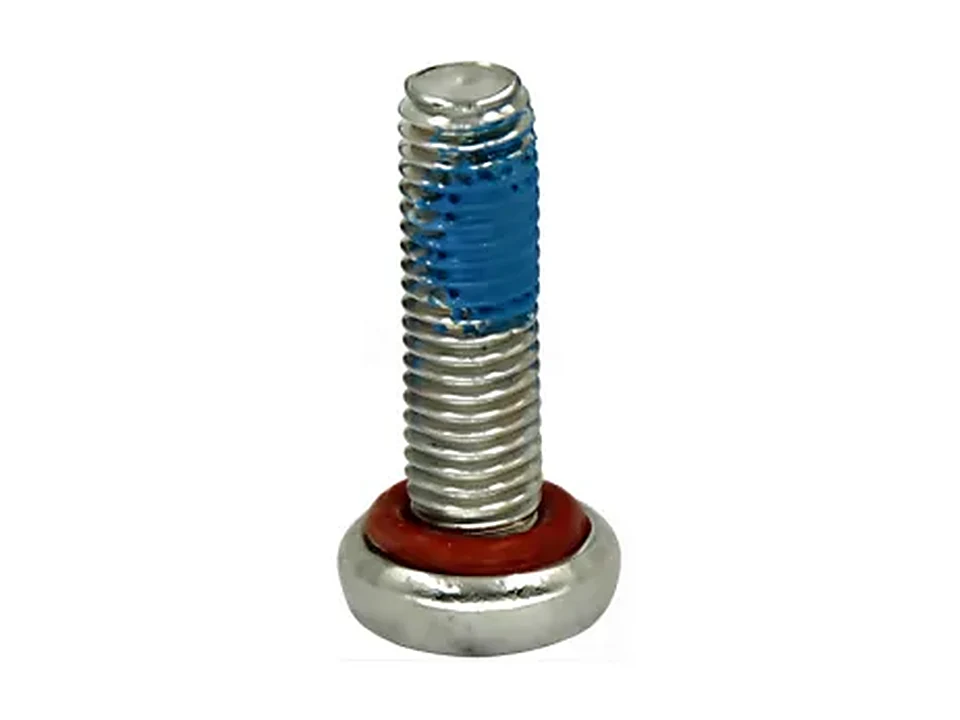
Battery pack and electronics housing sealing
Tight space, IP68 required, short assembly takt. Sealed multi-function screws merge locking and sealing and remove the separate O-ring station; but mind the flatness and cleanliness of the sealing faces — however good the part, contamination on the mating face will break the seal.
Construction machinery and fluid components
Heavy vibration plus water and dust exposure. The typical failure sequence in such locations is 'first it loosens, then it leaks, then it breaks'. Composite parts move anti-loosening and sealing to the front; what remains is setting the torque window precisely — on soft substrates the torque limit is set by substrate compressive strength, not bolt strength.
Selection logic for composite fasteners
First confirm 'can it stay assembled', then decide which functions to combine, and finally check space and torque.
The value proposition of composite fasteners is fewer parts and fewer process steps, but the trade-offs are just as clear: single-use, non-repairable, and a higher unit price. So the first step in selection is not choosing features, but deciding whether this joint will ever be disassembled during its service life. The five sections below are based on the technical clauses of the three composite fasteners on this site, and on the standard frameworks of GB/T 6170, GB/T 16674, GB/T 3098.1 and IEC 60529.
Step 1: will this joint be disassembled
Locking in composite parts comes from pre-applied adhesive or pre-riveted structure and fails after one disassembly: the adhesive cannot be restored once broken, and pre-riveted washer assemblies may also loosen. So they suit locations that are never reopened after assembly — battery pack covers, electronics housings, interior trim fixing points, appliance enclosures.
Locations that need maintenance (filter caps, service panels, regularly replaced modules) should return to separable solutions: replaceable O-rings, reusable spring washers or double nuts. Saving one station at the cost of maintainability means the repair costs come back multiplied.
- One pass, never disassembled → composite part (anti-loosening / anti-loosening + sealing / anti-loosening + anti-settlement)
- Regular maintenance needed → separable solution, replaceable seal ring
- Repeated disassembly with locking needed → mechanical locking structure (indentation, slotted, double nut)
- Soft substrate + high vibration → large bearing flange + locking structure
Step 2: which functions to combine
The 'multi-function' products on the market are really a few fixed combinations: anti-loosening + anti-settlement (large flange + locking thread / indentation / pre-applied adhesive), anti-loosening + sealing (pre-applied adhesive + sealing element), and anti-loosening + conductivity (serrated face + plating, not covered on this page). Start by defining what this joint fears most, then pick the combination — do not stack every function onto it.
More functions mean a more complex structure, a longer tolerance chain and a higher unit price. A sealed type on an interior fixing point that never sees water is waste; a battery pack cover with locking but no sealing will leak.
Step 3: on soft substrates, look at pressure, not torque
The failure mode of plastics and aluminium parts is creep settling: clamping force decays under constant load over time. There are two ways to reduce unit pressure — enlarge the bearing face (flange), or spread the load with washers (but washers introduce new parts and new risk of omission). Composite parts take the first route and solve it with a one-piece large flange.
The torque limit for such joints is therefore set by substrate compressive strength, not bolt strength. Before specifying a torque, confirm the substrate grade, bearing face diameter and operating temperature; the higher the temperature, the faster the creep, and the torque must be lowered accordingly.
Step 4: process conditions for pre-applied adhesive
The locking effect of microencapsulated adhesive depends on three conditions: the capsules are fully crushed during tightening (the torque must not be too low), the adhesive volume matches the thread length (too little leaves gaps, too much gets squeezed out), and the curing time (some adhesives need to cure before they can carry full load).
This means the assembly process must match the adhesive type: the torque lower limit, whether holding pressure is needed, and how long after the line a vibration test can be run all belong in the work instructions. Treating pre-applied adhesive parts like ordinary bolts and just tightening them is the most common misuse of these products.
Step 5: which acceptance items to write
Mechanical: properties per GB/T 3098.1; nut structure and dimensions per GB/T 6170, flange bolts per GB/T 16674; threads gauged with go/no-go gauges to 6g/6H. Anti-loosening: measure residual preload after a vibration test, or run a breakaway torque test per corporate standard.
Sealing: immersion or airtight tests with the agreed medium, depth and duration (IP68 per IEC 60529; conditions to be negotiated). Settling: re-measure the clamping force after thermal cycling on soft substrates — this best shows whether the flange design works.
A total-cost optimisation partner from prototype design to after-sales
Six professional services cover selection, samples, validation and volume ramp-up, turning "will this screw work" into a verifiable engineering conclusion.

Fast engineering samples
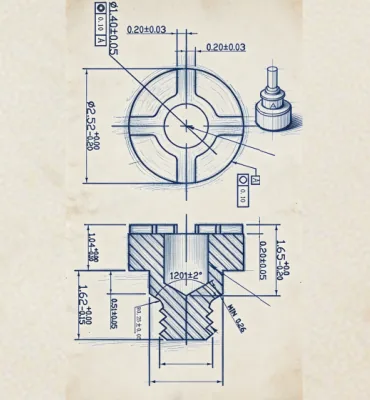
Professional training
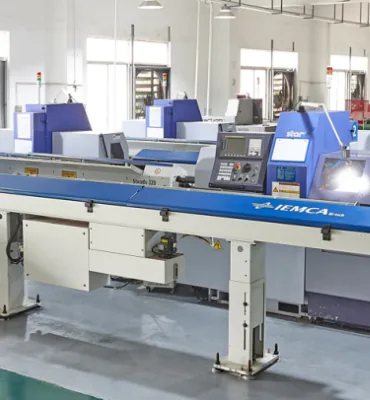
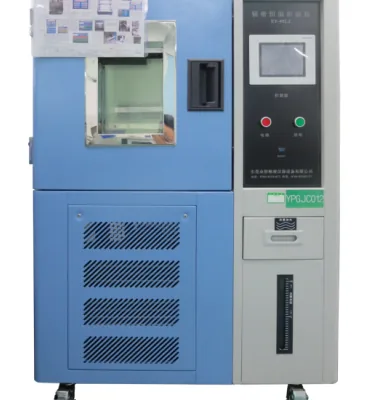
Professional testing services
Professional design consulting
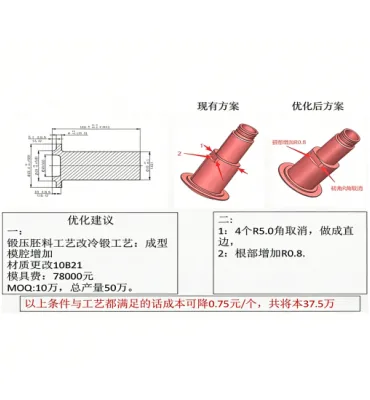
Continuous process optimisation
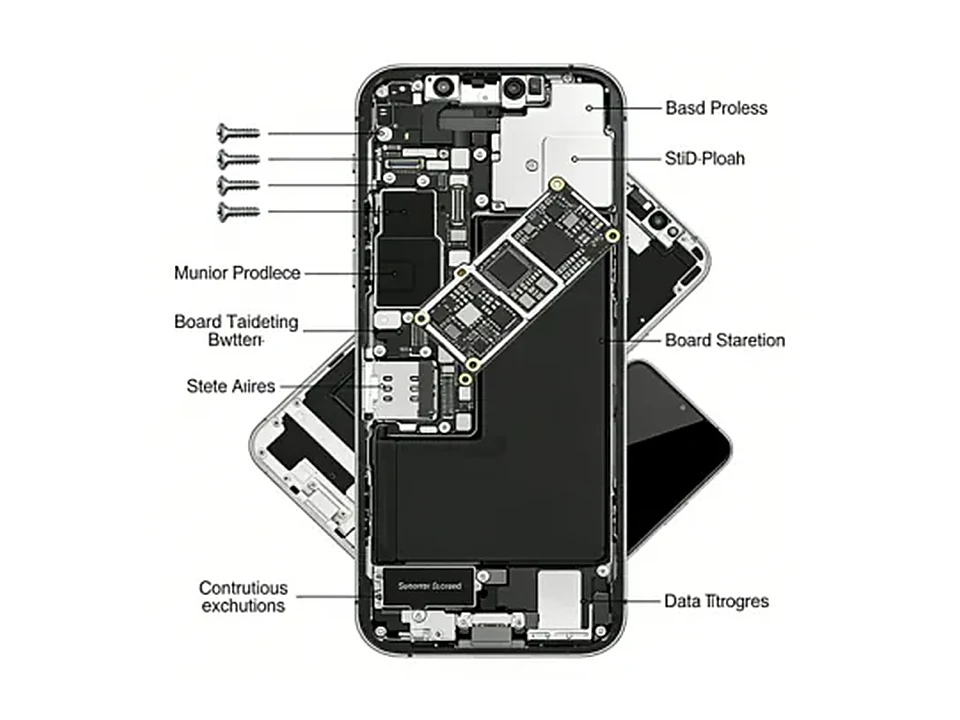
Professional teardown analysis
From function trade-offs to vibration validation
The value of composite parts shows on the assembly line, and so do the risks — the process must be defined together.
Maintainability assessment
Confirm whether the joint will be disassembled during its life cycle, then decide between a composite part and a separable maintainable solution.
Function combination choice
Choose the combination by the failure you fear most: soft-substrate settling — large flange; water exposure — sealed type; high vibration — pre-applied adhesive locking.
Space and substrate check
Check the flange diameter and counterbore space, the substrate grade and compressive strength, and confirm the torque limit is set by the substrate.
Process, torque and curing
Set the torque lower limit and curing wait time per adhesive type in the work instructions; include sealing-face cleanliness in the process requirements.
Validation and release
Run residual preload after vibration, airtight/immersion tests, and clamping-force re-checks after thermal cycling; release only after all three pass.
FAQ about multi-function fasteners
Can a composite part be reused after one disassembly?
Won't stay tight on soft substrates and loosens again after a while — what causes this?
How does locking by pre-applied adhesive differ from manual dispensing on the line?
Can sealed multi-function screws really reach IP68?
Does the integrated flange take up space?
Composite parts cost more than a three-part kit — are they worth it?
Continue below
Send us your assembly steps and failure symptoms; we supply parts by function combination
Send us the substrate grade, whether it will be disassembled, vibration and waterproofing requirements, current process steps and risk points for missing parts; we will decide which functions to combine and provide matching samples.