
Product Manual · High-Strength Aluminum Alloy Bolts
High-Strength Aluminum Alloy Bolts Manual
Lightweight aluminum bolts for automotive powertrains with no galvanic corrosion: the ZT68 material system, a complete cold heading, heat treatment and thread rolling route, and full mechanical test data from room temperature to 150 °C.
ZT68Material system
150℃Heat-exposure performance
3 StagesKey processes
Full setTest data
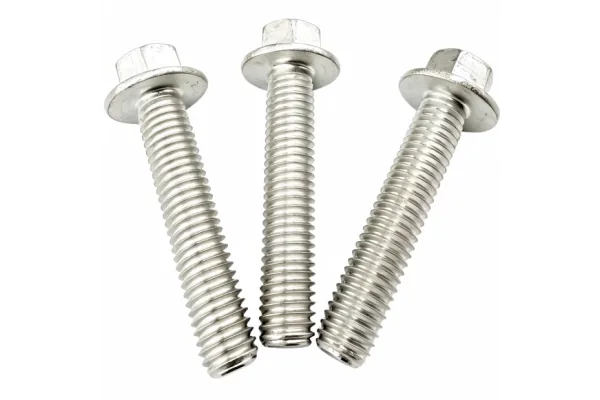
Product introduction
Definition: Aluminum fasteners are bolt-type connectors made from aluminum alloy; the industry usually refers to them simply as 'aluminum bolts'.
Essential nature: Made from aluminum alloy as the base material and formed by metalworking processes, they provide the basic connecting function of a bolt together with the properties of aluminum alloy.
Four core advantages
1. Short engagement length
When an aluminum bolt is used in magnesium or aluminum parts, the engagement length is 1.3–1.5d (d being the nominal thread diameter) — a short-engagement advantage over steel bolts, which need more than 2–3d.
2. No galvanic corrosion
Aluminum bolts and magnesium parts have similar electrochemical potentials, so galvanic corrosion between them is almost eliminated; aluminum bolts and aluminum parts share the same potential, so no galvanic corrosion occurs at all.
3. Excellent tightening behavior
A steel bolt tightens through elastic extension up to yield, with stress changing markedly with strain; an aluminum bolt also passes from elastic deformation to yield, but inside the yield zone the stress changes little as strain increases, so the curve stays flat.
4. Lightweight
Aluminum alloy has only one third of the density of steel, so an equivalent bolt greatly reduces the weight of the joint and supports lightweighting targets for automotive powertrains.
Complete aluminum bolt process route
Cold heading
Cleaning
Heat treatment (solution + aging)
Thread rolling
Sorting
Packing
Equipment: cold headers and thread rolling machines; aluminum bolts for automotive engines are mainly produced by cold heading.
Key processes for aluminum bolts
4.1 Forming – cold heading
Cold heading is an efficient way to manufacture aluminum bolts and is commonly used for automotive engine bolts.
4.2 Heat treatment (solution treatment + age hardening)
① Solution treatment: The bolt is heated to 480–530 °C so that alloying elements such as Mg, Si and Cu dissolve fully, forming a supersaturated solid solution that provides the basis for strengthening.
② Age hardening: After solution treatment the bolt is held at 150–200 °C for several hours so that dispersed strengthening phases such as Mg₂Si and Al₂Cu precipitate, greatly increasing material strength.
Heat treatment gain: After combined solution treatment and aging, aluminum bolts reach 630 MPa tensile strength and around 500 MPa yield strength, meeting the joint strength required in automotive powertrains.
4.3 Thread rolling (rolled after heat treatment)
Four benefits of rolling the thread after heat treatment:
1. Improves mechanical properties;
2. Reduces susceptibility to intergranular corrosion;
3. Creates compressive residual stress in the thread root, raising fatigue strength and reducing the notch effect;
4. Lowers the risk of thread damage.
1. Improves mechanical properties;
2. Reduces susceptibility to intergranular corrosion;
3. Creates compressive residual stress in the thread root, raising fatigue strength and reducing the notch effect;
4. Lowers the risk of thread damage.
Process control points: Friction coefficient and pressure during thread rolling are tightly controlled to prevent thread deformation and surface damage caused by the high plasticity of aluminum, and to guarantee the 1.3–1.5d engagement length needed for a safe joint; the thread is formed by pressing with thread rolling dies, safeguarding thread accuracy and surface finish.
Chemical composition and performance requirements
Standard: Volkswagen Group standard VW 60469 (2017-9); main grade AW6056 (AL9), plus the premium grade ZT68
AW6056 composition range:
Si: 0.7–1.2%, Fe ≤0.25%, Cu: 0.65–0.85%, Mn: 0.55–0.65%, Mg: 0.6–1.0%, Zn: 0.15–0.25%, Zr: 0.1–0.17%; Cr, Ti ≤0.05%, balance Al.
Si: 0.7–1.2%, Fe ≤0.25%, Cu: 0.65–0.85%, Mn: 0.55–0.65%, Mg: 0.6–1.0%, Zn: 0.15–0.25%, Zr: 0.1–0.17%; Cr, Ti ≤0.05%, balance Al.
Three keys to grade selection: strength (tensile/yield), elongation and high-temperature creep performance
| Alloy grade | Thread sizes | Tensile strength | Yield strength | Elongation at break |
|---|---|---|---|---|
| AW6056 | M6-M12 | approx. 420 MPa | 350-400MPa | ≥7% |
| ZT68 | M6-M12 | approx. 630 MPa | approx. 500 MPa | ≥6% |
What the figures mean: Tensile strength secures load capacity, yield strength secures joint stability and elongation reflects ductility; together they guarantee reliable service in the powertrain.
ZT68 complete material test data
6.1 Tensile properties at room temperature
| Specimen | Rm tensile (MPa) | Rp0.2 yield (MPa) | A elongation (%) | Yield ratio |
|---|---|---|---|---|
| 1 | 632 | 536 | 6 | 0.85 |
| 2 | 634 | 540 | 6 | - |
| 3 | 632 | 545 | 6 | 0.86 |
| Mean | 633 | 540 | 6 | 0.85 |
6.2 Room-temperature tensile strength after 150 °C heat exposure
| Group | Rm(MPa) | Rp0.2(MPa) | A(%) | Yield ratio | Heat exposure | Strength retention |
|---|---|---|---|---|---|---|
| 1 | 615 | 525 | 8.9 | 0.85 | 150℃×6h | 97.16% |
| 2 | 613 | 514 | 8.9 | 0.84 | ||
| 3 | 617 | 510 | 8.9 | 0.83 | ||
| Mean | 615 | 516 | 8.9 | 0.84 | 150℃×6h | 97.16% |
| 1 | 610 | 506 | 8.9 | 0.83 | 150℃×8h | 96.37% |
| 2 | 609 | 512 | 9.4 | 0.84 | ||
| 3 | 611 | 507 | 9.5 | 0.83 | ||
| Mean | 610 | 508 | 9.3 | 0.83 | 150℃×8h | 96.37% |
| 1 | 606 | 506 | 10.3 | 0.84 | 150℃×12h | 95.58% |
| 2 | 605 | 509 | 10.2 | 0.84 | ||
| 3 | 603 | 505 | 9.5 | 0.84 | ||
| Mean | 605 | 507 | 10 | 0.84 | 150℃×12h | 95.58% |
6.3 Micro Vickers hardness after heat exposure
Hardness remains stable across the 187–204 HV range with an average of 190–198 HV; mean hardness for each heat exposure process is shown below:
| No. | Hardness at point 1 (HV) | Hardness at point 2 (HV) | Group mean (HV) | Heat exposure process |
|---|---|---|---|---|
| 1 | 193 | 193 | 191.3 | 150℃×8h |
| 2 | 187 | 185 | ||
| 3 | 198 | 192 | ||
| 4 | 198 | 196 | 198.5 | 150℃×12h |
| 5 | 204 | 200 | ||
| 6 | 200 | 193 | ||
| 7 | 198 | 190 | 193.8 | 150℃×16h |
| 8 | 193 | 188 | ||
| 9 | 198 | 196 |
6.4 High-temperature tensile properties (110/130/150 °C for 20 min)
| No. | Rm(MPa) | Rp0.2(MPa) | A(%) | Yield ratio | Test condition | Strength retention % |
|---|---|---|---|---|---|---|
| 1 | 610 | 435 | 6.8 | 0.71 | 110℃×20min | 97.9 |
| 2 | 627 | 461 | 7.1 | 0.74 | ||
| 3 | 622 | 442 | 7.1 | 0.71 | ||
| Mean | 620 | 446 | 7 | 0.72 | ||
| 1 | 614 | 436 | 8.6 | 0.71 | 130℃×20min | 97 |
| 2 | 610 | 439 | 8.2 | 0.72 | ||
| 3 | 619 | 426 | 7.1 | 0.69 | ||
| Mean | 614 | 433 | 8 | 0.71 | ||
| 1 | 601 | 424 | 7.8 | 0.70 | 150℃×20min | 95.4 |
| 2 | 606 | 436 | 7.5 | 0.72 | ||
| 3 | 606 | 437 | 7.8 | 0.73 | ||
| Mean | 604 | 432 | 7.7 | 0.75 |
Key findings from the room-temperature force–displacement curve:
1. ZT68 tensile strength is consistently around 630 MPa and yield strength around 500 MPa;
2. Hardness remains in the 187–204 HV range, averaging 190–198 HV;
3. After heat exposure the high-temperature tensile strength retention is 95.58%–97.16%, showing excellent creep resistance.
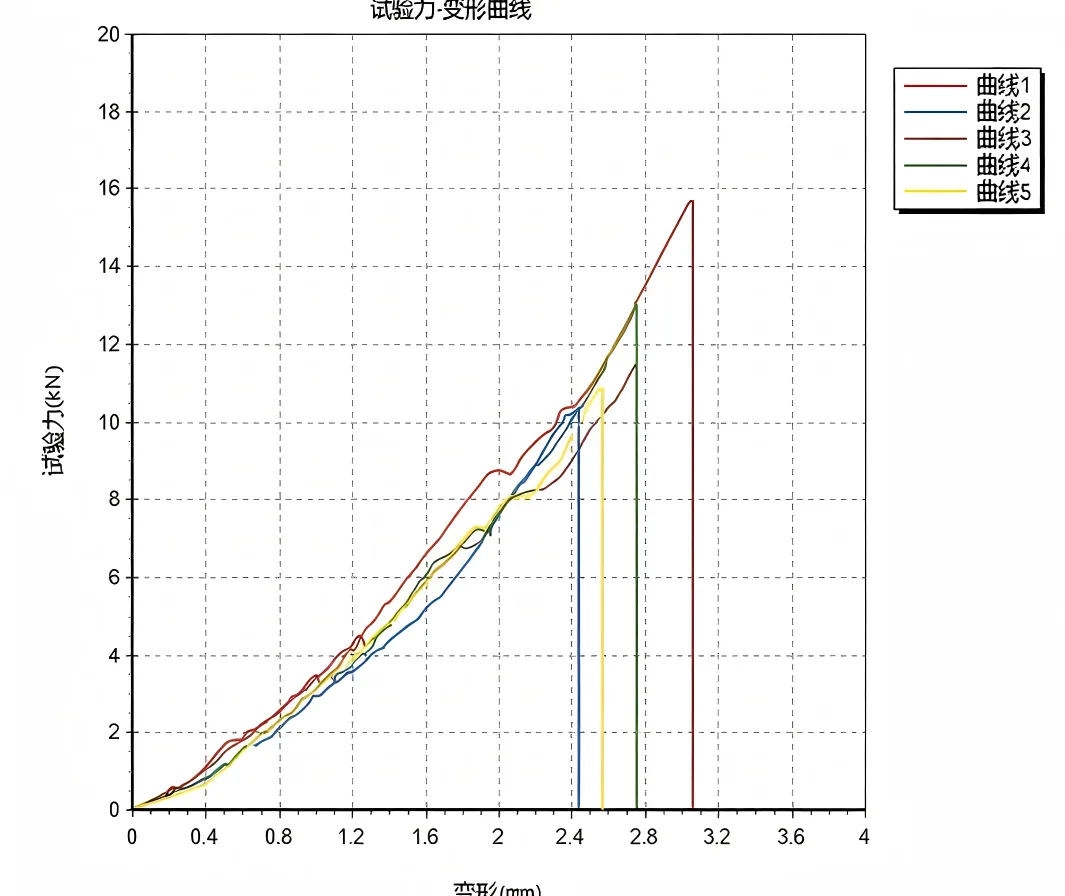
ZT68 force–displacement curve at room temperature
Galvanic corrosion comparison test
Comparison: yellow ZT68 aluminum bolt vs. silver carbon steel bolt with zinc-nickel coating, both fitted in an Mg-AZ91 magnesium alloy base material
1. ZT68 aluminum bolt + Mg-AZ91 magnesium alloy: no visible corrosion around the hole;
2. Carbon steel bolt + Mg-AZ91 magnesium alloy: numerous corrosion pits around the hole, severe spalling at the edges of the magnesium alloy and dark yellow corrosion products;
3. Mechanism: the potential difference between magnesium and aluminum is far smaller than between magnesium and iron, so carbon steel paired with magnesium alloy is highly prone to galvanic corrosion.
1. ZT68 aluminum bolt + Mg-AZ91 magnesium alloy: no visible corrosion around the hole;
2. Carbon steel bolt + Mg-AZ91 magnesium alloy: numerous corrosion pits around the hole, severe spalling at the edges of the magnesium alloy and dark yellow corrosion products;
3. Mechanism: the potential difference between magnesium and aluminum is far smaller than between magnesium and iron, so carbon steel paired with magnesium alloy is highly prone to galvanic corrosion.

Silver carbon steel bolt with nickel coating (severe galvanic corrosion)
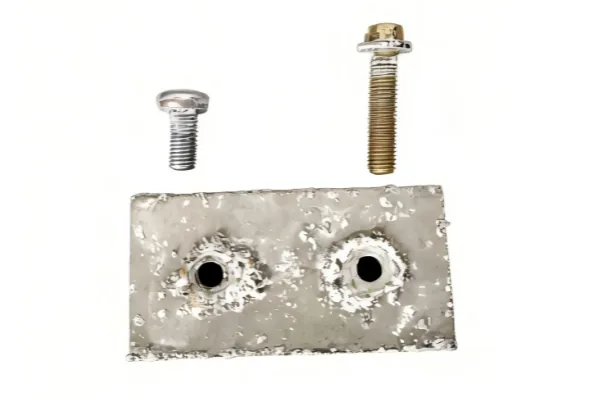
Yellow ZT68 aluminum bolt (no galvanic corrosion)
Industry challenge — project cost influence model & the 15–85 rule
Core R&D pain point: The early decision window in R&D is extremely short, yet it fixes most of a product's cost; later correction demands heavy investment and rework is very expensive, so risk and reward are badly mismatched — precise early specification is the way to avoid it.
The 15–85 rule: Companies tend to over-focus on visible purchasing cost (only 15% of total cost) and ignore the 85% of hidden cost; with design, supply chain and after-sales uncoordinated, an early specification error leads to high manufacturing cost, batch rework and quality and warranty problems, sharply raising the total lifecycle cost of the product.
YF ZCJ six end-to-end services: total cost optimization from prototype design to after-sales
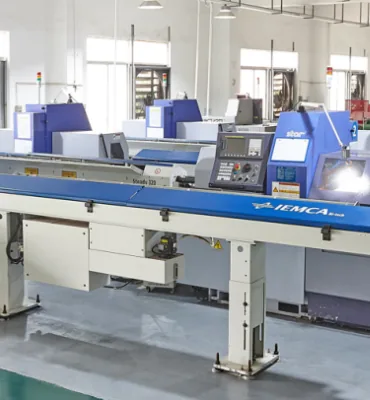
Rapid engineering samples
Rapid aluminum bolt prototyping for early bench validation

Professional training
Training on lightweight fastening joints and corrosion-resistant selection
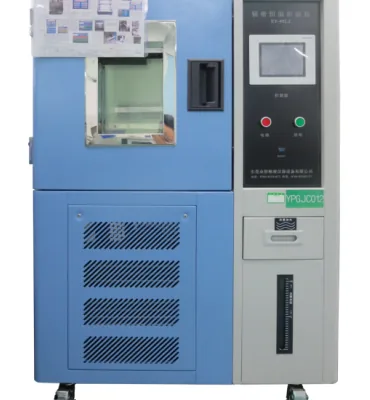
Professional testing services
Full tensile, high-temperature exposure and galvanic corrosion testing
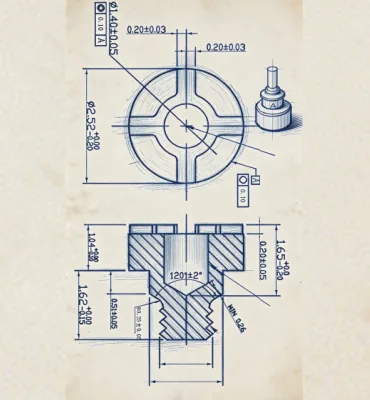
Design consulting
Engagement length for aluminum and magnesium alloys, plus structural optimization proposals

Teardown analysis
Microscopic teardown diagnosis of fractured, corroded and thread-failed parts
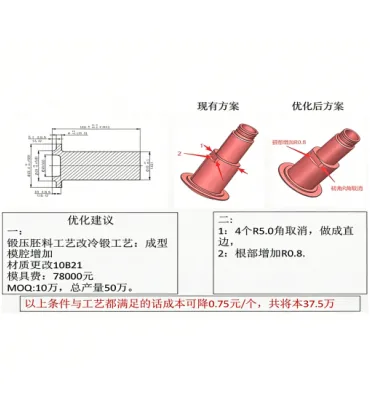
Continuous process optimization
Process iteration in volume production to keep reducing unit cost
Application summary
YF ZCJ high-strength aluminum alloy bolts (ZT68/AW6056) use cold heading plus solution and aging heat treatment to reach 630 MPa tensile and 500 MPa yield strength. Compared with steel bolts they offer four core advantages — light weight, short engagement length, no galvanic corrosion and a smooth tightening curve — making them a perfect fit for new energy vehicle powertrains and lightweight magnesium-aluminum structural joints, supported by six end-to-end technical services that address the 15–85 hidden-cost problem of the industry.
Company information & manufacturing strength
Brand positioning: YF ZCJ | an innovation leader in fasteners
Company fundamentals: Founded in 2005 · monthly output of about 650 million pieces · two production bases in Pingshan, Shenzhen and Gucheng, Hubei · 26 valid patents · 360 employees · more than 100 customers, spanning new energy vehicles, the low-altitude economy, embodied intelligence, industrial electronics and consumer electronics.
YF ZCJ Precision Hardware (Shenzhen) Co., Ltd. – headquarters
Address: 深圳市坪山区坑梓街道秀新社区坑梓中兴路13号C1栋101及整栋 13 号 | Tel: 0755-84061349
Address: 深圳市坪山区坑梓街道秀新社区坑梓中兴路13号C1栋101及整栋 13 号 | Tel: 0755-84061349
Zhichengjia Metal Technology (Xiangyang) Co., Ltd. – automotive plant
Address: 湖北省襄阳市谷城县城关镇三岔路经济开发区 | Tel: 0710-7269998
Address: 湖北省襄阳市谷城县城关镇三岔路经济开发区 | Tel: 0710-7269998
Website: www.zcjtech.com
Need an assessment of a high-strength aluminum bolt solution?
ZT68 material data and joint solution assessment; automotive powertrain parts can be prototyped and tested to drawing.