
Light alloy die casting fastening solutions|Thread insert reinforcementIntegrated Sealing OptionsProcess hole sealing
A thread in a die casting is cast, not tapped: internal porosity, dimensional scatter and draft angle make it a poor host for a bolt. So the first decision in die-casting fastening is not which screw to use, but how to reinforce this threaded hole, how to seal this process hole, and whether this bolt will react galvanically with magnesium. The specifications on this page are grouped along those three lines.

Five decisions in die-casting fastening, and the first cannot be avoided
Design a die casting like an ordinary metal part and the problems surface all at once during pilot production. Every point below can be checked against the original text of the Light Alloy Die Casting Industry Handbook or the product pages.
A cast thread has a fraction of the strength of a tapped one
During casting the melt flows, entraps gas and shrinks inside the die, and density is hardest to guarantee at the thread: porosity and shrinkage cavities may sit inside, and the thread profile is affected by the draft angle. The result is that a cast M6 carries far less load than a machined thread and strips after a few assembly cycles. The handbook's answer is direct: reinforce with a thread insert, which brings strength to class 8 and above, sometimes beyond class 12.
An insert is not one part but five different answers
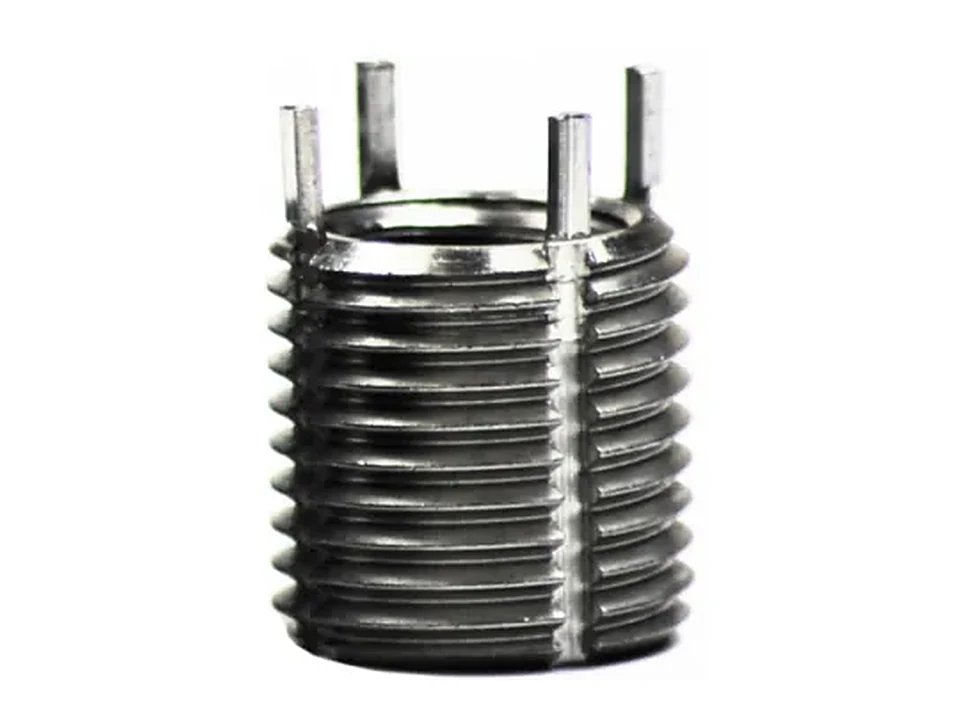
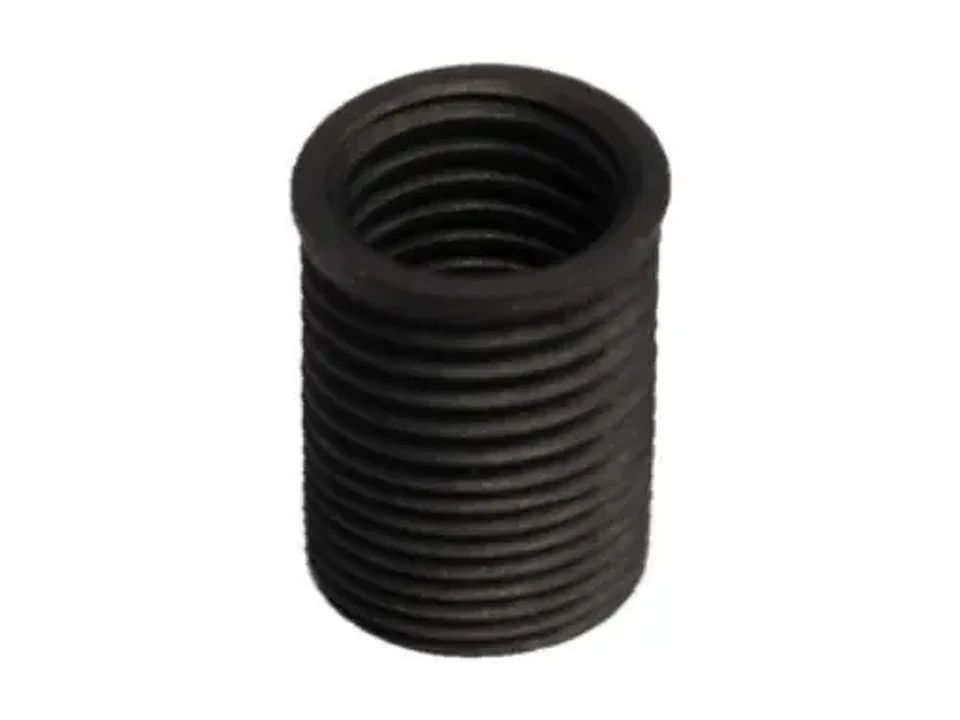
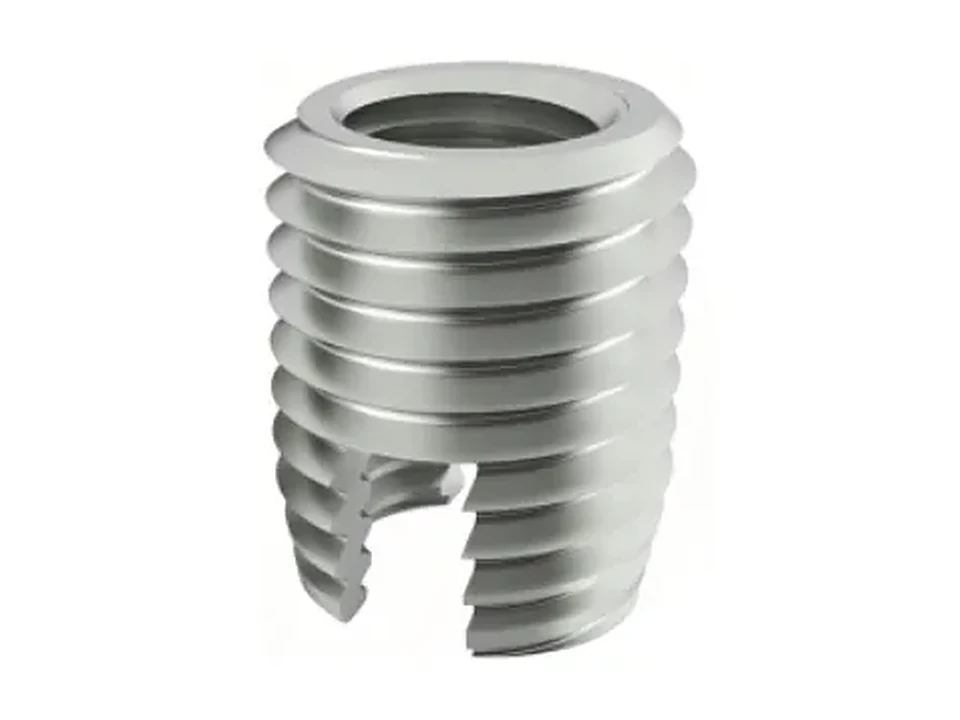
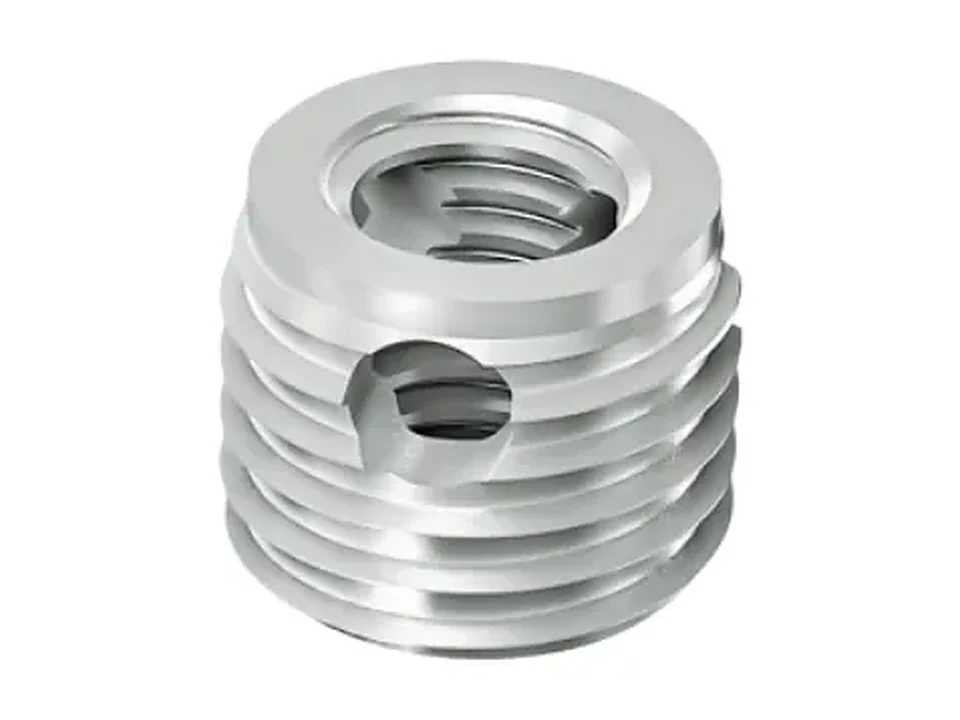
Wire thread inserts sit in a pre-tapped hole and hold by elastic expansion, with a wide size range (M2-M39) and a choice of materials; key-locking inserts lock on keys, resisting rotation and preventing the insert from coming out with the screw; thin-wall inner-outer inserts suit locations with limited wall thickness; 302 slotted and 308 three-hole self-tapping inserts need no pre-tapping and can be driven straight into die castings; tangless inserts skip the tang removal step and suit volume production. A wrong choice usually ends the same way: tight at installation, backing out on its own after a while.
A magnesium die casting with a steel bolt is a galvanic cell built in
Magnesium has a very low standard electrode potential; in contact with steel and under a water film it becomes the anode and corrodes faster. The handbook gives two parallel routes: use high-strength aluminum alloy bolts, whose potential is close to magnesium, and apply sealant under the bolt head as physical isolation. Both are needed to bring galvanic corrosion to a minimum - changing the material without isolating it still fails in long-term damp conditions.
An unsealed process hole is a hole left in the finished unit
Die castings usually keep process holes for slide cores, drainage and inspection. These holes take no fastener, yet they are paths for water and dust. The handbook divides plugs into two families: conventional plugs for locations that must be opened, and the newer pull-expansion and press-in types for process holes that demand high reliability and are not opened repeatedly, with sealing up to IP68 - in the handbook's words, almost 100% perfect sealing with virtually zero failure.
Forming a plain hole directly saves a step and trades in a different failure mode
Self-tapping, self-forming screws work like this: the die casting gets only a plain hole, the screw is driven in and forms the thread, and the interference fit provides locking. The handbook puts it as an overall gain in assembly efficiency and reliability. The price is that the thread comes from plastic deformation of the base material, so the number of re-assemblies is limited and thin walls may distort - hence it suits volume parts assembled once, not locations that need servicing.
The whole range, three jobs: reinforce the thread, block galvanic corrosion, seal the hole
Thread inserts fix the cast thread not being strong enough, galvanic protection fixes dissimilar metals fighting, and sealing plugs with self-tapping screws fix process holes and plain holes. Each card links straight to its product page.
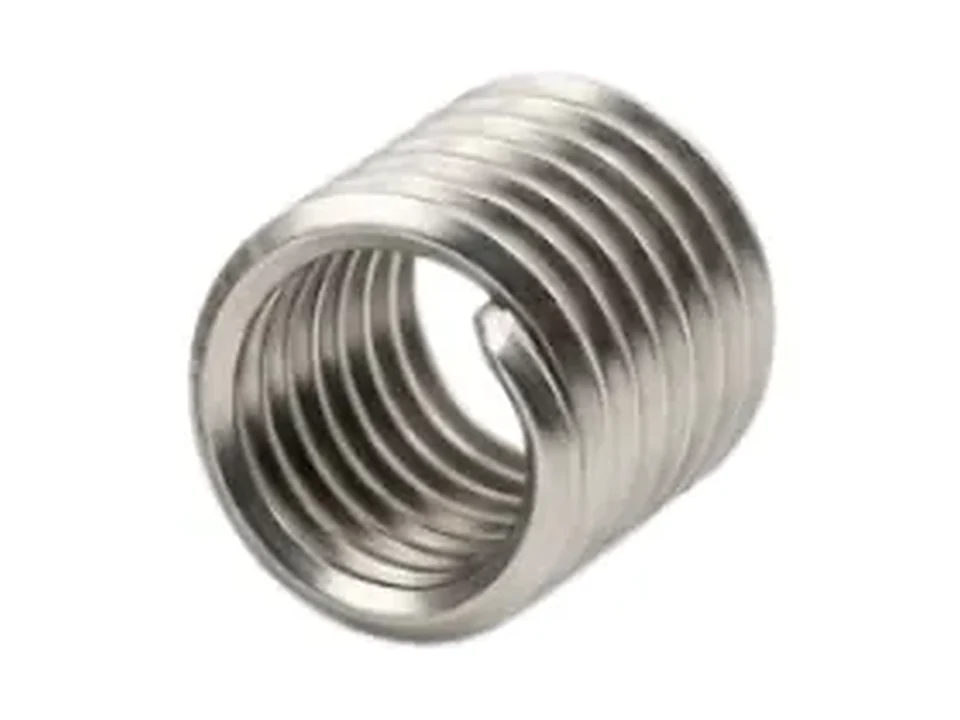
Thread inserts: giving a casting a real thread
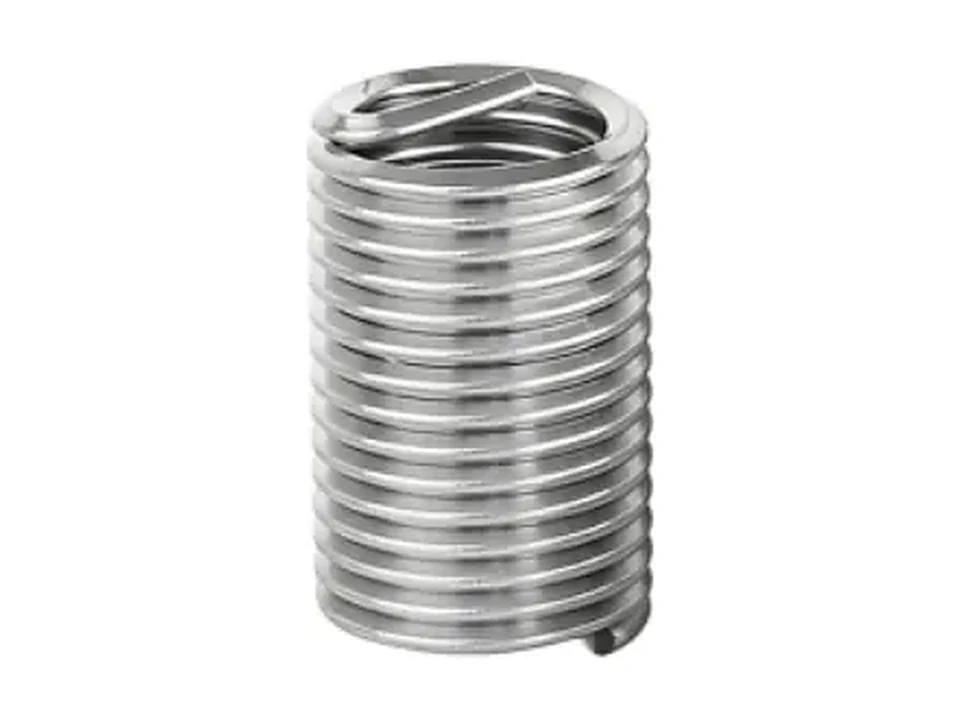
6 SKUsA carbon steel or stainless insert goes into the threaded hole of a die casting and moves the load from porous as-cast structure onto a metal thread, reaching class 8 or even class 12 strength and allowing repeated assembly. The six designs correspond to different wall thicknesses, assembly frequencies and willingness to pre-tap.
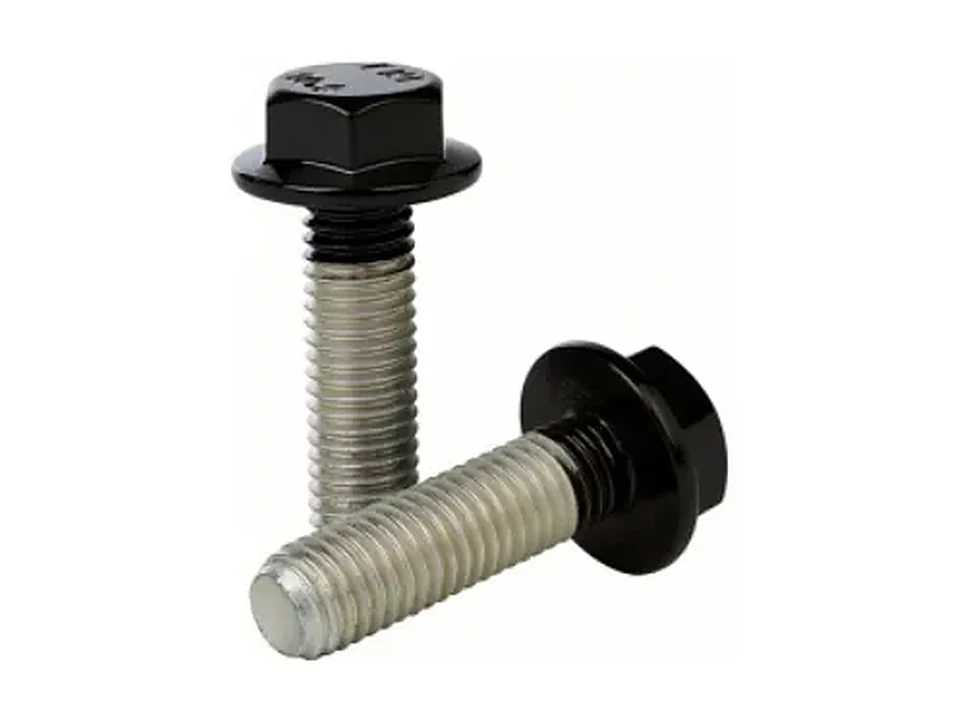
Galvanic corrosion protection: material change and isolation
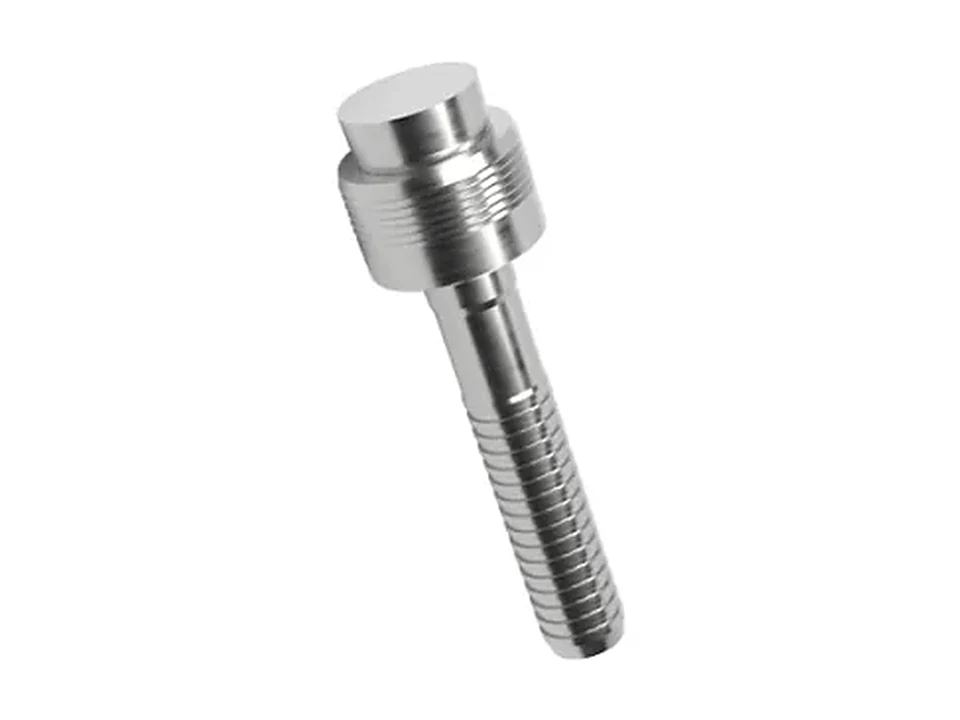
2 SKUsThe potential difference between a magnesium die casting and a steel bolt is what drives corrosion. On the left, coated high-strength aluminum alloy parts build an electrochemical barrier between the metals; on the right, ZT68 aluminum alloy bolts (tensile strength about 630 MPa) shrink the potential difference - the handbook's two principles, matched to these two product families.
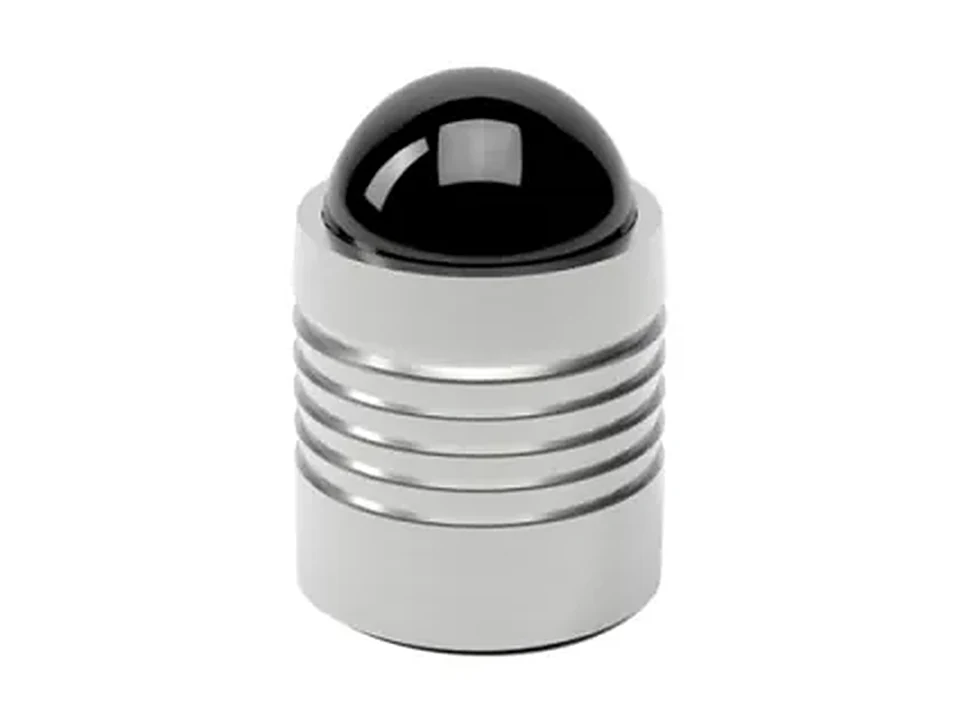
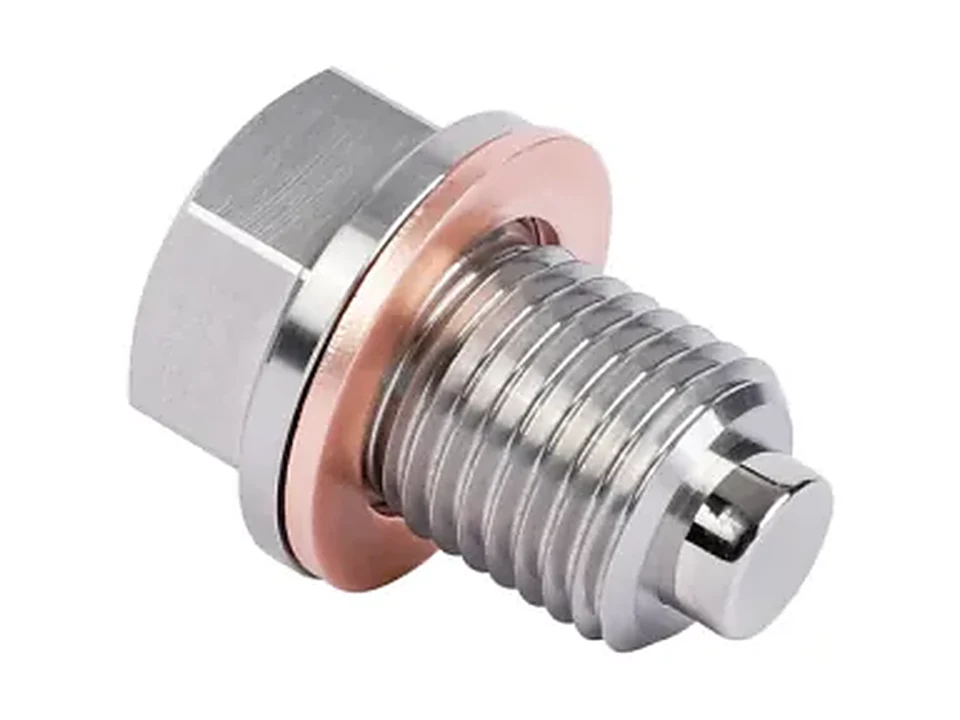
Sealing process holes and self-tapping plain holes
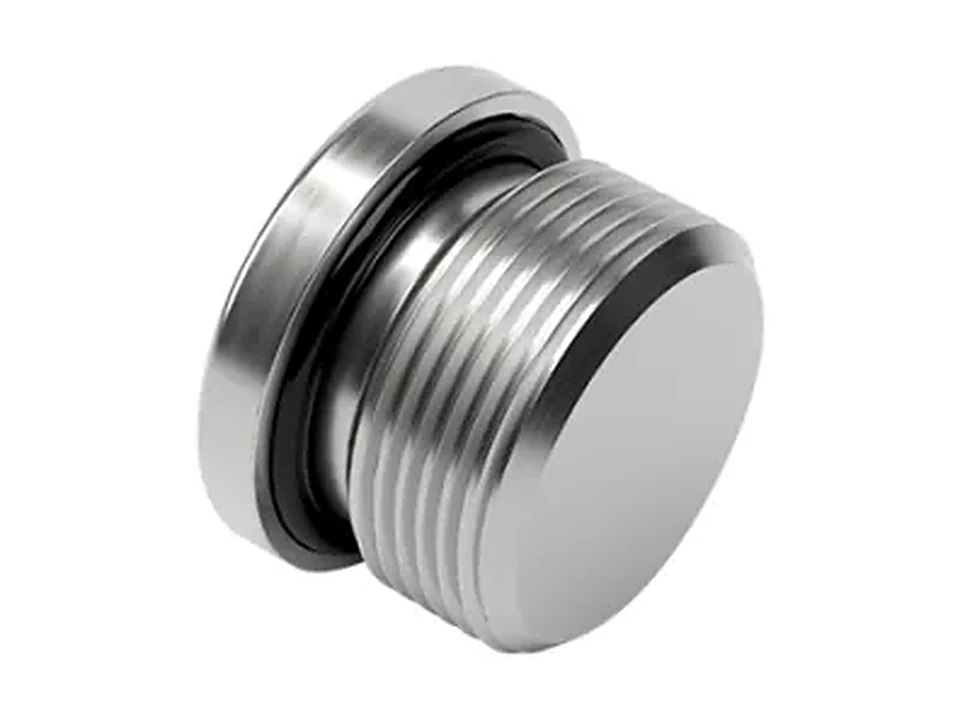
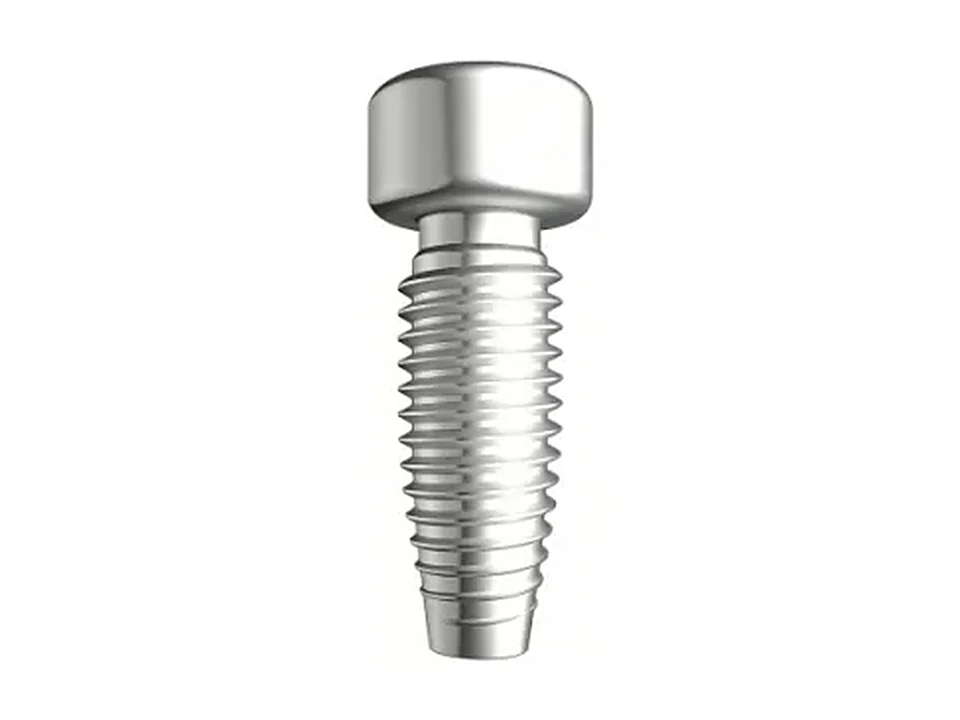
6 SKUsProcess holes in die castings must be sealed, otherwise they are channels for water and dust: pull-expansion and press-in plugs expand radially against the bore wall and seal to IP68, suiting permanent closure that is not opened repeatedly; conventional plugs suit locations that must be opened. Plain holes can be formed directly with trilobular self-forming screws, removing the pre-tapping step.
Four typical fastening locations in die castings
Battery pack housings, telecom cabinets, hydraulic and pneumatic parts, automotive structural parts - the weighting of sealing, strength and corrosion protection differs completely across the four.
Traction battery pack housing
A die-cast housing has both assembly threaded holes and process holes left by slide cores, and it must pass a leak test. The approach is inserts in the threaded holes, permanent pull-expansion plugs in the process holes, both verified to the IP68 definition, plus a galvanic corrosion check where the housing meets steel parts.
Telecom and server chassis
Aluminum die-cast enclosures have thin walls, many holes and high volume. Prefer self-tapping inserts (no pre-tapping, fewer steps); switch to key-locking inserts where parts are assembled frequently, to prevent pull-out; seal enclosure process holes with press-in plugs so dust cannot enter and disturb the cooling airflow.
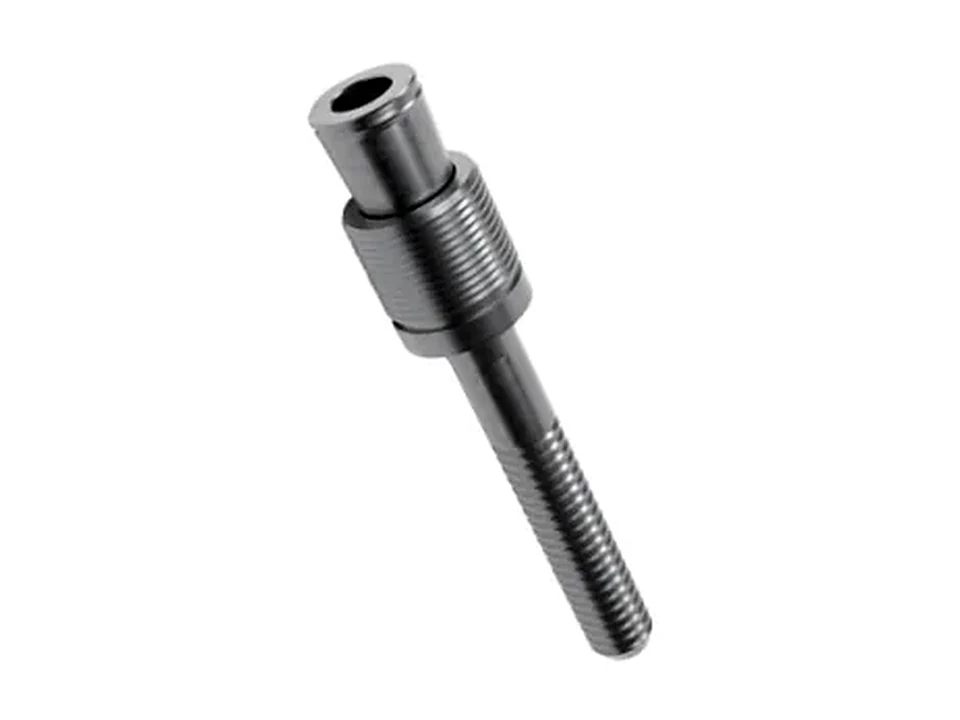
Aluminum parts for hydraulics and pneumatics
Here pressure is present and sealing is a hard requirement. All-metal pull-expansion plugs work up to roughly 300-500 bar depending on size and withstand about -40 to +100 degrees C (some series to +150 degrees C), which suits sealing process holes in hydraulic manifolds; selection must confirm pressure pulsation together with the medium.
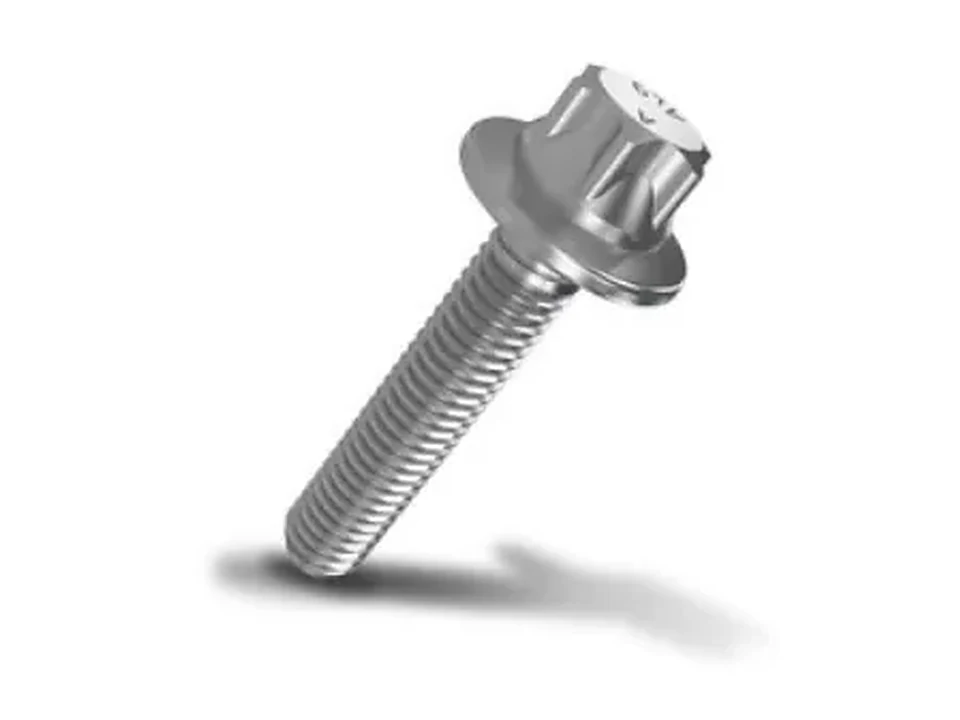
Automotive die-cast structural parts
Magnesium and aluminum die castings such as instrument panel frames and shock towers have dense connection points and see vibration for years. Thread inserts handle strength and repeated assembly, aluminum bolts and coatings handle galvanic corrosion, and self-forming screws cover plain holes assembled once - the three often appear on the same part.
The fastening logic of light-alloy die castings
First identify which kind of hole it is, then decide whether to reinforce, seal or tap directly.
Fastening in die castings has a clear classification: threaded holes for assembly, process holes that take no fastener, and plain holes that only need one forming step. Each type has its own answer, and mixing them causes trouble - tapping a process hole as if it were a threaded hole, or turning a load-bearing hole into a self-formed thread. The six sections below follow the thread insert, galvanic corrosion protection, sealing plug and self-tapping sections of the Light Alloy Die Casting Industry Handbook, together with the technical clauses of the related product pages on this site.
Step one: classify the holes, do not treat them alike
A die casting carries at least three kinds of hole: threaded holes that take a screw, process holes left by slide cores, drainage or inspection, and plain holes intended from the design stage to be formed by the screw itself. The three differ in dimensional accuracy, subsequent operations and acceptance criteria.
Once the holes are classified the scheme is largely fixed: reinforce threaded holes, seal process holes, self-tap plain holes. What remains is choosing the specific design - which depends on wall thickness, assembly frequency and whether sealing is required.
- Load-bearing threaded holes → thread inserts (wire / key-locking / thin-wall)
- Volume without tapping → self-tapping inserts (302 / 308)
- Process holes not opened → pull-expansion / press-in plugs (IP68)
- Process holes that must be opened → conventional plugs
- Plain holes assembled once → trilobular self-forming screws
Step two: choose the insert by wall thickness and assembly frequency
With sufficient wall thickness, a need for temperature and corrosion resistance and a wide size range, choose wire thread inserts: they go into a pre-tapped hole and hold by elastic expansion, come in SUS304/316, phosphor bronze and high-temperature INCONEL, and cover M2-M39. Where wall thickness is limited, use thin-wall inner-outer inserts, trading a smaller outer diameter for a larger internal thread.
Where parts are assembled often and there is a risk of the insert coming out with the screw, choose key-locking inserts: the keyed locking structure resists rotation and pull-out. Where volume parts should avoid an extra tapping step, choose self-tapping inserts - the 302 cuts with slotted cutting edges, the 308 clears chips through three round holes. The handbook states the reinforcement as class 8 and above, sometimes beyond class 12; actual values must be measured for the specific insert and base material combination.
Step three: galvanic corrosion needs both routes
The handbook states the principle clearly: high-strength aluminum alloy bolts sit close to magnesium alloy in potential, so the driving force for corrosion is small; sealant under the bolt head is physical isolation that breaks the circuit. The two routes act at different points - the material lowers the driving force, the isolation cuts the path.
Two extremes are common in practice: changing to aluminum bolts without isolation, which still corrodes in long-term damp conditions; and coating without changing the material, where a coating scratched during assembly turns the spot into a large cathode against a small anode and concentrates corrosion. The sound approach is to do both, and to write do not scratch the coating during assembly into the process.
Step four: choose the process hole plug by whether it will be opened
Conventional threaded plugs suit locations that must be opened, such as inspection or drain holes; pull-expansion and press-in plugs expand radially against the bore wall, seal more reliably, and suit process holes that are not opened repeatedly. The handbook rates the latter as almost 100% perfect sealing with virtually zero failure, with sealing up to IP68.
Selection also depends on pressure and temperature: all-metal pull-expansion plugs reach about 300-500 bar depending on size and withstand about -40 to +100 degrees C (some series to +150 degrees C). These are the ranges stated on the product pages; each project still needs confirmation by test against the medium, pressure pulsation and thermal cycling.
Step five: the limits of self-forming
Self-tapping, self-forming screws let the die casting keep only a plain hole; the screw is driven in to form the thread, the interference fit provides locking, and the pre-tapping step and its equipment disappear. The gain is in volume and cycle time; the limits are three: limited re-assembly (the thread comes from plastic deformation of the base material), risk of distortion in thin walls, and a narrower torque window than a machined thread.
That is why it suits locations that are assembled once and never opened. For parts that need service, an insert with a machine screw is more dependable - and this must be agreed with the structural engineer early in the project, because changing a die after volume production has started is a different order of cost.
Step 6: What to Put in the Acceptance Criteria
Inserts: pull-out force, torque resistance, go/no-go thread gauge (6H) and flushness of the face after installation; for self-tapping inserts also check that chips are fully cleared. Sealing plugs: pressure hold or leak test at the agreed pressure, immersion to the IP68 definition (conditions to be agreed), and a check that expansion has fully seated. Self-forming screws: breakaway torque, retention after repeated assembly, and cracking at the hole edge.
At assembly level: leak testing for housings, residual preload after vibration, and salt spray at dissimilar-metal joints (GB/T 10125). The casting itself should also get density or X-ray sampling - porosity near a threaded hole is usually the root cause of later stripping, and no fastener can compensate for it.
A total-cost optimisation partner from prototype design to after-sales
Six professional services cover selection, samples, validation and volume ramp-up, turning "will this screw work" into a verifiable engineering conclusion.

Fast engineering samples
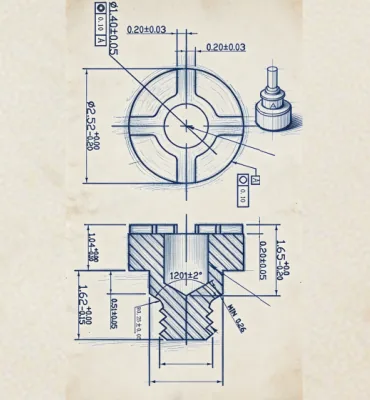
Professional training
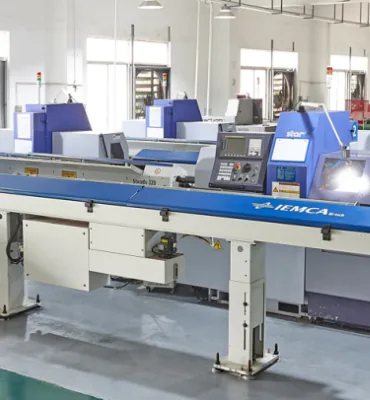
Professional testing services

Professional design consulting

Continuous process optimisation
Professional teardown analysis
From hole classification to leak validation
Validating a die casting means checking both whether the thread is strong enough and whether the hole is sealed; only the assembled unit settles either question.
Hole classification and drawing review
Mark threaded, process and plain holes, check wall thickness, hole diameter and position tolerance, and confirm which holes need reinforcement or sealing.
Insert and plug selection
Choose the insert design by wall thickness and assembly frequency, the plug type by whether it is opened and by pressure, then define the installation tooling.
Frozen installation process
Define stroke and torque for press-in, screw-in or pull-expansion; for self-tapping types, confirm pilot hole size and how chips are cleared.
Strength and sealing validation
Run pull-out, torque and go/no-go thread tests; pressure-hold the plugs at the agreed pressure and immerse them to the IP68 definition (conditions to be agreed).
Assembled unit and durability
Leak-test the housing, re-measure preload after vibration, and salt-spray the dissimilar-metal joints to GB/T 10125.
Common questions on light-alloy die casting fastening
Can you tap a die casting and drive a bolt straight in?
How do I choose between wire, key-locking and self-tapping inserts?
Must a magnesium die casting use aluminum bolts?
What seals a process hole, and can it reach IP68?
Can self-forming screws replace inserts?
Can a stripped thread in a die casting still be repaired?
What is the difference between the 302 slotted self-tapping insert and the 308 self-tapping insert?
When you say class 8 or class 12, do you mean the bolt property class or the thread strength?
Other industries under “Industry Solutions”
Continue below
Send the die casting drawing and hole list, and we will match parts to each hole type
Send the alloy grade, wall thickness, purpose of each hole (assembly or process), pressure and sealing requirements; we will determine whether to reinforce, seal or self-tap, and return matchable samples with the verification items.