
Magnesium alloy galvanic corrosion protection solutions|Same-family light metal selectionPhysical isolation by coatingSalt-spray verified
Driving a steel screw into a magnesium part is equivalent to burying a galvanic cell in the structure: magnesium is the anode, steel the cathode, and the condensate in between is the electrolyte. Corrosion does not appear on the day of assembly; it starts quietly at the thread root months later. This page follows the two routes given in the Light Alloy Die Casting Industry Handbook — reducing the potential difference and providing physical isolation — and sets out the verification method clearly.

Galvanic corrosion is not “corrosion protection done badly” but “material selection that ignored potentials”
Attributing corrosion of magnesium alloy to coating quality is the most common misjudgment. All five points below can be traced to the handbook text or a product page.
Magnesium's potential is so low that it is an anode by nature
The standard electrode potential of magnesium is about -2.37 V (vs. the standard hydrogen electrode), the lowest among common structural metals. This means that whenever it touches a metal with a higher potential — steel, copper, stainless steel — and a water film bridges the two, magnesium will inevitably act as the anode and be consumed. This is not a matter of coating quality: a coating only fails once it is breached, whereas galvanic corrosion occurs as soon as contact and electrolyte are present at the same time.
The handbook's first route: make the potential difference smaller
The handbook puts it this way: high-strength aluminum alloy bolts prevent galvanic corrosion because their potential difference to magnesium alloy is small. In other words it does not block corrosion, it changes the material — replacing steel bolts with aluminum bolts, also a light metal, compresses the potential difference between the two metals into a very small range so the driving force falls naturally. This is a change at the root, not a patch on the surface.
Route two: physical isolation, but guard against assembly scratches
The handbook gives a second route: adhesive on the bolt head works on the principle of physical isolation. The coating builds an electrochemical barrier between the two metals and breaks the circuit. The problem is that assembly itself damages this film — the socket scores the head, the thread cuts and scrapes, repeated assembly wears the edges. The isolation route must therefore be agreed together with the assembly method, otherwise it passes at the factory and fails once installed.
The area ratio sets the severity; the small anode is the dangerous one
The corrosion current density of galvanic corrosion rises with the cathode-to-anode area ratio: the larger the cathode and the smaller the anode, the higher the current density on the anode, and the more concentrated and faster the corrosion. An M4 aluminum bolt driven into a large magnesium die-casting is a tiny anode against a huge cathode — conversely, a magnesium screw driven into a steel frame is the worst combination of all. When assessing risk, look first at which part is small, not at which part is expensive.
Verification is not just salt spray — look at the thread root too
The salt-spray test (GB/T 10125) gives a comparable corrosion rate, but it is a uniformly exposed condition, while galvanic corrosion tends to concentrate in crevices and at thread roots — places the spray may not reach and that may not be visible even after the chamber. Verification therefore needs two things: a salt-spray test to standard for comparable data, and a teardown inspection to confirm there is no abnormal corrosion inside the thread pair.
The full range, mapped to the two protection routes
One is a material change (a light metal of the same family, reducing the potential difference), the other is isolation (a coating that breaks the circuit). The two can be combined but cannot replace each other — switching to aluminum bolts still calls for isolation, and a coated part still cannot be paired with a steel bolt.
Material change and isolation: representative specifications for both routes
2 SKUsOn the left, ZT68 high-strength aluminum alloy with a small potential difference to magnesium replaces steel, lowering the driving force at the source and incidentally cutting fastener weight to about one third of steel; on the right, a special coating builds an electrochemical barrier between dissimilar metals, for joints that must be mixed and cannot change material. The two can be combined but not substituted for each other.
The four places most prone to galvanic corrosion
Die-cast structural parts, consumer electronics housings, UAV components, automotive lightweight parts — what they share is a magnesium part mated to a dissimilar metal and long-term exposure to a humid environment.
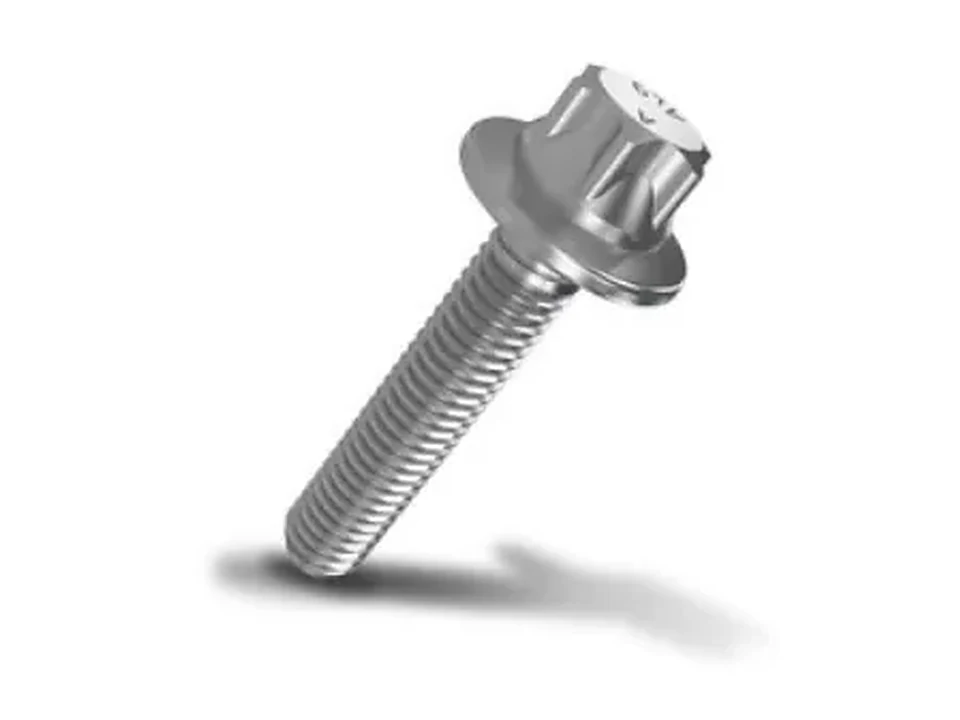
Magnesium alloy die-cast structural parts
Die-castings such as instrument panel frames, center console brackets and steering column brackets have dense fastening points, uneven wall thickness and often sit directly against steel brackets. The handbook's approach is to use high-strength aluminum alloy bolts together with adhesive on the head, applying both the potential-difference and the isolation route, and to seal the mating face separately to avoid liquid-trapping crevices.
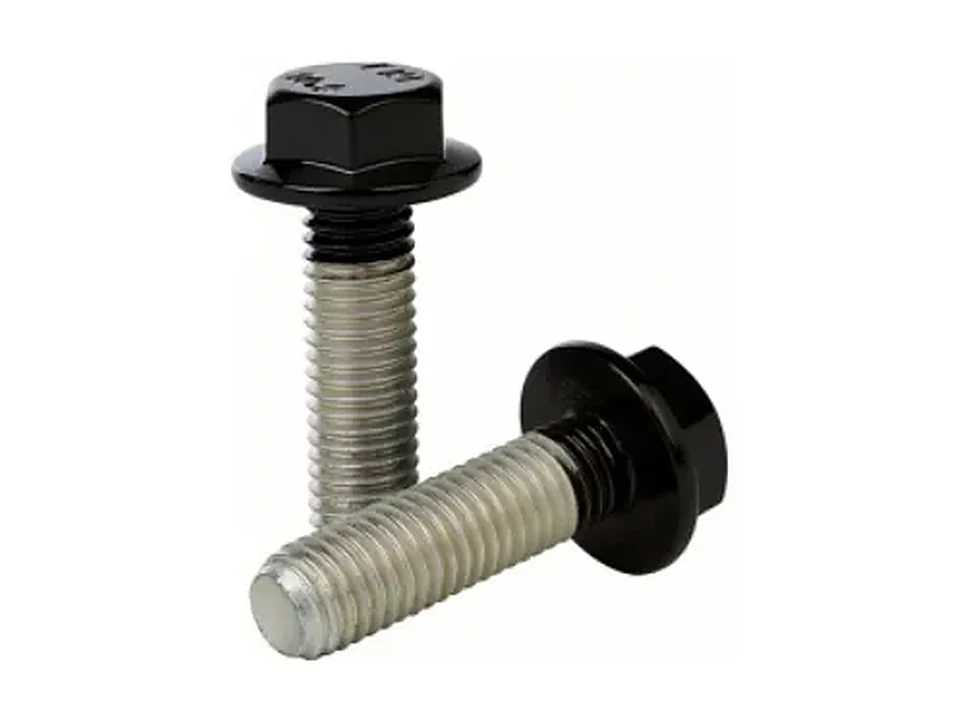
Laptop and consumer electronics housings
A magnesium alloy mid-frame has to carry the mainboard, hinge and shield cans, with many small screws (M1.4–M2). These locations are characterised by long-term hand contact (sweat is an excellent electrolyte), and corrosion usually appears first at the palm rest and edges. Material and coating must be considered together; a plating alone will not hold up.
UAVs and portable devices
Structural parts pursue extreme weight reduction, so magnesium is commonly mixed with carbon-fiber and aluminum parts. Carbon fiber conducts, and in contact with magnesium it forms a galvanic couple too — a point often missed because it does not look like a metal. The remedy is an insulating layer between carbon fiber and metal parts, or aluminum fasteners throughout.
Automotive lightweight components
Magnesium die-castings inside a vehicle face three challenges: temperature cycling, de-icing salt and cleaning agents. Corrosion here is usually not uniform but concentrated in the crevice under the bolt head and at the thread root. OEMs typically run salt spray to GB/T 10125 plus cyclic corrosion, together with teardown evaluation.
How to judge galvanic corrosion and select parts
Calculate the potential difference first, then the area ratio, and only then decide between a material change, isolation or a structural change.
Galvanic corrosion is a problem you can calculate, judge and verify — not something you settle by experience. The check order is fixed: are two metals present, is there an electrolyte, is there an electrical connection, and what is the area ratio? If any of the four answers is no, corrosion will not occur or can be largely mitigated. The six sections below follow the anti-galvanic-corrosion chapters of the Light Alloy Die Casting Industry Handbook and of the two new-energy-vehicle handbooks, the technical clauses of the two products on this site — the 600MPa aluminum alloy bolt and the magnesium alloy galvanic corrosion coating — and the GB/T 10125 salt-spray test method.
Step 1: Confirm whether the four conditions hold at the same time
Galvanic corrosion requires four things at once: two metals with different electrode potentials, a continuous electrolyte path (water film, condensate, cleaning liquid), an electrical connection between them (direct contact or through another conductor), and a sufficiently large cathode area. Remove any one and corrosion cannot occur — which is also where every protective measure acts.
In practice the condition most often overlooked is the electrolyte. Many structures are fine in a dry laboratory, then on the machine they see condensation from day-night temperature swings and show white rust within months. Judge by the real service environment, not by the assembly shop.
- Different potentials → change material or isolate
- Possible standing water/condensation → change the structure to drain or add sealing
- Direct conductive contact → add insulating washers and sleeves
- Cathode area far larger than anode → treat the small-anode spots first
Step 2: Work out which part is the small anode
Galvanic corrosion damages the anode, and the corrosion rate of the anode is proportional to the cathode area and inversely proportional to its own area. A small bolt against a large die-casting is the worst combination: the whole corrosion current concentrates on that bolt, pits appear at the thread root quickly and preload drops with them.
Conversely, if dissimilar metals must be used, make the small part the one with the higher potential (the cathode), not the lower one. This is why steel screws should not be used directly on magnesium alloy parts and aluminum parts should be used instead — moving the anode from the small screw to the large die-casting spreads the corrosion thin and markedly improves structural life.
Step 3: Route one — change material and bring the potential difference down
The first route the handbook gives is a material change: the potential difference between high-strength aluminum alloy bolts and magnesium is small, so replacing steel bolts with them removes galvanic corrosion to the greatest extent. The matching product on this site is the 600MPa-class aluminum alloy bolt, made from YF ZCJ's own ZT68 high-strength aluminum alloy with a tensile strength of about 630 MPa; the same series also offers 6056 aluminum alloy (about 420 MPa) for cost-sensitive applications.
A material change brings a second benefit: aluminum has about one third the density of steel, so weight drops noticeably at the same size. In lightweighting projects this route therefore often solves two problems at once rather than being a pure corrosion-protection cost. The price is aluminum's lower elastic modulus and lower shear strength than steel: thread engagement length and torque window must be recalculated, not taken from steel-bolt experience.
Step 4: Route two — isolation, but agree the assembly method at the same time
When dissimilar metals must be joined and the material cannot be changed, only isolation is left. The handbook says “adhesive on the bolt head works on the principle of physical isolation” — note the head, because the mating face between head and die-casting is exactly the crevice where water collects most easily. The coated part builds an electrochemical barrier between the two metals and breaks the circuit.
Isolation succeeds or fails at assembly: a socket scoring the head coating, the thread scraping the shank coating as it is driven, repeated assembly and disassembly wearing the edges — any breach re-creates a local galvanic couple, and corrosion spreads inward from the damaged point (large-cathode, small-anode effect). The drawing must therefore specify not only the coating but also process requirements such as “no tools that can score the coating may be used at assembly” and “recoat after disassembly”.
Step 5: Three more things the structure can do
First, drain and avoid trapped liquid: give the mating face a slope and add drain holes, so water does not sit under the bolt head. Second, break the electrical connection: add insulating washers and sleeves, or separate the bolt from the cathodic part with a non-metallic bushing. Third, close the gaps: a crevice both traps liquid and starts an oxygen concentration cell, so if the parts can mate flush, leave no gap.
These three measures add no fastener cost, yet they often work more directly than moving to a more expensive coating. Discuss them together with material selection during design review — that is more effective than adding a coating afterward.
Step 6: What to write into verification
The first level is the material level: neutral salt spray to GB/T 10125 for a comparable corrosion rate, aluminum alloy grades to GB/T 3190 and anodizing to GB/T 8013. The second level is the assembly level: assemble the two metals as actually mated and run salt spray or cyclic corrosion, observing the contact area and the thread root.
The third level is teardown evaluation: what the salt-spray chamber does not show, only disassembly will. Write the teardown checkpoints (e.g. 240 h, 480 h) and the acceptance criteria (no pits at the thread root, no build-up of white rust, preload loss within the agreed range) into the technical agreement. Only after these three levels can one speak of “standing up to expert review”.
A total-cost optimisation partner from prototype design to after-sales
Six professional services cover selection, samples, validation and volume ramp-up, turning "will this screw work" into a verifiable engineering conclusion.

Fast engineering samples
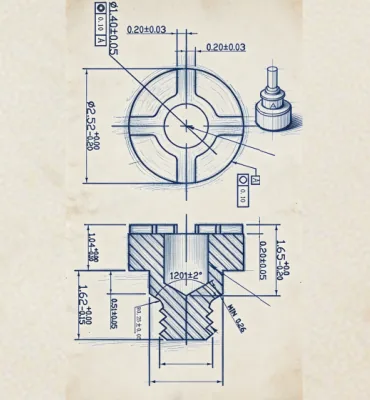
Professional training

Professional testing services

Professional design consulting

Continuous process optimisation
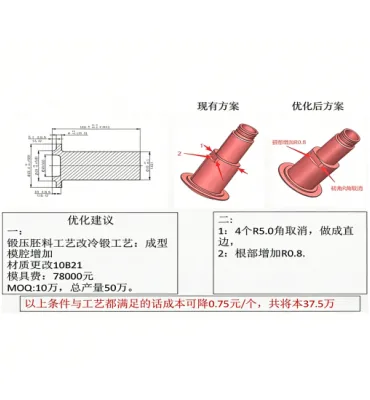
Professional teardown analysis
From potential assessment to salt-spray teardown
Galvanic corrosion must be verified on the real pair; a single part passing salt spray means nothing.
Mating pair and service conditions confirmed
Confirm both metal grades, the contact mode, whether water or condensation collects and the assembly frequency, and mark the small-anode locations.
Route selection
Change material first where possible (aluminum for steel); where not possible, isolate. The two can be combined but must be verified separately.
Structure and process review
Check crevices at the mating face, the drainage design, the fit of insulating parts, and whether assembly tools score the coating.
Salt spray and cyclic testing
Neutral salt spray to GB/T 10125, with temperature cycling and immersion added where necessary, recording how the contact areas behave.
Teardown and verdict
Teardown at the agreed intervals, checking for pits at the thread root, coating damage and preload loss, and issuing a verdict.
Frequently asked questions on magnesium alloy galvanic corrosion
Why can't ordinary steel screws be used on magnesium alloy parts?
With aluminum alloy bolts, is a coating still needed?
The coating is thick — why does corrosion still appear after assembly?
The salt-spray test passed — why do problems still appear on the vehicle?
Can ZT68 aluminum alloy bolts replace class 8.8 steel bolts?
Does contact between carbon-fiber parts and magnesium parts also corrode?
Continue below
Send the grades of both metals and the service environment; we calculate the potential first and then quote parts
Send us the magnesium grade, the mating metal, whether water or condensation collects, the salt-spray requirement and the assembly/disassembly frequency; we will judge whether to change material or isolate, and provide sample parts ready for the actual joint plus a salt-spray teardown verification plan.