Product overview
Service conditions:
Dedicated to high-vibration, heavy-load, loosening-prone environments (machinery, aerospace, new energy vehicles, industrial electronics, low-altitude economy), significantly improving vibration resistance and joint stability.
Six core benefits (from the PDF):
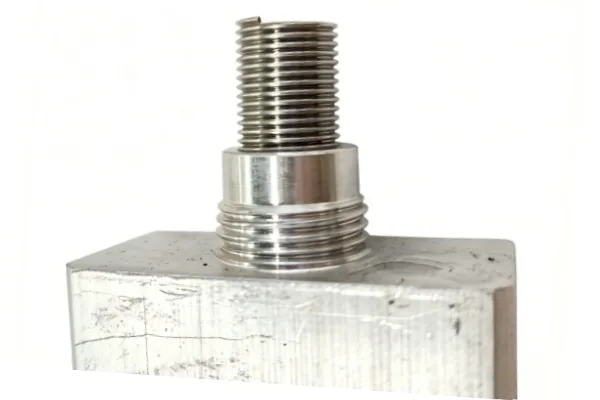
1. Repair and conversion
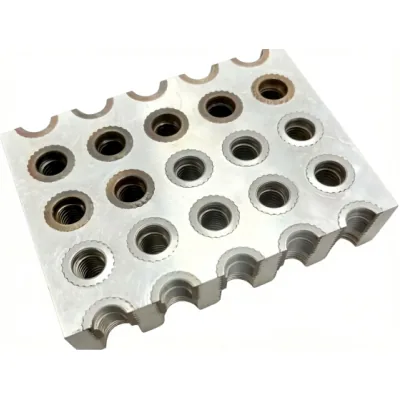
Damaged threaded holes in soft metals such as aluminum and magnesium can be repaired precisely, and conversion between thread standards is simple.
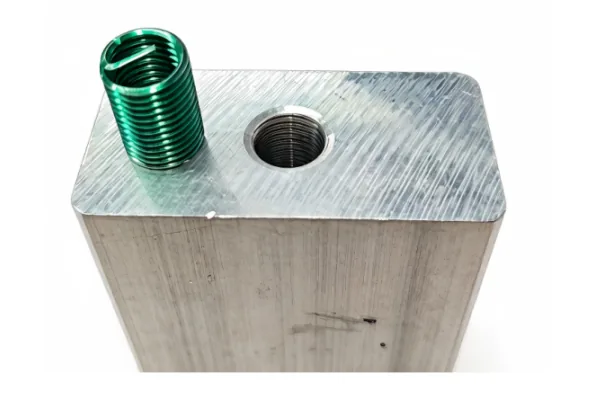
2. Longer substrate life
In equipment that is serviced regularly, bolts can be removed again and again without damaging the base material, resisting wear and extending service life.
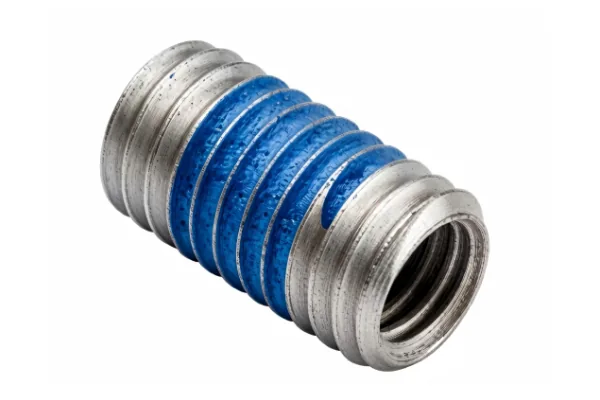
3. Better anti-loosening
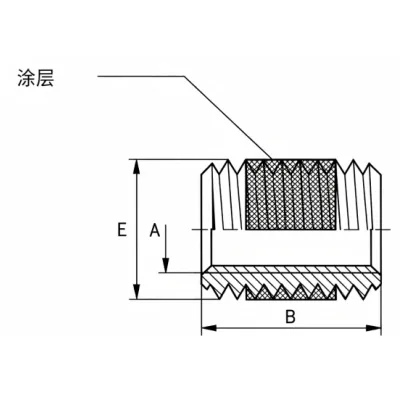
Where locking is required, thread inserts can be combined with various coatings to achieve good anti-loosening performance.
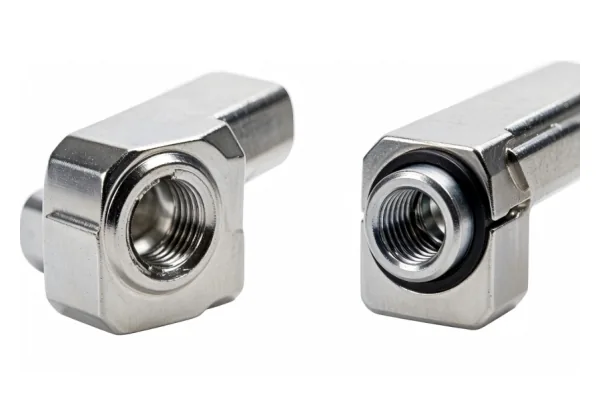
4. Stronger fastening in soft substrates
In soft materials such as plastics and wood, the larger contact area and reinforced material greatly increase pull-out resistance and durability.
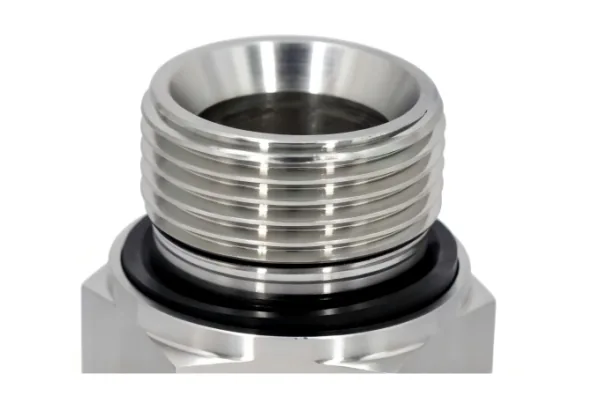
5. Long-lasting corrosion protection
Stainless steel or zinc-plated versions protect the thread effectively in highly corrosive environments such as marine equipment.
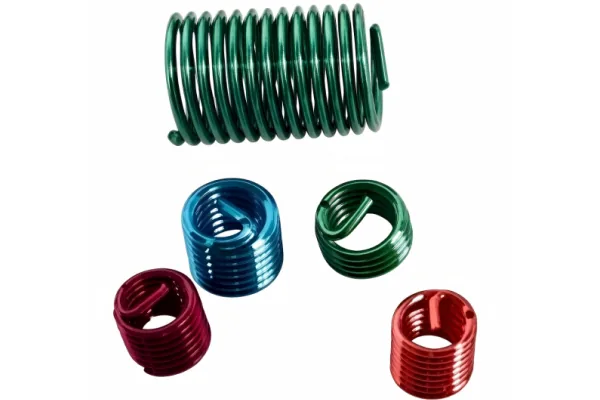
6. Higher overall equipment efficiency
Fast, accurate thread repair keeps the joint safe, cuts downtime significantly and improves equipment availability.
General installation notes:
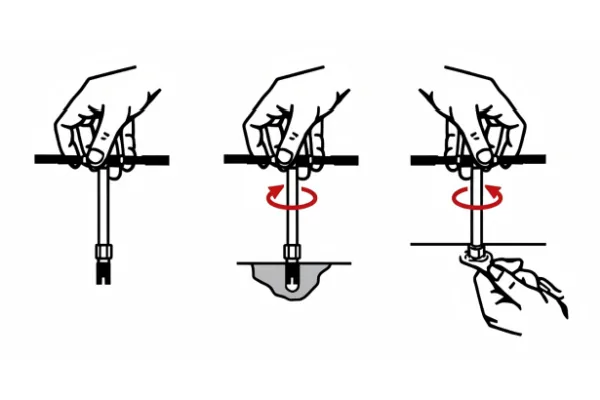
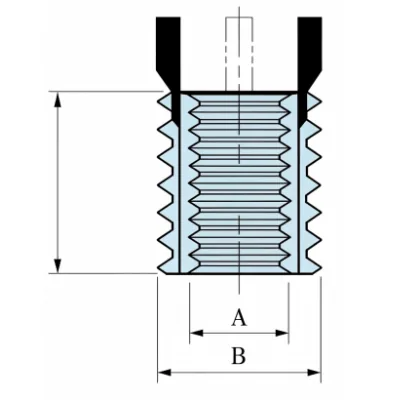
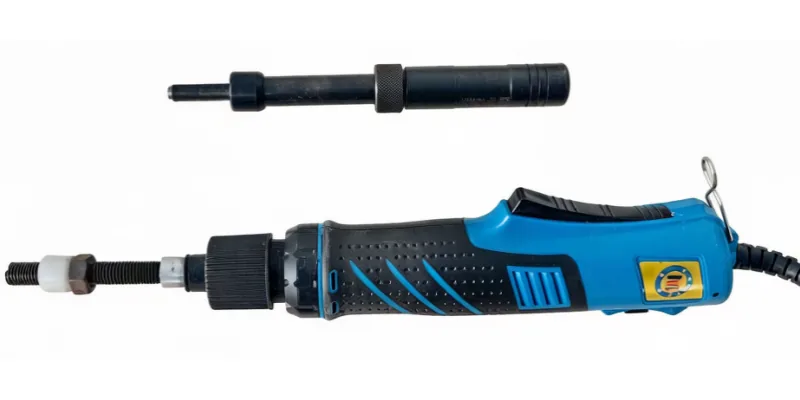
For volume installation use the dedicated insert driving tool, whose hex end accepts a manual tapping wrench or electric and pneumatic assembly tools, greatly increasing throughput. See the installation diagram for detailed operation.
Dedicated installation tools
Every self-tapping, keyed and flanged knurled insert can be supplied with dedicated installation tooling in manual, electric and pneumatic batch-assembly versions. The universal hex drive suits standard shop-floor tools, so no custom tooling is needed and line investment stays low.
Family 1: 308 (three-hole self-tapping insert)
Product features (from the PDF):
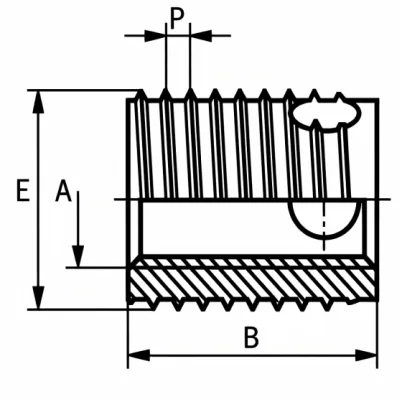
Cutting holes adapt to base materials with different machining behavior; the wall structure spreads the cutting force evenly across three cutting edges. Materials: 308 carbon steel and 308 stainless steel.
Applications:
General thread reinforcement and repair in metals and plastics, and heavy-load vibrating equipment.
308 drilling data (unit: mm, full data from the PDF chart)
| 308 internal thread |
Length B (mm) |
External thread E |
Drill diameter, aluminum |
Drill diameter, cast iron |
Min. drill depth (mm) |
| M3-0.5 |
6 |
M5-0.6 |
4.6-4.7 |
4.7-4.8 |
8 |
| M4-0.7 |
8 |
M6-0.8 |
6.0-6.1 |
6.1-6.2 |
10 |
| M5-0.8 |
10 |
M8-1.0 |
7.4-7.5 |
7.6-7.7 |
13 |
| M6-1.0 |
12 |
M10-1.25 |
9.3-9.4 |
9.5-9.6 |
15 |
| M8-1.25 |
14 |
M12-1.5 |
11.1-11.3 |
11.3-11.5 |
12 |
| M10-1.5 |
18 |
M14-1.5 |
13.1-13.3 |
13.3-13.5 |
22 |
| M12-1.75 |
22 |
M16-1.75 |
15.0-15.3 |
15.3-15.5 |
26 |
| M14-2.0 |
24 |
M18-2.0 |
17.0-17.2 |
17.3-17.5 |
28 |
| M16-2.0 |
24 |
M20-2.0 |
19.0-19.2 |
19.3-19.5 |
28 |
Family 2: 307 (three-hole self-tapping insert)
Product features (from the PDF):
Three-hole cutting geometry with wall thickness that spreads the cutting force evenly, developed specifically for very thin materials. Two pilot-hole standards are available, for aluminum alloy and for cast iron. Materials: 307 carbon steel and 307 stainless steel.
Applications:
Thin-wall die castings and thin plastic parts — thread reinforcement for small lightweight components.
307 drilling data (unit: mm, full specifications from the PDF chart)
| 307 internal thread |
External thread E |
Length B (mm) |
Drill diameter, aluminum |
Drill diameter, cast iron |
Min. drill depth (mm) |
| M3-0.5 |
M5-0.6 |
4 |
4.6-4.7 |
4.7-4.8 |
6 |
| M4-0.7 |
M6-0.8 |
6 |
6.0-6.1 |
6.1-6.2 |
8 |
| M5-0.8 |
M8-1.0 |
7 |
7.4-7.5 |
7.6-7.7 |
9 |
| M6-1.0 |
M10-1.25 |
8 |
9.3-9.4 |
9.5-9.6 |
10 |
| M8-1.25 |
M12-1.5 |
9 |
11.1-11.3 |
11.3-11.5 |
11 |
| M10-1.5 |
M14-1.5 |
10 |
13.1-13.3 |
13.3-13.5 |
13 |
| M12-1.75 |
M16-1.75 |
12 |
15.1-15.3 |
15.3-15.5 |
15 |
| M14-2.0 |
M18-2.0 |
14 |
17.0-17.2 |
17.3-17.5 |
17 |
| M16-2.0 |
M20-2.0 |
14 |
19.0-19.2 |
19.3-19.5 |
17 |
Family 3: 302 (slotted self-tapping insert)
Product features (from the PDF):
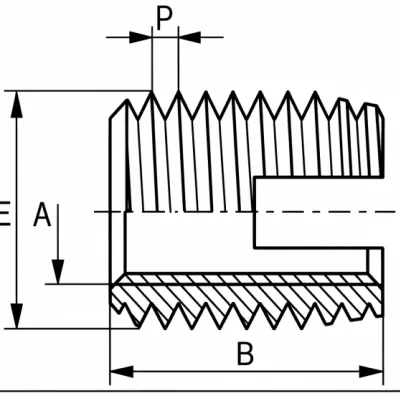
A general-purpose insert with cutting slots that covers the great majority of industry applications. The slots act as an inward spring, creating a built-in thread locking effect; where self-locking is not required, the 307/308 types are recommended. Materials: 302 stainless steel and 302 carbon steel blue zinc (302H stainless steel).
Applications:
General electronics and standard machinery — threaded joints that need slight self-locking.
302 drilling data (unit: mm, multi-material comparison table from the PDF chart)
| Item |
M2.5-0.45 |
M3-0.5 |
M3.5-0.6 |
M4-0.7 |
M5-0.8 |
M6-1.0 |
M8-1.25 |
M10-1.5 |
M12-1.75 |
M14-2.0 |
M16-2.0 |
| Nominal length |
6 |
6 |
8 |
8 |
10 |
14 |
15 |
18 |
22 |
24 |
22 |
| External thread |
M4.5×0.5 |
M5×0.5 |
M6×0.75 |
M6.5×0.75 |
M8×1.0 |
M10×1.25 |
M12×1.5 |
M14×1.5 |
M16×1.5 |
M18×1.5 |
M20×1.5 |
| Drill diameter, plastic |
4.0-4.1 |
4.5-4.6 |
5.3-5.4 |
5.8-5.9 |
7.1-7.2 |
9.0-9.2 |
10.6-10.8 |
12.6-12.8 |
14.6-14.8 |
16.6-16.8 |
18.6-18.8 |
| Drill diameter, aluminum |
4.1-4.2 |
4.6-4.7 |
5.5-5.6 |
6.0-6.1 |
7.3-7.5 |
9.2-9.3 |
11.1-11.2 |
13.0-13.3 |
15.0-15.3 |
17.0-17.3 |
19.0-19.3 |
| Drill diameter, cast iron |
4.2-4.3 |
4.6-4.8 |
5.6-5.7 |
6.1-6.2 |
7.5-7.6 |
9.3-9.4 |
11.2-11.4 |
13.2-13.4 |
15.2-15.4 |
17.2-17.5 |
19.2-19.5 |
| Min. drill depth |
8 |
8 |
10 |
10 |
13 |
17 |
18 |
22 |
26 |
26 |
27 |
Family 4: Keyed insert
Product features (from the PDF):
A solid bushing-style insert with internal and external threads and wedge or key bars at the top. The load is distributed evenly, preventing thread stripping, galling and corrosion failure; suited to high torque, high temperature and frequent disassembly. Available in carbon steel and stainless steel.
Applications:
New energy vehicles, aerospace and high-temperature, high-torque equipment that need a high-strength thread for repeated disassembly.
Keyed insert basic pilot-hole data (unit: mm, full data from the PDF chart)
| Internal thread |
External thread |
Length L (mm) |
Drill bit size (mm) |
Pilot hole depth (mm) |
| M2×0.4 |
M4×0.7 |
3 |
3.4 |
4 |
| M2.5×0.45 |
M4.5×0.75 |
3.81 |
3.9 |
5 |
| M3×0.5 |
M5×0.8 |
4.25 |
4.4 |
5.5 |
| M4×0.7 |
M6×0.75 |
5.25 |
5.5 |
6.5 |
| M5×0.8 |
M8×1.25 |
8 |
6.9 |
9.5 |
| M6×1.0 |
M10×1.25 |
10 |
8.8 |
11.5 |
| M8×1.25 |
M12×1.25 |
12 |
10.8 |
13.5 |
| M8×1.0 |
M12×1.25 |
12 |
10.8 |
13.5 |
| M10×1.5 |
M14×1.5 |
14 |
12.8 |
15.5 |
| M10×1.25 |
M14×1.5 |
14 |
12.8 |
15.5 |
| M12×1.75 |
M16×1.5 |
16 |
14.75 |
17.5 |
| M12×1.25 |
M16×1.5 |
16 |
14.75 |
17.5 |
Family 5: Flanged knurled insert
How it works (from the PDF):
A high-strength threaded insert with a flange and a knurled outer profile, pressed into a prepared hole with a dedicated tool to create an interference fit and rebuild a strong, durable internal thread.
Recommended base materials:
6061/6063 aluminum alloys, magnesium alloy, zinc alloy, engineering plastics and dense wood: these materials are ductile enough for the knurl to press in and lock firmly.
Base materials to avoid:
Heat-treated 7075 high-strength aluminum, steel, cast iron and titanium alloy: the base material is too hard for the knurl to bite, which damages tooling and inserts and prevents correct seating. For these materials a wire thread insert or plain threaded bushing is recommended.
Family 6: Internal/external thread insert
Product features (from the PDF):
Suited to formed light-alloy, cast-iron and steel components, providing a high-load, wear-resistant threaded joint for through or blind holes. Standard length series: 1A / 1.5A / 2A / 2.5A; the length is selected to match the shear strength of the workpiece and the property class of the bolt.
Selection calculation example (from the PDF):
Workpiece shear strength approx. 140 N/mm², screw size M6, property class 8.8: a 2A length is recommended — 2A = 2 × 6 mm = 12 mm
Insert standard length chart (unit: mm, full specifications from PDF figure 5)
| Internal thread A |
Mating external thread E |
1A overall length |
1.5A overall length |
2A overall length |
2.5A overall length |
| M3 |
M5 |
- |
4.5 |
6 |
- |
| M4 |
M6 |
- |
6 |
8 |
10 |
| M5 |
M7 |
- |
7.5 |
10 |
12.5 |
| M6 |
M8 |
- |
9 |
12 |
15 |
| M8 |
M12 |
- |
12 |
16 |
20 |
| M10 |
M14 |
- |
15 |
20 |
25 |
| M12 |
M16 |
12 |
18 |
24 |
30 |
Insert length selection table (by workpiece shear strength + bolt tensile class, full data from PDF figure 6)
| Workpiece shear strength (N/mm²) |
Screw tensile class |
M3 recommended length |
M4 recommended length |
M5 recommended length |
M6/M8/M10 recommended length |
M12 recommended length |
| ≥70 |
4.8 |
2A |
1.5A |
2A |
2A |
- |
| ≥140 |
4.8 |
2A |
1.5A |
2A |
1.5A |
1A |
| - |
6.8 |
2A |
1.5A |
2A |
1.5A |
1.5A |
| - |
8.8 |
2A |
1.5A |
2A |
2A |
2A |
| ≥210 |
6.8 |
2A |
1.5A |
2A |
1.5A |
1A |
| - |
8.8 |
2A |
1.5A |
2A |
1.5A |
1.5A |
| - |
12.9 |
2A |
1.5A |
2A |
1.5A |
2A |
| - |
14.9 |
2A |
2A |
2A |
2A |
2.5A |
| ≥280 |
6.8 |
2A |
1.5A |
2A |
1.5A |
1A |
| - |
8.8/12.9 |
2A |
1.5A |
2A |
1.5A |
1.5A |
| - |
14.9 |
2A |
1.5A |
2A |
1.5A |
2A |
Six key industries
YF ZCJ thread inserts serve high-end manufacturing across every sector — new energy, low-altitude aviation, robotics, consumer electronics and more — with a complete lightweight fastening solution:

New energy vehicles

Light alloys

Embodied intelligence

HPC & AI servers

Industrial electronics

Consumer electronics

Low-altitude economy
Aerospace
Industry challenge: project cost influence & the 15–85 cost rule
Core R&D pain point (from the PDF):
The decision window during concept and preliminary design is extremely short, yet that stage already fixes most of the product's lifecycle cost, while corrections during manufacturing, assembly and after-sales are very expensive: rework, failure repair and downtime carry huge hidden cost, and risk is badly mismatched with reward. A precise fastening solution must therefore be fixed early in development to avoid heavy downstream losses.
What the 15–85 cost rule means:
Most manufacturers look only at the visible 15% of cost — buying the fastener — and completely ignore the 85% of hidden total cost: design errors caught late, line rework, logistics and assembly losses, quality inspection, pre-assembly labor, after-sales repair and machine downtime. A wrong thread insert choice early on keeps multiplying the total lifecycle cost of the product.
YF ZCJ positioning: lifecycle total cost optimization from prototype design to after-sales
Six dedicated technical services prevent thread joint failure at the source and minimize the 85% of hidden cost:
Company strength and two production bases in Shenzhen and Hubei
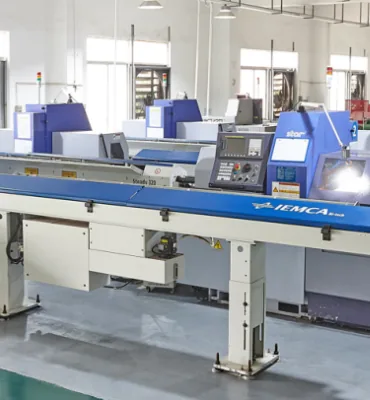
Founded in 2005, YF ZCJ has more than 20 years of experience in precision fasteners, a monthly capacity of up to 650 million pieces, two production bases in Shenzhen and Hubei, 26 valid technology patents, 360 employees and long-term partnerships with more than 100 brands. Core sectors: new energy vehicles, low-altitude UAVs, embodied-intelligence robots, industrial electronics, consumer electronics and aerospace.
Plant contacts (from the PDF)
YF ZCJ Precision Hardware (Shenzhen) Co., Ltd. (headquarters)
Address: 深圳市坪山区坑梓街道秀新社区坑梓中兴路13号C1栋101及整栋 13 号 | Tel: 0755-84061349
Zhichengjia Metal Technology (Xiangyang) Co., Ltd. (automotive plant)
Address: 湖北省襄阳市谷城县城关镇三岔路经济开发区 | Tel: 0710-7269998
Official website:
www.zcjtech.com
Mission / vision / goals (from the official website)
Vision: To be the innovation leader in fasteners, serving global customers with the lowest total cost and the fastest response
Mission: To provide products and fastening solutions our customers fully trust, helping them improve product performance and reduce total lifecycle cost
Goal: To become the number one brand in our niche and lead the world in single-product technology
Overall summary
The complete YF ZCJ thread insert matrix covers six families: 302 slotted self-tapping inserts, 307 thin-wall three-hole self-tapping inserts, 308 general-purpose three-hole self-tapping inserts, high-torque keyed inserts, flanged knurled press-in inserts and through-hole or blind-hole internal/external thread inserts. Together they meet every thread repair and reinforcement need in aluminum and magnesium alloys, plastics, wood, cast iron and ordinary steel. The whole range offers high vibration resistance, long-term locking, wear resistance against repeated removal and salt-spray corrosion resistance, suiting severe duty such as high loads, frequent disassembly, marine corrosion and high-temperature cyclic vibration. Six end-to-end technical services, backed by the production bases in Shenzhen and Hubei, deliver a one-stop lightweight fastening solution for new energy vehicles, low-altitude aircraft, industrial equipment and consumer electronics — eliminating 85% of hidden joint cost at the source and minimizing the customer's total lifecycle cost.