
R&D in Shenzhen, Mass Production in Xiangyang: Dividing the Two Bases
Executive Summary
Not divided by product category, but by change frequency — the more frequent the changes, the closer to the engineering team. Once this rule is set, what goes where becomes clear.
Table of Contents
Decide What to Move First, Then Where to Move It
Moving fastener capacity from the Pearl River Delta to central and western China has been a common phenomenon in recent years. Rising land and labor costs are one factor; tighter environmental requirements are another — approval for processes such as electroplating and passivation has become noticeably harder in the Pearl River Delta.
But not all processes are suitable for relocation. Cold heading, thread rolling, heat treatment and surface treatment have different requirements for the radius of supporting facilities, while die making and die trials depend on teams rich in hands-on experience. So the real question to answer is not "where to move to" but "which steps can leave Shenzhen".
What the Xiangyang Base Does
The Xiangyang base represents an investment of RMB 500 million and covers more than 40000 square meters. It is equipped with cold heading machines, CNC machining centers, fully automatic inspection lines and other equipment, focusing on high-strength fasteners and special-shaped cold-headed parts for new energy vehicles and rail transit.
The effect is most direct for customers in central China: logistics costs drop by about 30%, and delivery lead time is shortened from 15 working days to 7. This improvement mainly comes from transport distance, not capacity itself — building the plant next to customers saves the time spent on the road.
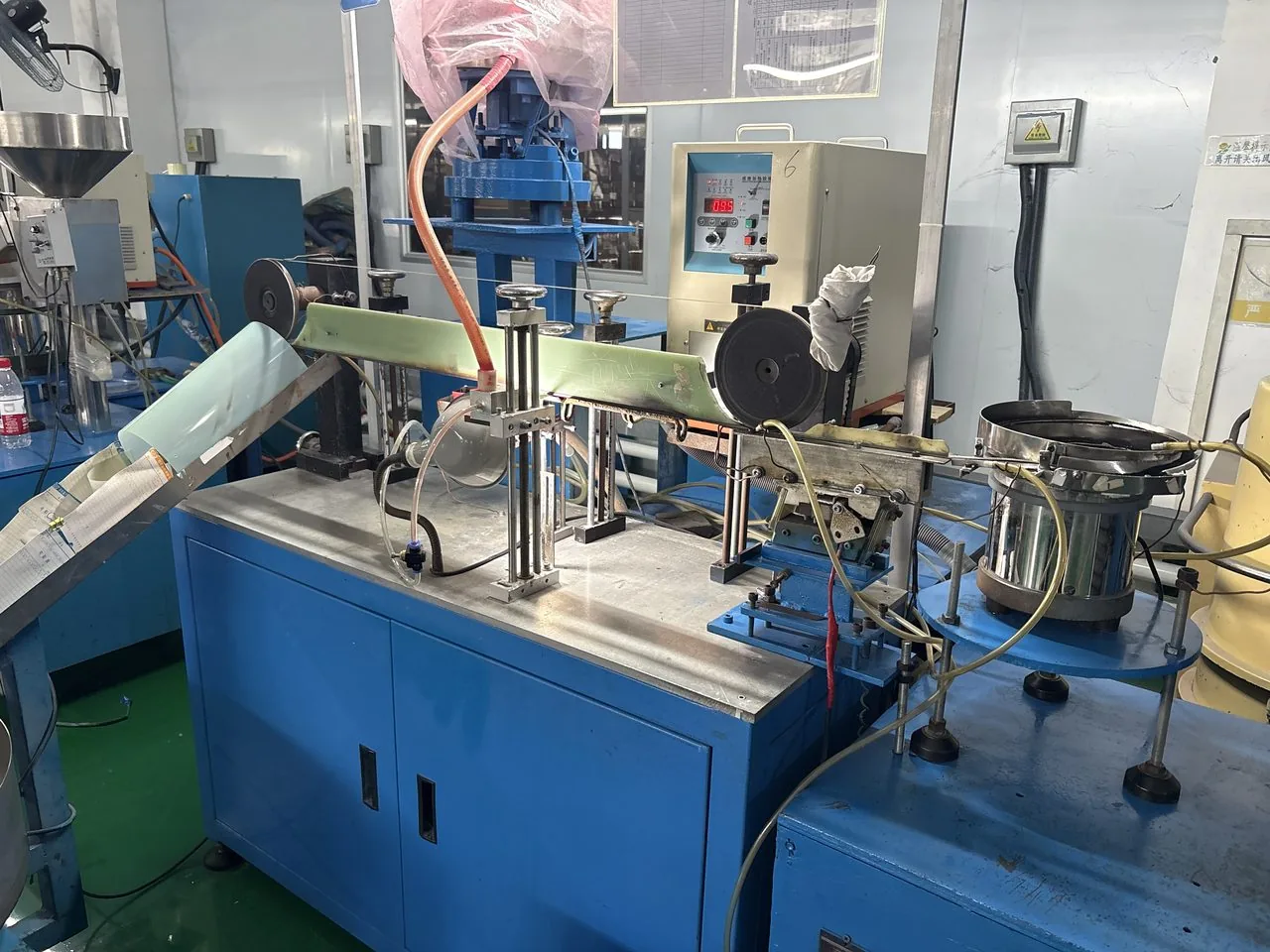
Workshop photo
What Stays in Shenzhen
The Shenzhen headquarters keeps both ends: front-end design and prototyping, and back-end small-batch, high-difficulty parts. Aerospace, semiconductor and medical orders share the characteristics of small batches, many variants and long validation cycles, requiring frequent back-and-forth between engineers and customers, so Shenzhen is the more reasonable location.
Xiangyang takes on the highly batch-oriented, standardized portion. This division is not cut by product category but by change frequency — if a drawing is revised three times a year, the part should not be far from the engineering team.
With the Division Set, the Challenge Is Coordination
The biggest cost of a dual-base setup is not freight but information synchronization. When the same drawing has one set of dies and one set of process parameters at each site, any change made on one side without notifying the other results in the same model with different performance.
The practice is to consolidate process parameters and die numbers into a single shared ledger used by both sites, with changes going through the same approval flow. The "one license, multiple addresses" policy solves the qualification issue, but real coordination still relies on process discipline, not policy convenience.
Problems Not Yet Solved
The structural problem of recruiting in central and western China is real — general workers are easy to hire, but technicians who understand cold heading machine setup and die maintenance are not. These people are currently transferred from Shenzhen; in the long run, they need to be trained locally.
The industrial supply chain gap also exists. Special materials, precision dies and some surface treatment services are still not complete around Xiangyang, and in the short term orders still need to make a round trip to the Pearl River Delta or the Yangtze River Delta. These costs must be counted into the total cost, not just labor and land.