
Medical and Semiconductor Fasteners: Cleanliness, Tolerance, Testing
Executive Summary
Cleanliness is a packaging problem, not just a washing problem, and micron-level tolerance comes from process capability, not from 100% inspection. Those two statements sum up the real difficulty in this field.
Table of Contents
Four Requirements, Four Process Steps
Requirements for fasteners in medical and life science applications are usually summarised as four: cleanliness, corrosion resistance, biocompatibility and precision control. The summary is correct but too abstract. On the production floor it translates into four concrete actions: how parts are cleaned and packed, which material and coating are chosen, verification of sterilisation tolerance, and the process capability of dimensional tolerances.
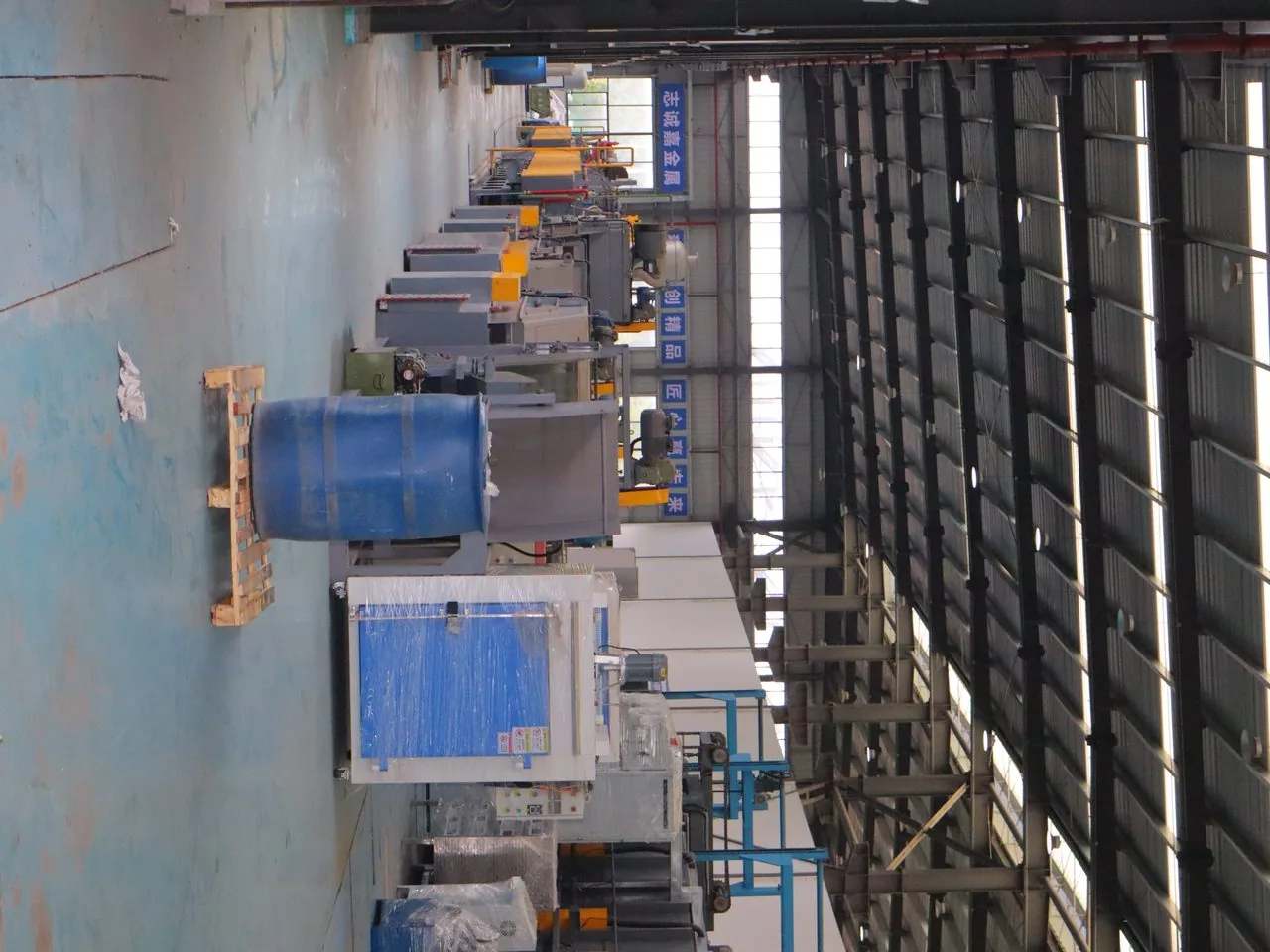
Optical medical instruments and surgical robots are two typical cases. The first fears contamination: a single greasy screw near the optical path is scrap. The second fears clearance: fasteners in joints must hold micron-level tolerance, otherwise backlash accumulates into positioning error.
Cleanliness Is a Packaging Problem
Many suppliers understand cleanliness as washing thoroughly. In practice, if the parts are then packed in ordinary plastic bags and opened in an ordinary workshop, the washing was wasted. The real control point is transfer and packaging after cleaning, not the cleaning tank itself.
Semiconductor equipment customers also ask about outgassing: some greases and coatings release organic compounds in vacuum and contaminate the chamber. Such requirements are rarely written on the drawing; they have to be asked for.
Tolerance: Process Capability, Not 100% Inspection
If micron-level tolerances were sorted out by 100% inspection, cost would run out of control, and the larger the volume the less viable it becomes. The workable approach is to hold process capability within an acceptable band and then monitor drift with sampling and SPC.
That requires traceable equipment and tooling condition. Our practice is to link the machining parameters for critical dimensions to the tool number, so that when drift appears we can identify the machine and the tool quickly instead of reworking and investigating an entire batch.
Inspection: What Else Is Done
Routine items include material composition, dimensions, corrosion resistance and mechanical properties. Medical work adds biocompatibility verification; semiconductor work focuses on magnetism and particle counts, to avoid contaminating magnetically sensitive structures.
The equipment includes a spectrometer, salt spray chamber, optical sorting machine, torque tester and magnetic particle inspection unit. The optical sorter does more than reject defects: it provides dimensional distribution data, and the shape of that distribution says more about process stability than any single part passing or failing.
Systems Are the Entry Ticket, Not the Selling Point
Medical and semiconductor customers almost always audit the five systems: ISO 9001, IATF 16949, ISO 14001, ISO 45001 and IECQ QC 080000. What they really care about is whether the systems are running. Audits look at the last three months of process records, the change management log and the closed loop on non-conforming product, not at the certificates themselves.
These custom parts currently go into optical microscopes, surgical robots, semiconductor lithography equipment and similar end products. The field is characterised by long validation cycles and high switching costs; once you are in the supply chain, cooperation usually lasts far longer than in consumer electronics.