
Thread Inserts Conductive metal inserts for plastic parts
Brass inserts
Product photos
Actual photos, not renders
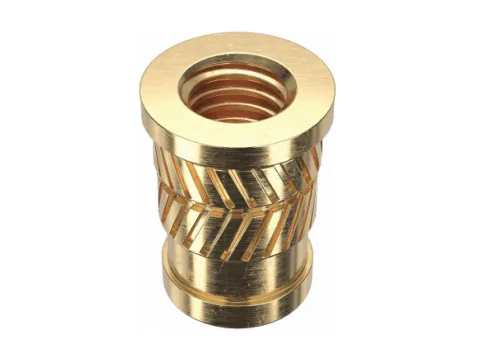
Illustration note
The image shows an actual part of this specification; appearance differs with surface treatment and head style, and the delivered part prevails.
Images are for appearance and structure reference; dimensions and tolerances are subject to the specifications and the applicable standards on this page.
Product description
Compiled from the existing technical description of this product on this site
Precision brass inserts are made of high-quality brass with excellent electrical conductivity and corrosion resistance. Multi-station precision turning and anti-slip knurling ensure a tight bond with plastic substrates, providing high pull-out strength and torque resistance. The thread tolerance is stable, making them suitable for plastic parts that require both threaded connections and electrical or thermal conductivity.
Specifications
The parameters listed on this page are subject to final inspection and the applicable standards; items not listed follow the customer drawing or the order agreement and are not committed by default.
| Material | Brass (H62 / H59) |
|---|---|
| Process | Precision turning |
| Surface treatment | Plain / nickel-plated / tin-plated (optional) |
| Standard | Per customer drawing / corporate standard; brass grade GB/T 5231; threads GB/T 196, GB/T 197 |
| Typical application | Conductive metal inserts for plastic parts |
Spec lookup
Look up your operating conditions directly across the 9 models in this series — front-end filtering only, no redirects, no URL changes
Filter results are based on the specification fields published on each model page and are for preliminary screening only; the final selection must be confirmed in light of the actual load, plate thickness and assembly process.
Drawings and documentation
Official catalogues and manuals are available for direct download; custom drawings are handled per project
Manufacturing process
The usual process route for this product family; actual operations follow the drawing and order requirements.
- Profile / wire formingCross-section and profile forming
- Wound or turnedInternal and external thread machining
- Heat treatmentReinforcement with wire thread inserts and metal inserts
- Surface treatmentZinc-plated / passivated / anodised
- 100% go/no-go gauge inspectionGo/no-go thread gauging and installation torque verification
Capacity & delivery
Taken from the company's published capacity and certification information; no unverified claims are included.
FAQ
Material, standards, surface treatment and installation points for this model; the data comes from the specification table on this page and from the national standards cited in the answers.
Q1What material does the brass insert use? What strength level does it reach?
Specified in the specification table on this page: material brass (H62 / H59). A material certificate and mechanical property test report can be provided with the goods; batch acceptance is carried out in accordance with the above specifications.
Q2Which surface treatments are available for the brass insert? How do I choose?
Surface treatment specified in the specification table on this page: self-colour / nickel-plated / tin-plated (optional). Different coatings differ in appearance, corrosion resistance and cost; select according to the service environment and the order agreement.
Q3In which applications is the brass insert used?
Typical applications listed in the product description on this page: electronic connectors and terminal blocks; plastic housings for switches and relays; chargers and power adapters; automotive electronic plastic parts. Overview: Precision brass inserts are made of high-quality brass with excellent electrical conductivity and corrosion resistance. Multi-station precision turning and anti-slip knurling ensure a tight bond with plastic substrates, providing high pull-out strength and torque resistance.
Q4What manufacturing process is used for the brass insert?
The process specified in the specification table on this page is precision turning. The process route follows the drawing and order requirements; first-article approval is provided before volume production.
Q5When is the brass insert required?
When threads in soft base materials (aluminium, magnesium, cast iron, engineering plastics) wear and strip after repeated assembly and disassembly, or when the thread strength is insufficient to withstand the assembly torque, an insert is used to form a wear-resistant, high-strength internal thread in the base material. This is a common solution for thread repair and reinforcement. This is a functional explanation; for verification refer to GB/T 196 and GB/T 197. Data for this model is subject to the specification table on this page. (Applies to this model: “brass thread insert”.)
Related models
Alternative sizes in the same series and cross-series fasteners commonly used together
Thread Inserts
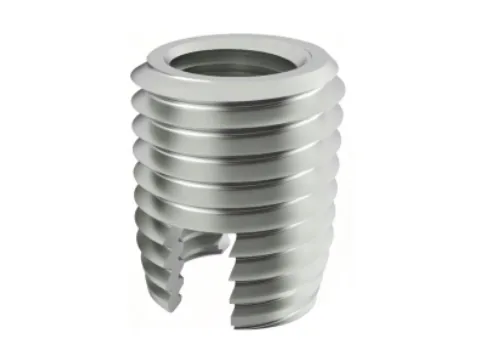
Type 302 slotted self-tapping inserts
The Type 302 slotted self-tapping insert is made of stainless steel or carbon steel, with a slotted structure that can form an internal thread by self-tapping, used to reinforce the thread strength of the base material. ...
Thread Inserts
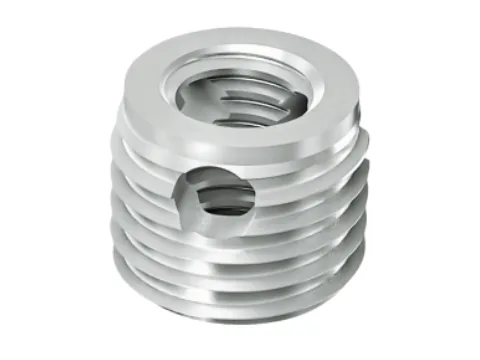
Type 308 self-tapping inserts
Type 308 self-tapping inserts
Thread Inserts
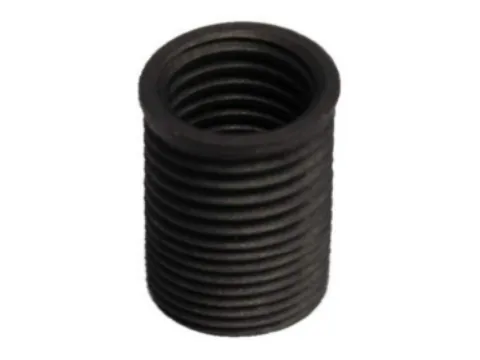
Thin-wall inner-outer thread inserts
The inner-outer thread spring insert is made of carbon steel or stainless steel, threaded both inside and out; it can reinforce the threaded holes of lightweight alloys such as aluminium and magnesium, reaching class 8 and class 10 strength. ...
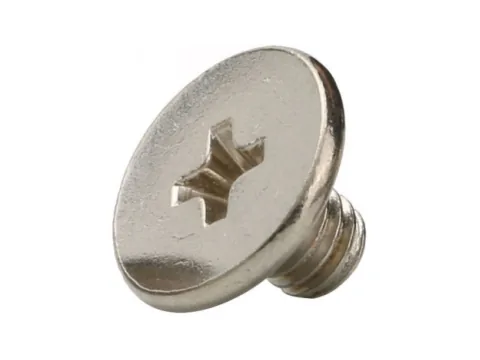
Direct Assembly
0.6 mm CM Phillips Ultra-Thin Ultra-Short Large-Head Micro Screw
A 0.6 mm ultra-thin large-head design that pushes space utilisation to the limit, effectively increasing the contact area and preventing the sheet from being pierced. Precision Phillips drive combined with a very short thread body.
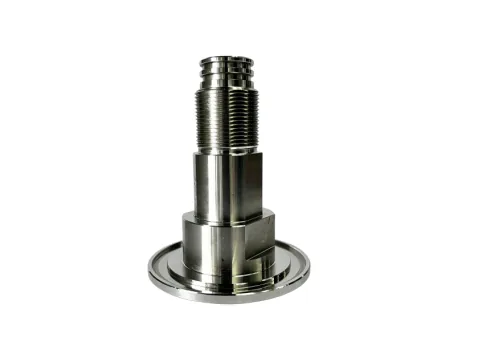
High-strength aluminium alloy parts
Aluminum 6061 Lifting Sleeve
The 6061 aluminium-alloy lifting sleeve is a core precision structural part for new-energy vehicle battery packs and is used mainly for lifting during battery pack assembly.