
Riveting and clinching series Flat head / Countersunk
Sealed clinch standoffs
Product photos
Actual photos, not renders
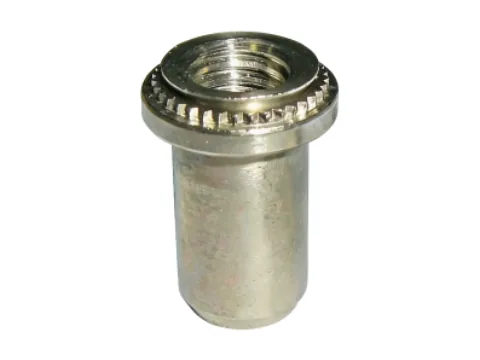
Illustration note
The image shows an actual part of this specification; appearance differs with surface treatment and head style, and the delivered part prevails.
Images are for appearance and structure reference; dimensions and tolerances are subject to the specifications and the applicable standards on this page.
Product description
Compiled from the existing technical description of this product on this site
The sealed clinch nut standoff uses a sealed design; after clinching into sheet metal it provides a waterproof, sealed internal-thread connection point (protection rating determined by actual testing). Suitable for housing-type structures that need a sealed threaded joint on thin sheet but cannot tolerate weld distortion.
Specifications
The parameters listed on this page are subject to final inspection and the applicable standards; items not listed follow the customer drawing or the order agreement and are not committed by default.
| Material | Carbon steel / stainless steel |
|---|---|
| Head type | Flat head / Countersunk (by model) |
| Mounting method | Clinching |
| Rivet thickness | 0.5mm ~ 4mm (by model) |
| Surface treatment | Zinc plated / Dacromet / Plain |
| Standard | Clinch / blind-rivet structure per customer drawing / corporate standard; threads GB/T 196, GB/T 197 (ISO 965-1); mechanical properties and mounting-hole dimensions per the manufacturer's datasheet (e.g. PEM system); sealed and waterproof (rating determined by actual testing) |
Spec lookup
Based on your operating conditions, look up directly among the 15 models in this series — pure front-end filtering, no redirects, no URL changes
Filter results are based on the specification fields published on each model page and are for preliminary screening only; the final selection must be confirmed in light of the actual load, plate thickness and assembly process.
Drawings and documentation
Official catalogues and manuals are available for direct download; custom drawings are handled per project
Rivet Nut Product Manual
Specifications, installation and performance data 4.6 MB
Manufacturing process
The usual process route for this product family; actual operations follow the drawing and order requirements.
- Cold heading / TurningSleeve body and flange formed in one step
- Tapping and deformation-zone machiningInternal thread and riveting deformation zone
- Heat treatmentTreated to material and strength requirements
- Surface treatmentZinc plated / Dacromet / Plain
- Spot checks of riveting performanceVerified pull-out force, shear strength and rivet thickness
Capacity & delivery
Taken from the company's published capacity and certification information; no unverified claims are included.
FAQ
Material, standards, surface treatment and installation points for this model; the data comes from the specification table on this page and from the national standards cited in the answers.
Q1What material is used for "Sealed clinch standoff (protection rating confirmed by testing)"? What strength level does it achieve?
Specified in the specification table on this page: material carbon steel / stainless steel. A material certificate and mechanical property test report can be provided with the goods; batch acceptance is carried out in accordance with the above specifications.
Q2How is "Sealed clinch standoff (protection rating confirmed by testing)" installed? What should be noted?
Noted in the specification table on this page: mounting by clinching; riveting thickness 0.5mm ~ 4mm (depending on model). Match hole diameter to sheet thickness per the recommended values for each model; a trial installation is recommended before batch production.
Q3What is the head type, drive and structure of "Sealed clinch standoff (protection rating confirmed by testing)"?
The specification table on this page notes: head types are flat head / countersunk head (by model). Structural details are subject to the drawing.
Q4What are the main features of "Sealed clinch standoff (protection rating confirmed by testing)"?
Features listed in the product description on this page: clinch fixing + sealed structure, waterproof and dustproof (rating determined by actual testing); provides a solid internal-thread connection point for thin sheet; no welding, avoiding thermal distortion and coating damage; high torsion and push-out resistance.
Q5Can "Sealed clinch standoff (protection rating confirmed by testing)" be used on aluminium sheet and other dissimilar metals?
Selection to requirements is possible, but contact between steel parts and aluminium sheet, or between dissimilar metals in humid environments, tends to cause galvanic corrosion. The usual practice is zinc plating or Dacromet coating to improve corrosion resistance, verified in critical applications by salt-spray testing to GB/T 10125 and under actual service conditions. (Applies to the model “sealed clinch nut standoff (protection rating determined by actual testing)”.)
Related models
Alternative sizes in the same series and cross-series fasteners commonly used together
Riveting and clinching series
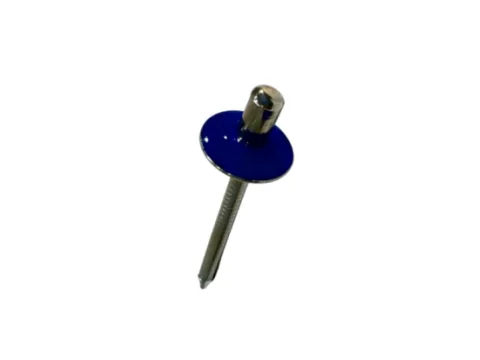
Type 69 Pre-applied Sealant Sealing Blind Rivet
The Type 69 pre-applied adhesive sealing rivet uses a pre-coating process; the adhesive cures after riveting to form a seal, providing waterproof and anti-loosening functions, fixed by riveting
Riveting and clinching series
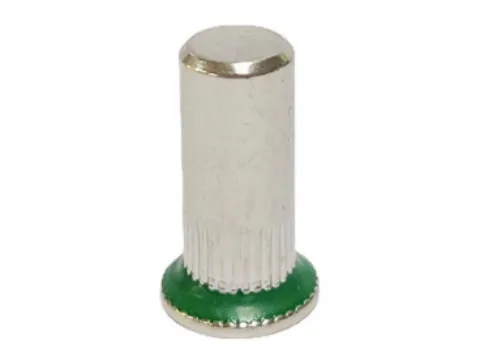
Pre-applied Adhesive Sealing Blind Rivet Stud
The Type 71 flat-head knurled sealing rivet nut adopts a flat-head knurled design with a sealing function. Installed by riveting, it provides a reliable threaded connection
Riveting and clinching series
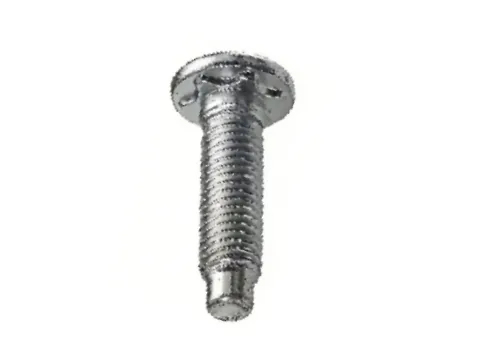
Grounding Self-Clinching Stud
Precision cold-headed from high-hardness carbon steel or stainless steel, with a unique toothed extrusion structure in the head. It is embedded in thin sheet by the clinching process.
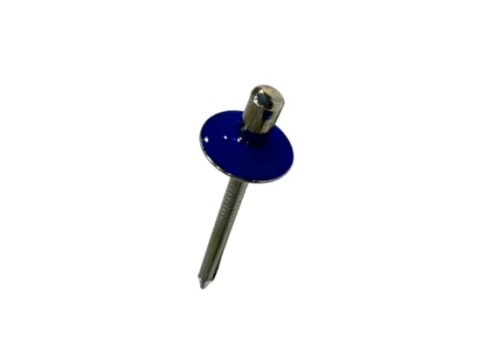
Anti-Loosening
Type 69 Pre-applied Sealant Sealing Blind Rivet
The Type 69 pre-applied adhesive sealing rivet uses a pre-coating process; the adhesive cures after riveting to form a seal, providing waterproof and anti-loosening functions, fixed by riveting
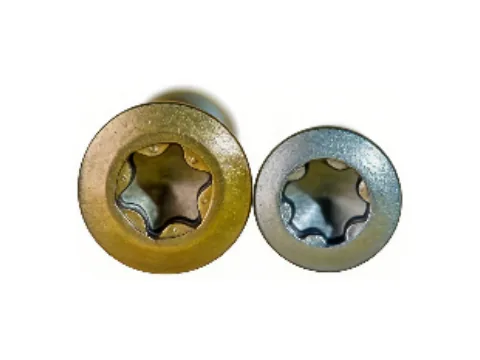
Insert Screws
TORX PLUS Insert Screws
Made of class 12.9 high-strength alloy steel