
Fastener Failures Explained: Loosening, Breakage and Corrosion
Executive Summary
Loosening, breakage and corrosion are the three most common fastener failures, and behind them lies a whole chain of issues in selection, installation, material and environment. This article breaks each one down - loosening through preload and locking, breakage through overload, fatigue, hydrogen embrittlement and material defects, corrosion through environment, material and protective coating - and gives practical countermeasures alongside.
Table of Contents
As an indispensable connecting component of industrial manufacturing, the operating condition of a fastener directly affects the stability and safety of equipment and engineering structures. In practice, fasteners frequently suffer loosening, breakage and corrosion, which not only reduce production efficiency but can also cause safety incidents. Many companies cannot identify the cause accurately when these faults appear, and struggle to solve them effectively. Drawing on years of industry experience, YF Zhichengjia Precision Hardware (Shenzhen) Co., Ltd. analyses the three common fastener faults - loosening, breakage and corrosion - in detail, explains how they arise and provides targeted solutions to help companies avoid the risk of failure and extend fastener service life.
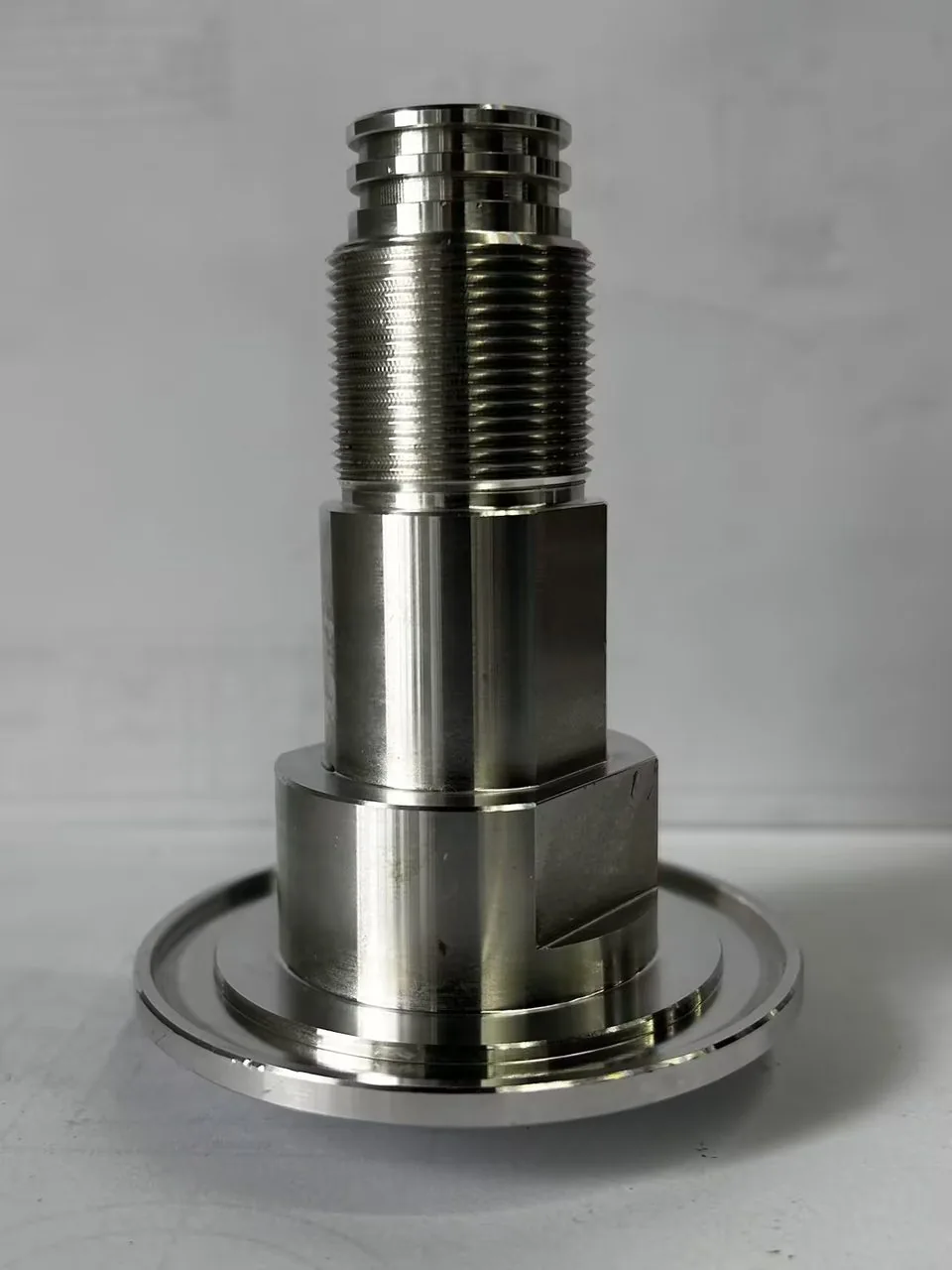
Fastener loosening: the most common fault, prone to chain reactions
Loosening is the most common fault in practical application, and is especially widespread under vibration, impact and alternating loads. Loosening not only displaces and deforms the joined parts and disturbs normal equipment operation, but in severe cases allows the fastener to fall out and cause a safety incident.
Main causes of loosening
- Insufficient preload: preload is the key to a reliable fastener joint. With insufficient preload a gap remains between the fastener and the joined part, and under external forces such as vibration and impact the threads slide relative to each other and the joint loosens. Many companies tighten by feel during installation without a professional torque tool to control preload, so preload ends up too low or uneven, which leads to loosening.
- Improper locking measures: under vibration and impact, if no effective locking measure is used, or the locking device is wrongly selected, it cannot prevent loosening. In high-vibration situations, for example, an ordinary spring washer alone gives poor locking and loosens easily; locking washers and lock nuts that are incorrectly installed also lose their effect.
- Thread wear or damage: worn, deformed or burred thread surfaces reduce fit accuracy between the threads and lower friction, so the joint slides easily under external force and loosens. Oil, dust and other contaminants on the thread surface also reduce friction between the threads and cause loosening.
- Deformation of the joined part: if the joined part deforms under load, the fastener preload drops and the joint loosens. A joined part made of soft material or of insufficient thickness, for example, deforms plastically during tightening, widening the gap between the fastener and the part and causing loosening.
Solutions for loosening
- Control preload: use professional torque tools such as torque wrenches and electric torque wrenches, and control preload according to the fastener size and property class and to the standard requirements, so that preload is even and sufficient. For important joints, a torque checking tool can verify whether preload meets the requirement and prevent both under-tightening and over-tightening.
- Select a suitable locking device: choose an effective locking device for the working conditions. In high-vibration and impact situations, lock nuts, locking washers, split pins and thread-locking adhesives can be used to strengthen the locking effect. A lock nut, for example, prevents loosening through the self-locking action of its thread structure; thread-locking adhesive fills the thread clearance and cures into a firm joint that resists loosening.
- Ensure thread quality: use fasteners with accurate threads and surfaces free of wear and burrs, and clean oil, dust and other contaminants from the thread before installation to raise friction between the threads. Where threads are worn or damaged, replace the fastener promptly rather than continuing to use it.
- Optimise the structure of the joined part: use a joined part of suitable material and sufficient thickness so that it does not deform under load. For parts that deform easily, add a shim to spread the pressure, reduce deformation and keep preload stable.
Fastener breakage: a severe fault that can cause safety incidents
Breakage is a severe fault, most often seen with high-strength fasteners and under dynamic loads. When a fastener breaks, the joined parts separate and equipment failure or an engineering accident can follow, with serious economic loss and safety risk.
Main causes of breakage
- Overload fracture: the load on the fastener exceeds its rated capacity. The main reasons are incorrect selection, where the property class or size chosen is too low to carry the actual load; a sudden increase in load beyond the capacity range of the fastener; and excessive preload, which puts too great an axial load on the fastener and causes it to break.
- Fatigue fracture: under alternating loads and vibration, a fastener subjected to repeated stress develops a fatigue crack, and as the crack propagates the part finally breaks. Fatigue is the main form of fastener fracture and occurs mostly in dynamic load applications such as mechanical transmission, rail transit and wind power. Fasteners on wind turbines, for example, carry alternating loads and vibration over the long term and are prone to fatigue fracture.
- Hydrogen embrittlement fracture: this occurs mainly with high-strength fasteners. Hydrogen absorbed during production, for example in electroplating or pickling, accumulates under stress, embrittles the metal and initiates fracture. Hydrogen embrittlement fracture is sudden, with no obvious warning, and is extremely harmful.
- Material or process defects: unqualified material containing inclusions, cracks or porosity, or an unsuitable production process such as unreasonable heat treatment or a cold heading defect, lowers the mechanical properties of the fastener and makes breakage likely. If the temperature is not properly controlled during heat treatment, for example, the fastener ends up too soft or too hard, toughness drops and breakage becomes likely.
Solutions for breakage
- Select correctly: choose the property class and size that suit the actual load, and make sure the load capacity of the fastener exceeds the actual load. For dynamic and alternating load applications, use high-strength, high-toughness fasteners such as 10.9 and 12.9 grade high-strength bolts, and carry out a fatigue strength check.
- Control preload: avoid over-tightening and use professional torque tools to keep preload within a reasonable range, reducing the axial load on the fastener. For important joints, check preload periodically and adjust it promptly.
- Prevent hydrogen embrittlement: for high-strength fasteners, apply a dehydrogenation process during production and keep hydrogen content strictly at or below 0.5 ppm to remove the risk of hydrogen embrittlement fracture. At the same time, choose a suitable surface treatment and avoid electroplating processes that readily absorb hydrogen; environmentally friendly processes such as Dacromet and zinc-aluminium coating can be used instead.
- Ensure product quality: use fasteners of qualified material and sound process from a reputable manufacturer such as YF Zhichengjia, whose products pass strict quality inspection and conform to standard requirements in both material and process, effectively preventing breakage caused by material or process defects. Check the appearance of fasteners before installation as well, and replace any with cracks or burrs promptly.
Fastener corrosion: shortens service life and reduces joint reliability
Corrosion is a common fault, especially in humid, corrosive or high-temperature environments. It causes rusting and oxidation of the fastener surface, lowers mechanical properties and corrosion resistance, shortens service life and, in severe cases, causes the fastener to fail and undermines joint reliability.
Main causes of corrosion
- Environmental factors: humidity, dust, salt spray and acid or alkaline media cause electrochemical and chemical corrosion of fasteners. Salt spray in a marine environment, for example, attacks fasteners strongly, while acid and alkaline media in chemical equipment react with the fastener and cause corrosion.
- Unsuitable material: the fastener material selected does not have enough corrosion resistance for the service environment. Ordinary carbon steel fasteners in a corrosive environment, for example, rust and corrode easily, and stainless steel fasteners of an inadequate grade can also corrode.
- Improper surface protection: a surface protection process that does not meet requirements, or a damaged protective layer, cannot protect effectively and allows corrosion. An unqualified zinc plating with too thin a layer, for example, flakes and rusts easily, and a protective layer scratched during installation exposes the fastener to the corrosive environment and starts corrosion.
Solutions for corrosion
- Use corrosion-resistant material: select a fastener material with corrosion resistance suited to the service environment. In humid and salt-spray environments use 304 or 316 stainless steel fasteners; in severely corrosive environments such as chemical plant and nuclear power, use 316L stainless steel, Hastelloy and other highly corrosion-resistant materials.
- Apply suitable surface protection: use environmentally friendly, highly corrosion-resistant processes such as Dacromet, zinc-aluminium coating and PTFE spraying to improve corrosion resistance. Dacromet coating, for example, withstands 500-2000 h of salt spray testing and effectively resists corrosive attack. Also make sure the process is qualified, with an even, undamaged layer.
- Strengthen environmental protection: for fasteners in harsh environments, reinforce protection with sealing, moisture-proofing and anti-corrosion measures to reduce environmental attack. In a marine environment, for example, seal the fastener so that salt spray cannot reach it directly, and clean and maintain it regularly to remove oil, dust and rust.
- Inspect and replace periodically: check fasteners regularly and deal with corrosion or rust promptly, for example by removing rust and re-coating the protective layer; replace fasteners that are badly corroded and cannot be repaired, so that joint reliability is not compromised.
Summary
In summary, fastener loosening, breakage and corrosion are mainly related to incorrect selection, non-standard installation, material or process defects and environmental factors. In practice, companies need to strengthen the selection, installation and maintenance management of fasteners and take targeted measures to avoid the risk of failure. As a professional precision fastener manufacturer, YF Zhichengjia uses high-quality materials and advanced processes, and its products pass strict quality inspection, so failures are effectively reduced; the company also provides professional troubleshooting solutions to help customers improve the stability and safety of equipment and engineering structures.