
How to Avoid False Tightening During Fastener Installation
Executive Summary
The torque is reached but the clamping force does not follow - that is false tightening, with no abnormality at first and sudden failure after vibration. Following the whole installation sequence, this article gives concrete practice for thread cleaning, stepwise tightening (30%/70%/100%), torque re-checking and on-site verification to eliminate this hidden fault.
Table of Contents
What false tightening is
A: False tightening is a hidden fault in fastener installation in which the torque value is reached but the effective clamping force is insufficient. It shows no abnormality shortly after assembly, yet under vibration or load changes it can quickly loosen and fail, leading to equipment malfunction and even safety incidents. The problem is usually caused by contaminants in the thread, improper installation methods, insufficient tool accuracy or fastener quality defects, and it is extremely harmful in high-end fields such as aerospace, new energy vehicles and robotics. Drawing on years of installation service experience, YF Zhichengjia has summarised a set of full-process preventive measures to help customers eliminate the risk of false tightening entirely.
Preparation before installation: thread cleaning and tool calibration
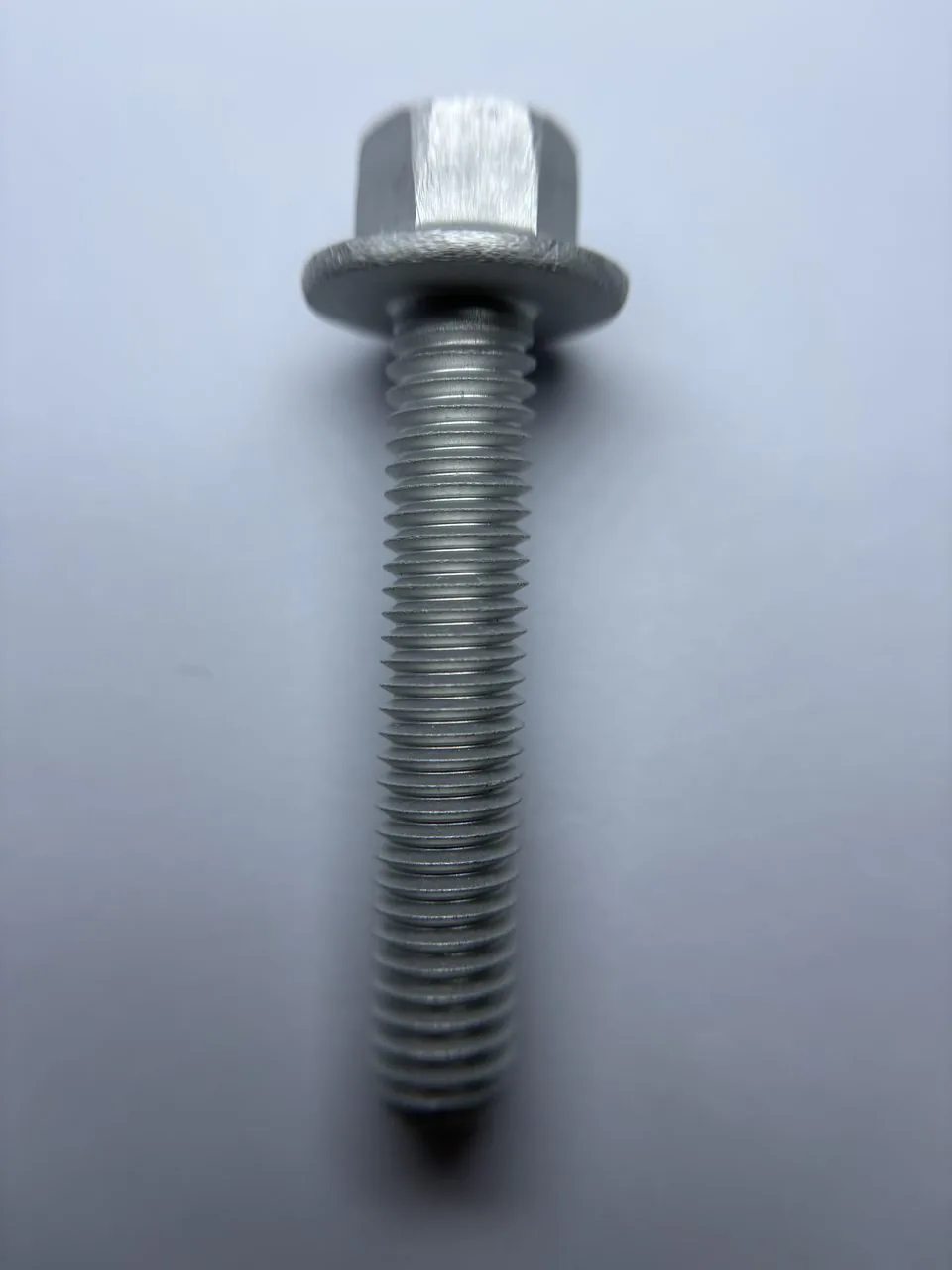
Preparation before installation is the foundation for preventing false tightening, and its core is clean threads, qualified fasteners and accurate tools. For thread cleaning, contaminants, rust and oil must be removed thoroughly from the bolt and from the tapped hole in the base material; a wire brush for rust removal, high-pressure air blasting or ultrasonic cleaning can be used to ensure smooth thread engagement. If the thread is damaged or deformed, repair it or replace the base part promptly, so that poor thread engagement does not lead to insufficient clamping force. For reused fasteners, magnetic particle inspection and visual checks should be used to detect thread damage, cracks and other defects, and unqualified fasteners must never be used. For tooling, use torque wrenches and torque screwdrivers of adequate accuracy, with an error within plus or minus 3%, and calibrate the tools regularly to keep torque values accurate. Before installation, calculate and set a reasonable torque value from the fastener size, material properties and base material hardness, rather than applying torque blindly.
Process optimisation: the stepwise tightening method
Optimising the installation process is the core step in avoiding false tightening. First, control how preload is applied and avoid applying full torque in one go: use stepwise tightening, first tightening to 30% of the rated torque, then re-tightening to 70%, and finally to 100% of the rated torque, so that the threads engage fully and clamping force is transmitted evenly. Second, standardise the operation: keep the torque wrench aligned with the fastener axis and avoid angular loading, which puts load on one side of the thread and causes poor engagement. For fasteners with washers, make sure the washer is flat and undistorted and installed the right way round, so that misalignment does not create uneven pressure on the contact face. Third, avoid interference from abnormal factors: never apply excess grease to the thread surface during installation, since too much grease lowers thread friction and lets the torque value be reached while actual clamping force falls short; and avoid installation at low temperature or in humid conditions, because low temperature reduces material toughness and moisture promotes thread corrosion, both of which affect clamping performance.
Installation strategy for different fasteners
Different types of fastener and application need a targeted installation strategy. Fine-thread fasteners have a large thread contact area and high load capacity, but are more sensitive to contaminants and installation accuracy: they need extra thread cleaning and a lower tightening speed to ensure full engagement. High-strength bolts need matching nuts and washers, and fittings of different grades must not be mixed; preload must be strictly controlled so that the bolt does not deform plastically through overload and lose clamping force. Fasteners in vibration conditions need, in addition to correct installation, accessories such as locking washers and thread-locking adhesive to raise fastening reliability and prevent later loosening from turning into false tightening.
Inspection and verification after installation
Inspection and verification after installation is the key means of detecting false tightening. Once assembly is complete, a torque re-check can be used: 10 to 15 minutes after tightening, measure the fastener torque again with a torque wrench. A clear drop in torque indicates false tightening, and the thread must be cleaned and the joint re-tightened. For fasteners at critical locations, devices such as ultrasonic thickness gauges and strain gauges can measure clamping force directly to confirm it meets the design requirement. Mark the installed fasteners and record installation time, torque value and operator, so that maintenance can be traced later.
High-quality fasteners are the root safeguard
Choosing high-quality fasteners is the root safeguard against false tightening. Every fastener produced by YF Zhichengjia passes strict quality inspection, with thread accuracy, dimensional tolerance and mechanical properties all conforming to industry standards, so that insufficient clamping force caused by fastener quality defects is avoided. The company also provides professional installation guidance: a dedicated installation plan is drawn up for the customer’s specific working conditions, and technical staff supervise the installation on site, detecting and solving problems promptly, so that fastening performance is assured through the whole process and the risk of false tightening is eliminated.