
2025 Fastener Market Tops RMB 160 Billion as Localisation Accelerates
Executive Summary
China’s industrial fastener market reached RMB 167.519 billion in 2025, up 20.7% year on year. Demand from new energy vehicles and wind power has surged, import substitution is accelerating and penetration of intelligent equipment has passed 52%, though raw material volatility and low concentration remain challenges.
Table of Contents
- Industry Size Passes RMB 160 Billion
- Demand from New Energy Vehicles Surges
- Wind Power Becomes a Major Growth Point
- Import Substitution Accelerates
- Intelligent Upgrading Spreads Across the Industry
- YF Zhichengjia’s Intelligent Manufacturing Practice
- Challenges Ahead
- Where the Industry Goes Next
Industry Size Passes RMB 160 Billion
2025 was a pivotal year for high-quality development of China’s fastener industry. Industry statistics show that the market for industrial fasteners in China rose from RMB 138.82 billion in 2024 to RMB 167.519 billion in 2025, up 20.7% year on year, far above the average of the previous five years. Behind the figure are rigid downstream demand, policy support and technical renewal, with import substitution and intelligent upgrading acting as the twin drivers of high-quality growth and opening opportunities for companies such as YF Zhichengjia Precision Hardware (Shenzhen) Co., Ltd.
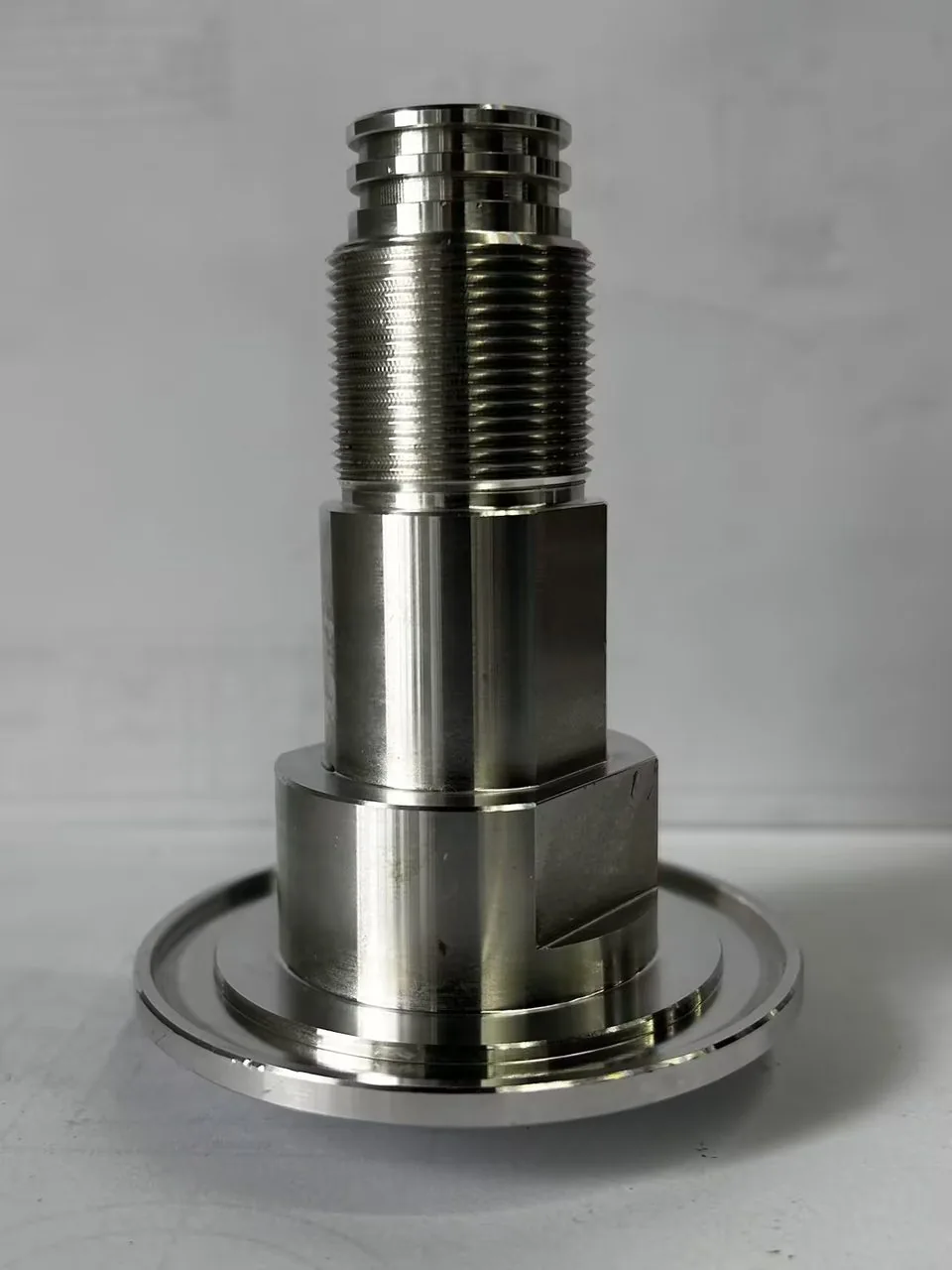
Demand from New Energy Vehicles Surges
Explosive growth in downstream emerging sectors is the core driver of industry expansion, and new energy vehicles stand out. Domestic sales reached 9.495 million units in 2024, up 37.9% year on year, and a single car uses more than 2,000 fasteners. Because of battery packs, electric drive systems and other core assemblies, high-performance fastener content is 15%-20% higher than in a conventional combustion car. At about RMB 350 of fastener value per vehicle, this segment alone accounts for more than RMB 33 billion of market. YF Zhichengjia responded to the demand by developing precision fasteners for new energy vehicles, using corrosion-resistant and lightweight materials and optimised geometries to meet battery pack sealing and high-strength electric drive connections, and has established cooperation with several new energy vehicle component suppliers.
Wind Power Becomes a Major Growth Point
Wind power is another major growth point for fastener demand. A 5 MW turbine requires about 22,000 high-strength threaded connections, worth more than RMB 400,000 per unit. New offshore wind capacity in China is expected to exceed 8 GW in 2025, creating more than RMB 32 billion of related fastener demand. Facing requirements for extreme environments, fatigue resistance and high reliability, YF Zhichengjia increased R&D spending and improved its processes; its wind-power high-strength bolts reach a tensile strength above 1200 MPa and pass stringent fatigue and salt-spray testing, suiting the high humidity and high corrosion of offshore duty, and have been recognised by wind industry customers.
Import Substitution Accelerates
Import substitution is accelerating, a marker of high-quality development. At one time more than 80% of fasteners in high-end fields such as aerospace were imported, and 2025 is gradually changing that. Under the Action Plan for Revitalising the Machinery Basic Parts Industry (2024-2027), the domestic content ratio of high-strength fasteners is to rise above 85% in 2025, from 72% in 2023. With policy support, domestic companies are investing more in high-end fastener R&D and breaking through material and process barriers, progressively replacing imported products. YF Zhichengjia focuses on precision fasteners for high-end manufacturing: its grade 12.9 high-strength bolts and stainless steel precision screws match international products in precision and mechanical properties, have replaced some imported parts, and are used in high-end equipment manufacturing and electronic devices.
Intelligent Upgrading Spreads Across the Industry
Intelligent upgrading is spreading and lifting both efficiency and quality. Penetration of intelligent equipment passed 52% in 2025, up from 35.6% in 2023. Leading companies have digitalised and automated the whole production flow, raising output per employee by more than 50%, cutting unit cost and shortening payback to 2-3 years. AI has brought a step change: AI vision inspection raises defect recognition accuracy to 99.9%, far better than the 2%-5% miss rate of manual inspection; and AI-optimised heat treatment parameters narrow hardness scatter to plus or minus 1 HRC and cut customer returns from 0.8% to 0.1%.
YF Zhichengjia’s Intelligent Manufacturing Practice
YF Zhichengjia is pushing its own transformation, investing dedicated funds to rebuild production workshops and introducing multi-station fully automatic cold headers, high-precision thread rollers and AI vision inspection, automating everything from raw material processing and forming to quality inspection. A digital management system monitors process parameters in real time and optimises the flow, raising efficiency while keeping quality stable. Finished-product acceptance on the intelligent lines is above 99.8% and efficiency is 30% higher than on conventional lines, lowering production cost and strengthening competitiveness.
Challenges Ahead
Despite the momentum, several challenges remain. Raw material volatility is the biggest pain point: carbon steel wire rod accounts for more than 60% of fastener production cost, and wire rod prices swung 23% year on year in the first half of 2025, squeezing many small and medium-sized enterprises below a 5% margin. Low industry concentration, pressure on SMEs to upgrade, and rising environmental and compliance costs also hold the industry back. Regional rules such as the EU carbon border adjustment mechanism, GCC certification in the Middle East and SNI certification in Southeast Asia raise compliance costs for exporters and set higher demands on product quality and environmental performance.
Where the Industry Goes Next
Facing both opportunity and challenge, YF Zhichengjia will hold to its principle of precision manufacturing and quality first, invest more in R&D, advance import substitution and intelligent upgrading, and focus on new energy vehicles, wind power and high-end equipment, optimising the product mix and adding value. It will also strengthen supply chain management against raw material volatility, follow international and domestic standards closely and improve product compliance, so that quality products and service help China’s fastener industry move from scale expansion to quality and efficiency and take a stronger position in the global market.