
Smart and Green Trends Drive High-Quality Fastener Industry Growth
Executive Summary
Industry 4.0 and dual-carbon goals are driving the integration of smart and green manufacturing in the fastener industry: intelligent inspection and digital control raise production efficiency, clean processes such as Dacromet reduce carbon emissions, and 3D printing opens a new path for customized production — the integration of the two is reshaping competitive logic.
Table of Contents
Smart and Green Development Becomes the Core Trend
With the in-depth advancement of Industry 4.0 and the guidance of the "dual carbon" goals, the integrated development of smart and green manufacturing has become the core trend in the fastener industry. More and more companies are increasing investment in intelligent equipment and pushing digital control of the entire production process, while accelerating the upgrade to clean production processes and reducing carbon emission intensity. The industry is gradually moving away from the traditional labor-intensive production model and entering a new stage of high-quality development. This transformation not only improves production efficiency and product quality, but also reshapes the competitive landscape of the industry, providing a differentiated competitive path for companies with technological advantages.
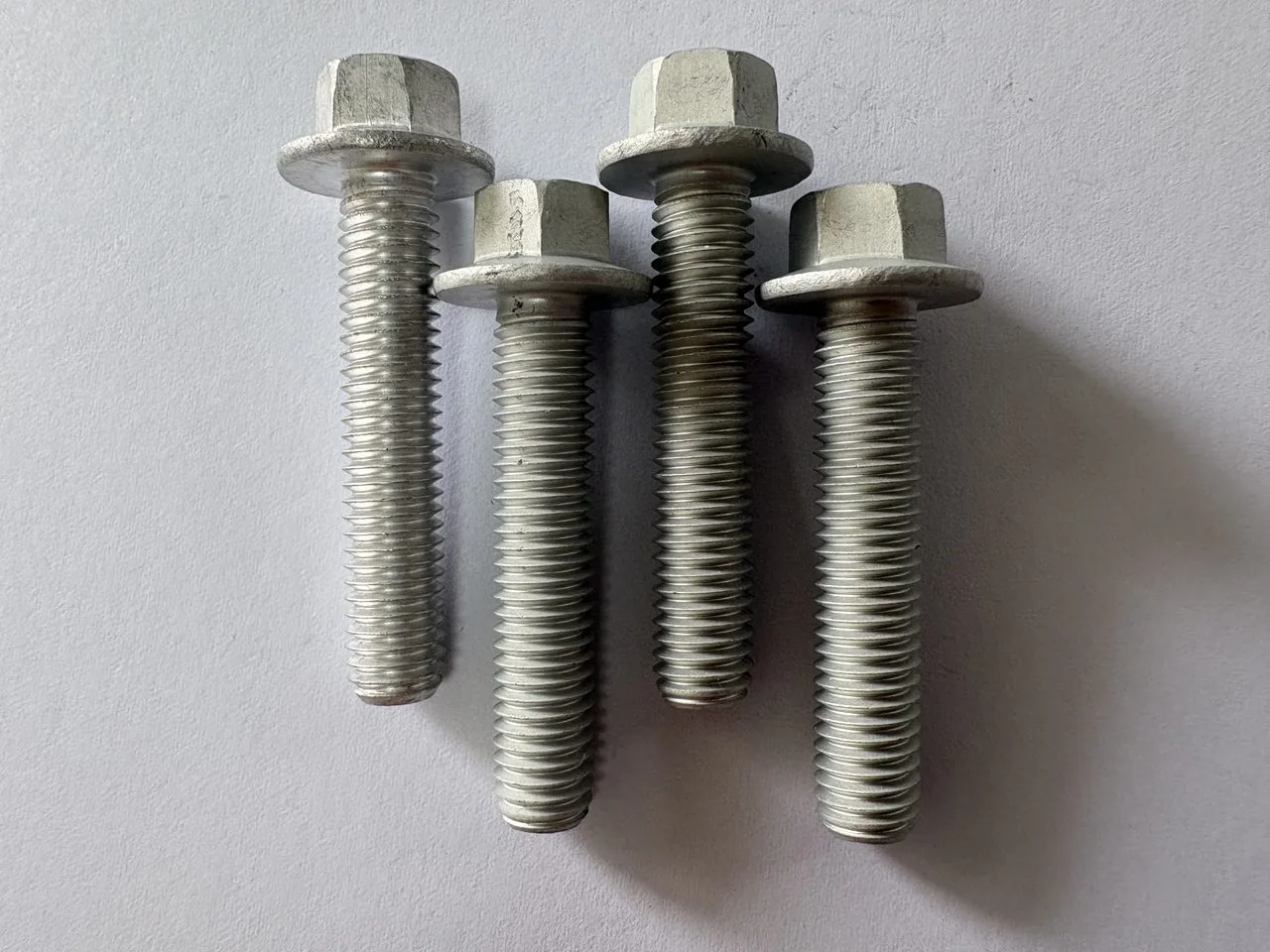
Smart Upgrading Enhances Competitiveness
Smart upgrading has become a key lever for companies to enhance their core competitiveness. With the spread of smart manufacturing, the penetration of precision fasteners in automated assembly scenarios keeps rising and is expected to reach 37% in the industrial equipment monitoring field by 2030. Leading companies in the industry are introducing fully automatic precision forming equipment, intelligent inspection systems and digital management platforms to achieve whole-process intelligent control from raw material processing to finished product delivery. Through real-time data collection and analysis, companies can precisely adjust production parameters, raise product tolerance control to the micron level, and greatly reduce labor costs and defect rates. At present, the product pass rate of leading companies' smart production lines has stabilized above 98%, and production efficiency is more than 50% higher than traditional lines. Some companies have also integrated sensor technology to develop intelligent fastening systems, driving fasteners from "passive connection" toward "active monitoring"; by 2030, the penetration of intelligent fastening systems in industrial equipment is expected to reach 15%, creating a new market of USD 8.2 billion.
Green Transformation, the Necessary Path
Green development is the necessary path for the industry's transformation. Under the global "dual carbon" wave, the full implementation of the EU Carbon Border Adjustment Mechanism (CBAM) requires fastener manufacturers to accelerate the upgrade to clean production processes, and the industry's overall carbon emission intensity must be reduced by 31% before 2027 to maintain export competitiveness. Domestic policies also set clear requirements for the green development of the fastener industry, pushing companies to phase out high-energy-consumption, high-pollution capacity and promote low-carbon production technologies. At present, the industry's green transformation focuses on three areas: first, material greening — promoting lightweight materials such as aluminum and titanium alloys to reduce steel consumption, while increasing the use of recycled materials to reduce raw material consumption; second, process greening — optimizing heat treatment and surface treatment processes, adopting eco-friendly processes such as chromium-free passivation and dry-film lubrication to replace traditional high-pollution processes and reduce wastewater and exhaust emissions; third, energy greening — using photovoltaic, wind and other renewable energy sources to cut carbon emissions in production, with some leading companies already achieving 100% clean energy coverage of production electricity.
Integration Reshapes Competitive Logic
The integrated development of smart and green manufacturing is driving the fastener industry toward a new competitive logic. Small and medium-sized capacity that relies on low-price competition lacks the capital and technical support to complete smart and green upgrading and is gradually being eliminated by the market; companies with technological reserves and financial strength improve production efficiency through smart manufacturing and reduce compliance costs through green transformation, forming a double competitive advantage. Data show that in 2025 the average R&D investment ratio in China's fastener industry rose to 4.7%, with surface treatment technology, intelligent joining systems and low-carbon production processes as the main research directions, and the industry as a whole shows a "strong get stronger" competitive pattern.
3D Printing Opens a New Path
The spread of 3D printing technology provides a new path for the industry's smart and green transformation. 3D printing enables rapid prototyping of customized fasteners, with manufacturing costs 40% lower than traditional processes, while reducing material waste and fitting the concept of green production. It has already achieved large-scale application in the field of medical implants, with the application share rising to 12%. In the future, as 3D printing technology continues to mature, its applications in aerospace, automotive and other fields will expand further, driving the fastener industry toward customization, low carbon and intelligence, and injecting new momentum into the industry's high-quality development.