
General Rules for Threaded Fastener Tightening: Practical Interpretation of GB/T 16823.2
Executive Summary
GB/T 16823.2 is the top-level general rule for threaded fastener tightening in China, specifying the calculation relationships and implementation requirements among tightening torque, preload and friction coefficient. This article interprets the standard in engineering order: scope, torque calculation path, friction-state definitions, tightening process requirements, and acceptance criteria, and gives clauses that can be dropped directly onto drawings and process cards.
Table of Contents
- The Standard Exists, Yet Production Still Tightens by Old Torque
- Scope and Positioning of the Standard
- Core Relationships: Three Formulas Supporting One Logic
- Friction State Must Be Defined on the Drawing
- Tightening Implementation Requirements and Verification
- How to Turn the Standard Into a Technical Requirement
- Conclusion
The Standard Exists, Yet Production Still Tightens by Old Torque
A drawing reads "M12×1.75, grade 10.9, torque 90 N·m." Asked where the number 90 comes from, the answer is usually "inherited from the previous product." This is exactly what GB/T 16823.2-1997, General Rules for Tightening of Threaded Fasteners, aims to solve: turn the determination of tightening torque from experience hand-down into evidence-based calculation and verification.
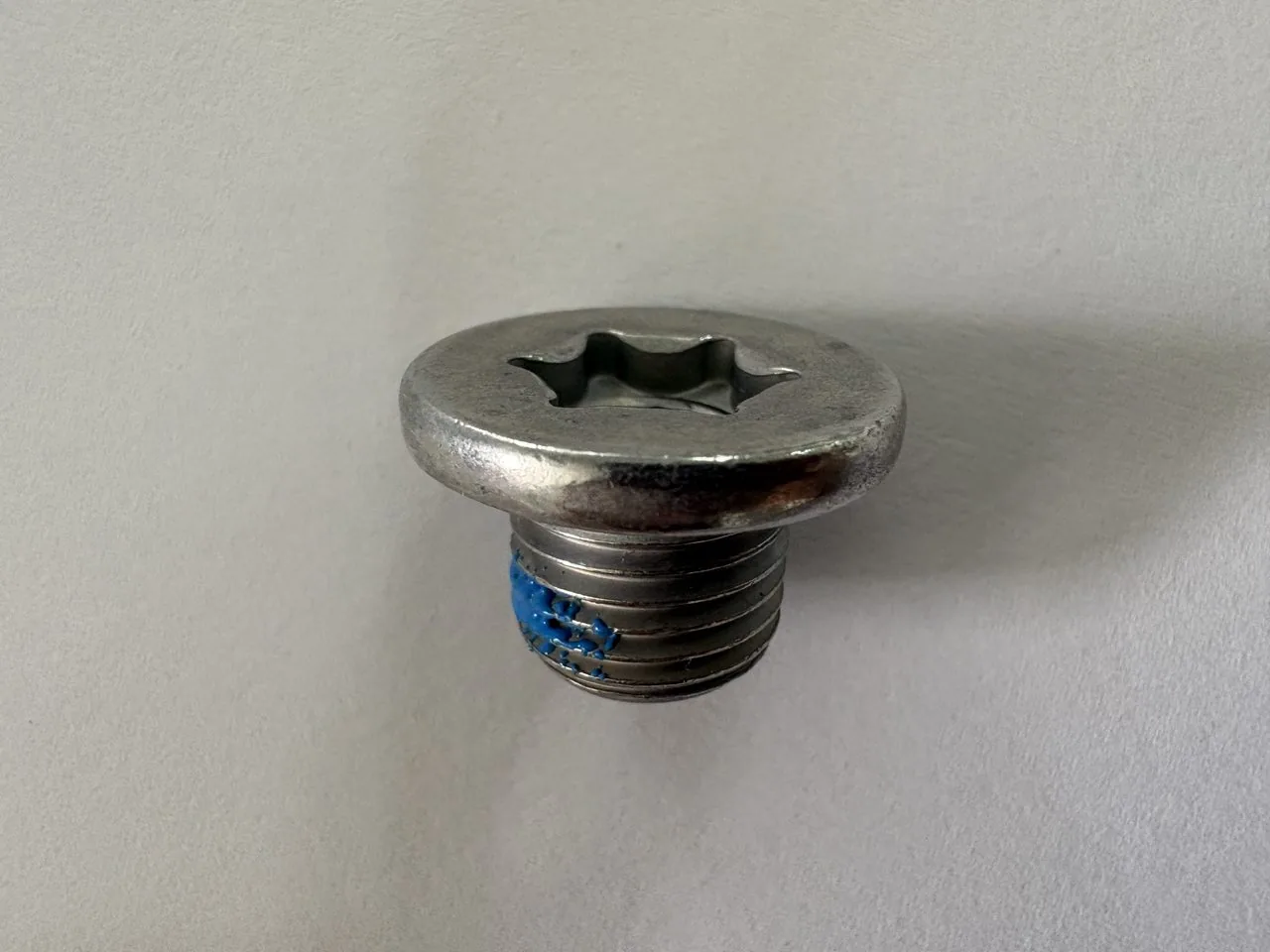
The value of this standard is not that it gives a ready-made torque table—what it gives is a method chain for determining torque: determine the target preload from joint functional requirements, convert it to a torque coefficient from the friction state, calculate the tightening torque from the torque coefficient, and verify it by test.
Scope and Positioning of the Standard
The GB/T 16823 series is the foundational standard family in the field of tightening implementation:
| Standard No. | Title | Main Content |
|---|---|---|
| GB/T 16823.1 | Stress Cross-Sectional Area and Load-Carrying Area of Threaded Fasteners | Calculation of stress cross-sectional area As; the basis of all strength calculations |
| GB/T 16823.2 | General Rules for Tightening of Threaded Fasteners | Relationships and implementation requirements among tightening torque, preload and friction coefficient |
| GB/T 16823.3 | Fasteners—Torque-Clamp-Force Test | Test method for determining friction coefficient and actual preload |
The three form a closed loop of "calculate—assemble—measure." Of them, 16823.2 is the general rule: it specifies the common requirements that must be met during engineering implementation, rather than stipulations for a specific joint. This is important: the standard does not tell you how many newton-meters a certain bolt should be tightened to; it tells you how that number should be determined and verified.
Core Relationships: Three Formulas Supporting One Logic
Formula 1: Stress cross-sectional area
As = (π/4) × [ (d2 + d3) / 2 ]2
d2: pitch diameter; d3 = d1 − H/6, where d1 is minor diameter and H is the original thread height
As is neither the minor-diameter area nor the pitch-diameter area, but an equivalent value between the two. For M10, As ≈ 58.0 mm², while the minor-diameter area is ~52 mm² and the pitch-diameter area ~61 mm². Using the wrong one introduces a strength deviation of about 10%.
Formula 2: Target preload
FM = ν × σ0.2 × As
ν: preload utilization coefficient; σ0.2: material yield strength
The value of ν is determined by the tightening strategy and the scatter of the friction state: 0.60~0.70 for torque control, 0.80~0.90 for torque-angle control. The higher ν, the larger the preload—but the higher the requirement for friction consistency.
Formula 3: Tightening torque
T = K × FM × d
K: torque coefficient, jointly determined by thread-pair friction and bearing-surface friction
Chained together, the three formulas form a complete path: size → As → FM → T. The only quantity that must be measured in the field is K—which is precisely why GB/T 16823.3 exists.
Friction State Must Be Defined on the Drawing
The engineering value of 16823.2 lies largely in its requirement to define the friction state, because K is not an inherent property of the fastener but a property of the mating state. Items that must be made clear in implementing the standard include:
| Item to Define | Typical Way to Specify | Consequence of Not Defining |
|---|---|---|
| Thread lubrication state | Lubricated coating / dry / specified lubricant applied | K can differ by a factor of two |
| Coating type and film thickness | Zinc-aluminum coating, film thickness 8~15 μm | K drifts between batches |
| Bearing-surface condition | Whether washers are used, washer hardness and flatness | Bearing-surface friction term fluctuates |
| Thread tolerance class | External thread 6g, internal thread 6H | Inconsistent contact; both K and stripping strength are affected |
| Whether reuse is allowed | Reuse forbidden for critical joints | K drops on second tightening, preload runs high |
| Cleanliness requirements | No oil, no chips, no burrs | Random friction fluctuation |
Tightening Implementation Requirements and Verification
The tightening process document should include
- Graded tightening requirements: multi-bolt joints are loaded in graded steps following a diagonal/cross sequence. Common practice is three stages: 30% → 60% → 100% of target torque.
- Tightening speed and tools: specify tool type and speed range; tools must be calibrated periodically and records kept.
- Process monitoring: record the torque-angle curve for critical joints and set abnormal criteria (torque out of tolerance, angle out of tolerance, abnormal curve).
- Re-inspection method: re-inspection should not re-tighten by torque, because turning again changes the friction state. The witness-mark method (visually checking whether the torque mark has shifted) or ultrasonic preload measurement is recommended.
Verification per GB/T 16823.3
The standard requires verification of tightening effectiveness, using the torque-clamp-force test: under the same fastener batch and the same clamped-part conditions, measure the actual friction coefficient and preload, and check whether K falls within the design assumption range.
Engineering criterion: the deviation between the measured mean K and the design assumed value should not exceed 10%, and the within-batch range should not exceed 30% of the mean. If exceeded, first correct the torque or improve friction-state control rather than letting the line keep producing at the original torque.
How to Turn the Standard Into a Technical Requirement
Putting the above together, an executable tightening technical requirement usually has six parts:
| Part | Content | Example Wording |
|---|---|---|
| 1 Fastener specification | Thread, property class, material, coating | M12×1.75, grade 10.9, zinc-aluminum coating with lubricant additive |
| 2 Friction state | K target and tolerance | K = 0.13 ± 0.02, verified per GB/T 16823.3 |
| 3 Tightening parameters | Strategy, torque or angle, tolerance | Torque control, T = 90 N·m ± 8% |
| 4 Tightening sequence | Sequence diagram and graded percentages | Diagonal/cross, three stages 30% / 60% / 100% |
| 5 Tools and calibration | Tool type, calibration cycle | Servo spindle, monthly calibration, accuracy ± 3% |
| 6 Acceptance criteria | Sampling ratio, basis for judgment | Sample 5 pieces per batch for torque-clamp-force test |
Conclusion
The practical value of GB/T 16823.2 is turning "how much should this bolt be tightened" from a piece of experience into a calculable, specifiable and verifiable chain: As sets the strength upper limit, ν sets the preload level, K sets the torque value, and the test determines whether it holds.
The standard does not tighten any bolt for you, but it makes every bolt's torque evidence-based. For critical joints, missing any one of these four links means that "tightened per the standard" is just a sentence written on paper.