
Cold Heading vs. CNC Machining: A Three-Dimensional Comparison of Cost, Strength, and Precision
Executive Summary
Cold heading and CNC machining are not competitors that replace each other; each has its own boundary across three dimensions—cost, strength, and precision. Using four sets of data—material utilization, unit-cost curves, grain-flow continuity, and tolerance capability—this article gives you a way to judge which process applies, explains why a combined process is often the optimal choice, and provides a practical process-selection decision flow.
Table of Contents
- The Cost of Choosing the Wrong Process
- Dimension 1: Cost Structure and Unit-Cost Curve
- Dimension 2: Strength and Fatigue Performance
- Dimension 3: Precision and Surface Quality Limits
- Combined Process: You Don't Have to Choose One
- A Practical Selection Decision Flow
- Conclusion: Takeaways from the Three-Dimensional Comparison
The Cost of Choosing the Wrong Process
A common scenario: a designer draws a special-shaped stepped bolt based on functional needs, a process engineer quotes a CNC turning plan by convention at 28 RMB per piece; another supplier forms it by cold heading at 6 RMB per piece, and the performance is actually better. The difference is not in machining skill, but in process selection.
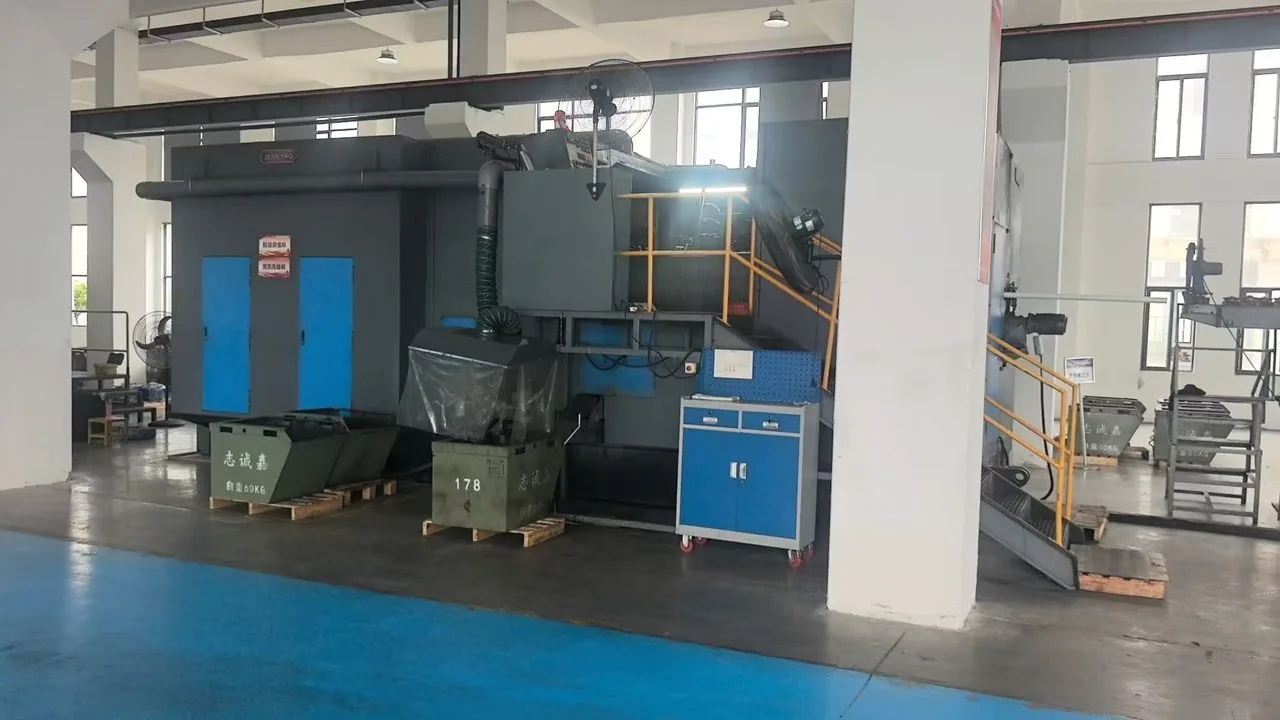
The opposite scenario is equally common: for a special-shaped part in a small-batch trial run, insisting on building cold heading dies spreads the tooling cost over a few hundred pieces, making the per-piece cost several times higher than CNC.
Cold heading and CNC machining each have a clearly defined application range. There are three dimensions to judge: cost, strength, and precision.
Dimension 1: Cost Structure and Unit-Cost Curve
The cost structures of the two processes are completely different:
| Cost Item | Cold Heading | CNC Machining |
|---|---|---|
| Die / tooling | High (tens of thousands to hundreds of thousands RMB) | Near zero |
| Material cost | Low (utilization 85%~95%) | High (utilization 30%~45%) |
| Machining time | Very short (seconds per piece) | Long (minutes per piece) |
| Tool consumption | Low (amortized over dies) | High |
| Changeover cost | High (die change + setup) | Low (just modify the program) |
Typical Unit-Cost Comparison
| Batch (annual volume) | Cold Heading per Piece | CNC per Piece | Better Process |
|---|---|---|---|
| 100 pcs | 80~200 RMB (incl. die amortization) | 30~60 RMB | CNC |
| 1,000 pcs | 15~35 RMB | 25~50 RMB | Depends on geometry |
| 10,000 pcs | 4~10 RMB | 22~45 RMB | Cold heading |
The cost crossover point is typically at the thousands of pieces level. The larger the batch, the more obvious cold heading's relative advantage becomes.
Dimension 2: Strength and Fatigue Performance
On this dimension, cold heading has a structural advantage rooted in the metal grain flow:
| Performance Index | Cold Heading | CNC Turning | Difference |
|---|---|---|---|
| Metal grain flow | Continuous, follows the contour | Cut through | Core difference in fatigue strength |
| Head transition zone strength | Grain flow bends along the fillet, forming reinforcing fibers | Cross-section microstructure exposed | Cold heading clearly superior |
| Surface condition | Die-formed, roughness Ra 0.8~1.6 | Tool marks, Ra 1.6~3.2 | Affects crack initiation |
Dimension 3: Precision and Surface Quality Limits
CNC machining's precision advantage is real, and cold heading must face its own limits squarely:
| Machining Feature | Cold Heading Capability | CNC Capability |
|---|---|---|
| General dimensional tolerance | IT9~IT11 | IT6~IT8 |
| Precise dimensional tolerance | IT8~IT9 (critical positions) | IT5~IT7 |
| Surface roughness | Ra 0.8~3.2 μm | Ra 0.4~1.6 μm |
| Position tolerance (concentricity) | 0.03~0.10 mm | 0.005~0.02 mm |
Worth noting is the last row: batch consistency of cold-headed parts is often better than CNC. Because cold heading dimensions are determined by the dies, parts from the same die set vary very little; with CNC, as tool wear and thermal distortion accumulate, dimensions slowly drift and must be maintained through compensation and sampling inspection.
Combined Process: You Don't Have to Choose One
In actual production, the optimal solution is usually a combination:
- Main body cold-headed near net shape: head, flange, steps, and outer contour all cold-formed, gaining grain-flow and material-utilization advantages.
- Local finish machining of critical features: turning or grinding only the bearing mating surfaces, sealing surfaces, and high-precision locating holes to control tolerances.
- Thread roll forming: threads formed by thread rolling or flat die threading to further strengthen fatigue performance at the thread root.
- Deburring and cleaning: as the final pre-delivery operation to ensure technical cleanliness.
| Part Feature | Recommended Process |
|---|---|
| High-volume standard bolts, nuts, screws | Cold heading + flat die threading |
| Special-shaped fasteners with flanges or steps | Multi-station cold heading |
| Precision sleeves, lifting structural parts | Cold heading near net shape + local finish machining |
| Parts with many high-precision mating surfaces | Cold heading + CNC hybrid machining |
| Single-piece, very small-batch special-shaped trial parts | Direct CNC machining |
| Ultra-slender, ultra-thin-wall structures | Primarily CNC |
A Practical Selection Decision Flow
Put the three dimensions above into an executable flow:
- Look at volume first: annual volume below 3,000 pcs, prioritize CNC; above 10,000 pcs, prioritize evaluating cold heading.
- Then look at formability of the geometry: are there internal cavities, sharp corners, or ultra-deep holes that cannot be die-formed? If so, assess whether local finish machining can make up for it.
- Then look at precision requirements: if critical dimension tolerances are tighter than IT8 and cannot be achieved by subsequent finish machining, CNC or a hybrid process is more suitable.
- Then look at the nature of the load: for alternating loads or safety-critical locations, prioritize cold heading (grain-flow advantage).
- Finally, calculate the full cost: combine die investment, material cost, machining time, tool consumption, and scrap rate to calculate per-piece cost and total lifecycle cost.
A rule-of-thumb judgment: if the part geometry can be made with a single multi-station die and the annual volume exceeds ten thousand pieces, cold heading is almost always the better solution—not only cheaper, but with better fatigue performance. CNC's true advantage zone is very small batches, ultra-complex geometries, and high-precision features that cold heading cannot form.
Conclusion: Takeaways from the Three-Dimensional Comparison
Putting the three dimensions together, the conclusion is clear:
- Cost: above thousands of pieces, cold heading clearly wins, and the gap widens with volume.
- Strength: cold heading has structural advantages in grain-flow continuity, surface strengthening, and fatigue life.
- Precision: CNC wins in tolerance capability, surface roughness, and freedom for complex geometry.
Therefore the right approach is not to choose one, but to divide the work by volume and geometry: leave the contour to cold heading, and leave critical precision to local finish machining. This way you gain both cold heading's material and performance advantages while preserving the product's precision requirements.