
6061 Aluminum Lifting Sleeve: Lightweight and Precision Engineering
Executive Summary
In modern industry, where structural lightweighting and high performance are the goal, the 6061 aluminum lifting sleeve has become a key component in joining and lifting applications thanks to its balanced property profile. This article explains this precision part from three angles: material properties, manufacturing process and performance advantages.
Table of Contents
In modern industry, where structural lightweighting and high performance are the goal, the 6061 aluminum lifting sleeve has become a key component in joining and lifting applications thanks to its balanced property profile. This article explains this precision part from three angles: material properties, manufacturing process and performance advantages.
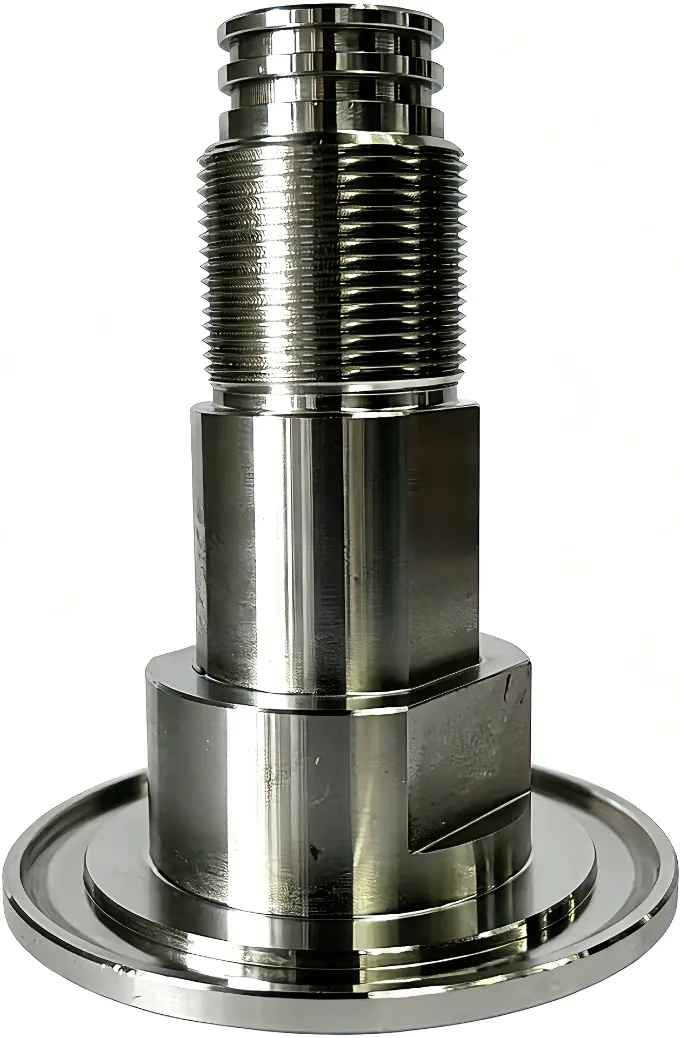
1. Material selection: the outstanding properties of 6061 aluminum alloy
6061 aluminum alloy belongs to the Al-Mg-Si family of heat-treatable alloys and is one of the most widely used standard structural materials in industry. Its core advantages are as follows:
Excellent mechanical properties: through heat treatment (for example the T6 temper), 6061 aluminum alloy achieves relatively high strength and good toughness, meeting the severe load-bearing requirements placed on a lifting sleeve.
Outstanding workability: the alloy is not only easy to form by extrusion and forging, but also suitable for precision machining such as turning and drilling, which makes it convenient to manufacture sleeves with complex geometry.
Good corrosion resistance: 6061 aluminum alloy has a natural resistance to corrosion, and surface treatments such as anodizing can further improve its weather resistance and wear resistance, extending service life in harsh environments.
2. Manufacturing process: from precision forming to finish machining
According to the process documentation in our knowledge base, the manufacture of 6061 aluminum lifting sleeves usually combines efficient cold forming technology with high-precision machining.
Core forming: multi-station cold forming
For sleeve production in large batches, multi-station cold forming is the process of choice. This technology applies high-precision extrusion and forging to 6061 aluminum wire, shaping a complex geometry in a single forming cycle without generating machining chips, which guarantees optimal material properties and very high production efficiency. A typical process flow includes:
Precision wire feeding: ensures accurate raw material dimensions and lays the foundation for subsequent forming.
Cutting and initial forming: the wire is cut to length and the rough shape of the sleeve is pre-formed.
Multi-stage cold extrusion: the material is progressively extruded to its final shape through several dies; this process effectively refines the grain structure and raises part strength.
Final forming and blanking: the final shape of the sleeve is completed and the finished part is separated.
Precision machining: ensuring high-accuracy fits
For lifting sleeves with very tight dimensional tolerances and coaxiality requirements, precision machining is still needed after cold forming. To guarantee the coaxiality of the bore and the outer diameter, for example, the process usually turns both surfaces in a single clamping setup. For long, thin-walled sleeves, a steady rest or a dedicated mandrel may be required during machining to hold the accuracy. The precision machining equipment mentioned in our knowledge base can perform turning, grooving, drilling and other operations, ensuring that the final dimensional accuracy and surface roughness of the sleeve meet the design requirements.
3. Performance advantages and applications
Significant lightweighting effect: the density of aluminum alloy is only about one third that of steel, so using 6061 aluminum lifting sleeves can greatly reduce the weight of the overall structure, which is of major significance in aerospace, automotive manufacturing and high-end equipment.
Reliable connection performance: drawing on experience with high-strength aluminum alloy bolts, 6061 aluminum sleeves can deliver stable preload and a reliable joint under appropriate lubrication and tightening processes. Their stable friction coefficient also makes them suitable for working conditions that involve repeated tightening.
Corrosion resistance and long service life: combined with surface treatments such as anodizing, 6061 aluminum sleeves maintain a long service life in humid, salt-spray and other corrosive environments, reducing maintenance costs.
4. Conclusion
The 6061 aluminum lifting sleeve is a showcase of materials science combined with precision manufacturing. It makes full use of the light weight, high strength, corrosion resistance and easy machining of 6061 aluminum alloy, and through advanced cold forming and precision machining achieves high-accuracy, high-efficiency production. In modern engineering applications that must balance strength and weight, the 6061 aluminum lifting sleeve is undoubtedly an ideal and reliable connection solution.